India’s energy transition has entered a decisive era—one defined not by incremental reform but by structural redesign. As the world’s fastest- growing major economy, India now carries the unique burden of scale, aspiration and global impact. Its energy choices will determine the competitiveness of its industries, the resilience of its economy and the breadth of its influence across emerging clean-energy value chains.
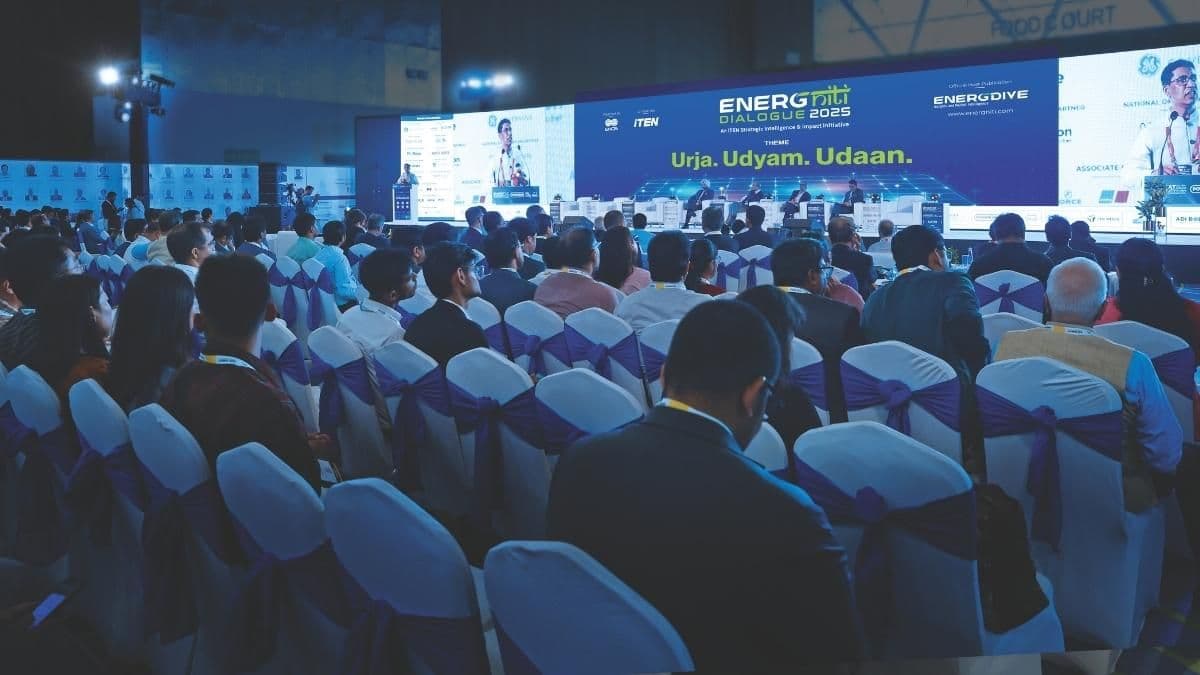
The EnergNiti Dialogue 2025, to be held on 18 December in New Delhi, rises to meet this moment. Organised by the Energy & Climate Initiatives Society (ENCIS) and co-organised by ITEN Media, the Dialogue gathers the institutions shaping India’s energy architecture—ministries, regulators, public sector leadership, private industry, technology pioneers, financiers, global partners and research bodies. “Yet its ambition is deeper than convening decision-makers.
EnergNiti aims to anchor a new standard of national discourse: analytical, future- oriented and capable of aligning policy, markets and industry with the discipline this decade demands,” says Abhishek Bhatnagar, Director General, ENCIS.
A New Framework for a New Energy Era
The Dialogue is built around a powerful thematic triad—
Urja. Udyam. Udaan.
Each word captures a dimension of India’s evolving energy story and the transformation underway.
Urja reflects energy as the bedrock of sovereignty, growth and resilience. It signals a shift from viewing energy as a service to recognising it as a strategic asset that shapes economic security, industrial depth and geopolitical posture.
Udyam represents enterprise, infrastructure, innovation and the capability-building required to convert ambition into national strength. India’s refineries, pipelines, grids, digital systems, manufacturing clusters and clean-energy industries form this new engine of progress.
Udaan embodies India’s ascent: the maturity to shape standards, the confidence to influence global markets, and the ambition to lead in the technologies that will define the next era of global competitiveness.
Together, these pillars provide the Dialogue with its intellectual architecture, encouraging participants to look beyond sectoral silos and instead view the transition as an integrated national mission.
Seeing India’s Energy Landscape Whole
The true strength of EnergNiti lies in its unified view of the energy system. India’s upstream, downstream, power markets, clean energy vectors and digital infrastructure are no longer independent ecosystems; they are interwoven components of a national project.
The Dialogue examines the renewal of India’s domestic energy base— from expanded exploration to basin unlocking, technological deployment and investment frameworks that reinforce security and self-reliance. It highlights how refiners, petrochemical producers and future-fuel innovators are reshaping their strategies in response to shifting markets, carbon competitiveness and the emergence of new industrial value chains.
It also scrutinises the dramatic transformation of the power sector. With renewable penetration rising and demand patterns evolving, India must design a system that is reliable, flexible, digital and cost- efficient. Forecasting accuracy, storage readiness, strengthened transmission, distribution companies (DISCOM) reform and market-aligned mechanisms now occupy the centre of national energy planning.
The Dialogue then extends its focus to frontier technologies—hydrogen, ammonia, Carbon Capture, Utilisation, and Storage (CCUS), e-fuels, battery ecosystems, synthetic fuels and the digital public infrastructure emerging around energy. These are not viewed as distant innovations but as near- term opportunities that can reposition India as a global clean-energy leader.
Across these domains, EnergNiti frames the transition not as a series of disconnected reforms but as the construction of a coherent national energy architecture.
A Strategic Arc, Not a Programmatic Sequence
EnergNiti is structured as a narrative rather than a set of standalone sessions. It begins with a high-order interrogation of energy as strategy— how supply security, affordability, climate commitments, industrial competitiveness and foreign policy converge in India’s long-term planning. This opening perspective sets the tone for discussions grounded in national purpose rather than sectoral preoccupations.
From there, the Dialogue examines the structural transformation underway across India’s fuels and electricity systems. Exploration reforms, modernised refineries, the rise of green fuels, enhanced grid reliability and the redesign of power markets are analysed not as isolated initiatives but as interdependent capabilities that must advance in tandem.
Attention then shifts to the engines of economic expansion. Industrial decarbonisation, low-carbon molecules, advanced manufacturing clusters, renewable-powered industry, and India’s potential emergence as a global supplier of green materials and technologies are explored as opportunities to create competitive advantage and new export capacity.
Data not available: country-energy-data
The concluding deliberations look toward Viksit Bharat @ 2047. Here, the Dialogue explores the deep institutional, regulatory, technological and collaborative foundations India must build to secure long-term leadership. These conversations move beyond targets to questions of national capability— how India can become a model of clean growth, energy sovereignty and industrial transformation in an era of global volatility and rapid technological change.
Shaping Outcomes that Influence Policy, Investment and Collaboration
EnergNiti is not designed as an event for commentary; it is structured to shape outcomes. Its objective is to provide clarity at a time when India’s energy transition requires strategic discipline, robust governance and long-term visibility.
The Dialogue is expected to articulate policy priorities, strengthen market signals, identify investment-ready opportunities, and illuminate areas where regulatory coherence can accelerate national progress. It serves as a forum where ministries and regulators can engage directly with industry and global partners—aligning practical expectations with policy direction.
Equally important, it fosters collaboration across organisations that often operate in parallel. The Dialogue encourages cross-sector partnerships, supports knowledge exchange and creates a platform for generating actionable insights that can guide India’s transition from aspiration to execution.
A Forum for India’s Decisive Decade
The EnergNiti Dialogue 2025 arrives at a moment when India’s energy narrative is expanding—from megawatts and molecules to systems, capabilities and global leadership.
As the nation moves from energy transition to energy transformation, this Dialogue stands as one of the country’s most consequential forums—where India’s next steps will be debated with clarity, ambition and rigour.
Within its conversations lie the principles, partnerships and pathways that will define a cleaner, stronger and more sovereign energy future for India.
This is where the next chapter of India’s energy story begins.