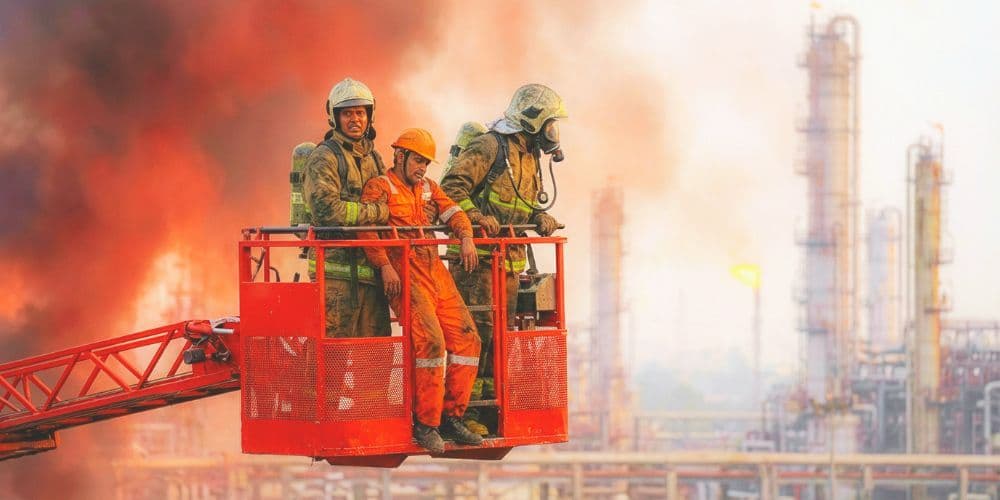
Fire safety in India is at a critical juncture, where rising complexity in urban infrastructure and industrial systems is exposing the limits of a compliance-led approach. As risks evolve, organisations are increasingly recognising that fire safety cannot remain operational or reactive. It must be embedded into strategy, shaping decisions on design, investment and governance to ensure resilience.
A System under Strain
Fire safety in India occupies a paradoxical position. Frameworks, codes and institutional structures exist, yet their implementation remains uneven across regions and sectors. Industry experts point to a persistent gap between intent and execution, reflected most starkly in the country’s capacity to respond to fire incidents.
Assessments linked to national-level evaluations indicate that the shortfall in fire service infrastructure, including stations, equipment and trained personnel exceeds 85 percent. This deficit is not merely administrative, as it shapes the effectiveness of response systems across both urban and non-urban geographies.
Operational realities reinforce this constraint. In certain regions, fire stations are required to respond to multiple incidents in a single day, reflecting growing pressure on limited resources.
An Industry beyond Emergency Response
Fire safety is often perceived through the narrow lens of firefighting. In practice, it extends across building design, industrial operations, regulatory compliance and public awareness. Experts across sectors emphasise that prevention, preparedness and response are interdependent, and weaknesses in any one dimension undermine the system as a whole. Organised sectors such as hydrocarbons have demonstrated that structured systems, regular audits and institutional oversight can significantly improve safety outcomes. However, similar levels of preparedness are not consistently visible across other segments, particularly in smaller establishments and residential contexts.
Urbanisation and Regulatory Fragmentation
India’s urban expansion is introducing new complexities into fire risk management. As cities grow vertically, the parameters governing safety become more critical. Yet, even basic definitions vary across jurisdictions. The classification of high-rise buildings, for instance, ranges from approximately 15 to 32 metres depending on location. Such variation directly influences safety requirements, including equipment standards, evacuation protocols and fire response planning. This lack of uniformity reflects a broader governance challenge.
Fire safety remains a state subject, and while model frameworks have been circulated, adoption and interpretation differ across regions. Around 23 states have adopted the model fire safety framework, but implementation continues to vary in practice.
Compliance Gaps in Critical Infrastructure
One of the most concerning aspects of the current ecosystem is the level of non-compliance in essential services. Industry observers estimate that a significant proportion of private nursing homes do not conform to prescribed building safety norms under the National Building Code. This gap highlights a deeper issue: compliance is often treated as a procedural requirement rather than an operational imperative. Systems may be installed to meet regulatory conditions, yet their maintenance and functional readiness are not always assured.
The Data Deficit
Perhaps the most fundamental constraint facing the sector is the absence of reliable data. India does not have a unified national repository of fire incidents.
Existing information is often dependent on secondary reporting mechanisms, including police records, which may not capture the full extent or nature of incidents. In addition, there is no uniform classification system for fire incidents across states, further complicating efforts to build a coherent national picture. The absence of consistent and credible data limits the ability to assess risk accurately, allocate resources effectively or design targeted interventions.
Capacity and Training Constraints
Institutional capacity remains uneven. While specialised training infrastructure exists, its scale is limited relative to national requirements.
Experts note that fire safety is not sufficiently integrated into mainstream technical education, particularly in fields such as engineering and architecture, despite its relevance to building design and infrastructure planning. At the same time, awareness at the community level remains limited. Exposure to fire safety concepts typically begins only at later stages of formal education, leaving a gap in early behavioural conditioning.
Environmental and Operational Pressures
Changing environmental conditions are also influencing fire risk. Higher temperatures, particularly during peak summer months, have been associated with an increase in fire incidents, adding further pressure on already constrained response systems. These pressures are compounded by the expansion of infrastructure and industrial activity into regions where fire service capacity may not have kept pace.
Towards a More Integrated Approach
Industry experts consistently emphasise the need for a more integrated approach to fire safety—one that moves beyond compliance towards continuous preparedness. This includes strengthening infrastructure, improving training systems, enhancing awareness and developing more reliable data frameworks. Equally important is the need for greater standardisation across jurisdictions, particularly in areas such as building classifications, safety norms and incident reporting.
India’s fire safety ecosystem is at a critical juncture. Significant gaps in infrastructure, compliance and data coexist with increasing complexity in the built environment and industrial systems. Addressing these challenges will require coordinated action across policy, industry and communities. As the country continues to urbanise and expand its economic base, the effectiveness of its fire safety systems will play an increasingly important role in safeguarding both lives and assets. The question is not whether the need for reform exists, but how quickly and cohesively it can be addressed.