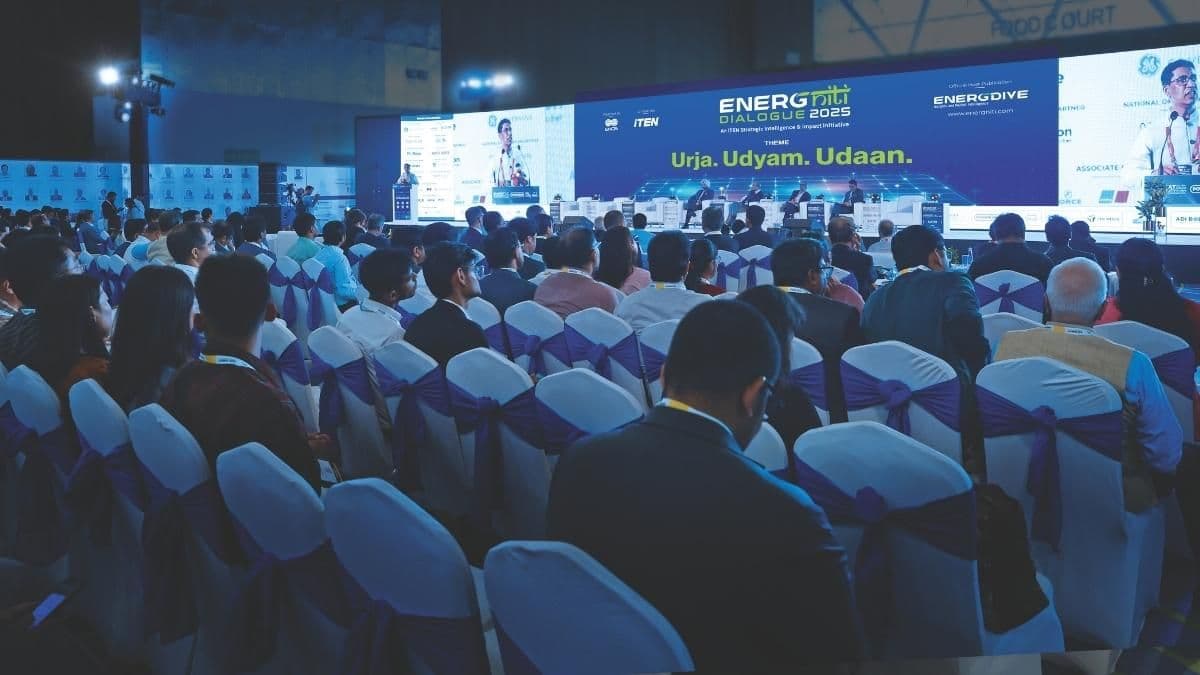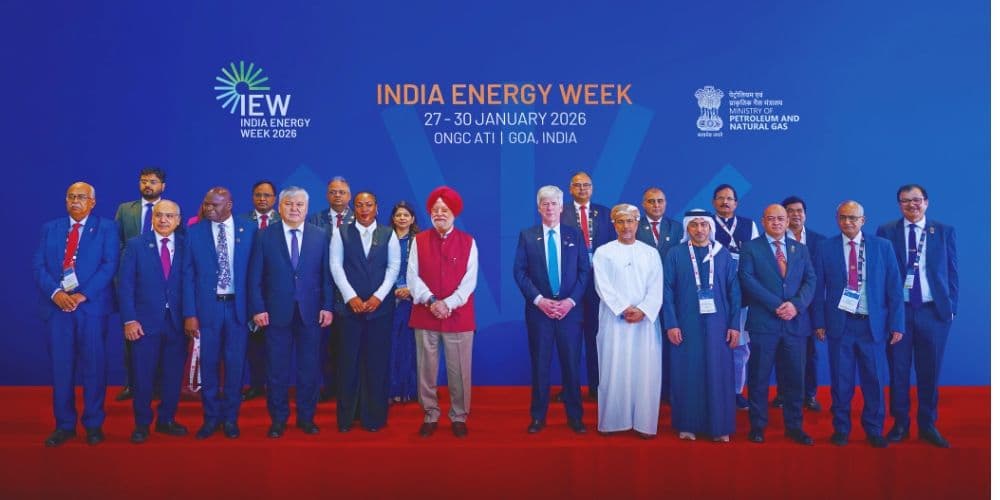
Held in Goa from 27–30 January, India Energy Week (IEW) convened more than 75,000 professionals, over 700 companies and participants from 120 countries. The gathering unfolded at a time of unsettled geopolitics and fluctuating markets, yet its tone was notably assured: India, speakers said, has the scale and policy direction to navigate uncertainty while shaping global energy outcomes.
Across ministerial dialogues and leadership panels, a common theme emerged that the transition must be realistic and inclusive. Union Minister for Petroleum and Natural Gas Hardeep Singh Puri described the shift as one of energy addition rather than replacement where oil, gas, biofuels, hydrogen and renewables expand together to meet rising demand. Abrupt substitution, he cautioned, would undermine affordability and development. IEW 2026, therefore, evolved as a platform of implementation, connecting investment with technology and national priorities with international cooperation.
Investment as the Cornerstone of Security
Participants repeatedly identified underinvestment as the principal risk to the global energy system. Dr Sultan bin Ahmed Al Jaber, UAE Minister of Industry and Advanced Technology and ADNOC Group CEO, said that inadequate capital across all forms of energy could threaten security and affordability more than any single technology pathway.
India’s approach to attracting capital was highlighted through successive Open Acreage Licensing Policy and Discovered Small Fields rounds, alongside broader policy reforms. Speakers pointed to the rapid expansion of LPG coverage, cleaner cooking access and a diversified energy mix as evidence that investment delivers inclusive growth.
The message was consistent: stable and predictable markets depend on long-term finance across upstream, midstream and emerging energy sectors.
Natural Gas and Liquified Natural Gas (LNG):
The Pragmatic Bridge
A dedicated leadership panel on natural gas concluded that the fuel is increasingly positioned as a long-term component of modern energy systems, with global demand projected to rise by 30–35 percent by 2050. Coal-to-gas switching was identified as the most tangible near-term route to reducing emissions while maintaining grid stability.
From India’s perspective, panellists noted the expanding city gas distribution network, diversified LNG imports and continuing investments in pipelines and terminals. Affordability, however, was described as decisive. During the LNG supply and demand session, the Akshay Kumar Singh, Managing Director, Petronet LNG observed that prices in the range of $6–7/MMBtu are essential to attract new consumers in transport, power and urban markets.
India at the Centre of Global Demand Growth
The presentation of the OPEC World Oil Outlook 2025 reinforced India’s pivotal role. The report projected that India alone will add 8.2 million barrels per day of oil demand by 2050, making it the largest contributor worldwide. India’s primary energy demand is expected to almost double over the same period.
The Outlook estimated $18.2 trillion in cumulative oil-related investment between 2025 and 2050, underlining the scale required to meet rising demand. Speakers noted that oil and gas will remain central to transportation, petrochemicals and industrial activity even as renewables expand.
Bio Energy:
A Policy-driven Success
Biofuels emerged as one of India’s most dynamic segments. The IEA India Bioenergy Market Report stated that modern bioenergy consumption has tripled since 2020, driven by blending mandates and supply-chain development. Neeraj Mittal, Secretary, the Ministry of Petroleum and Natural Gas (MoPNG) noted that ethanol blending has risen from 1.4 percent in 2014 to nearly 20 percent.
Compressed Biogas (CBG) and Sustainable Aviation Fuel (SAF) were identified as future growth areas, with state energy policies playing a key role in feedstock aggregation and market creation. Speakers highlighted bioenergy’s ability to link energy security with rural development and waste management.
Hydrogen Moves towards Commercialisation
At the Hydrogen Zone, technologies across production, storage and utilisation were showcased. National Green Hydrogen Mission Director Abhay Bakre described 2025–27 as launchpad years for India’s green hydrogen ecosystem, adding that prices are approaching parity with conventional alternatives.
International participants observed that emerging demand frameworks in Europe could create opportunities for Indian exports, while domestic applications in refining, fertilisers, steel and mobility were gaining momentum.
Coal and the Imperative of Baseload
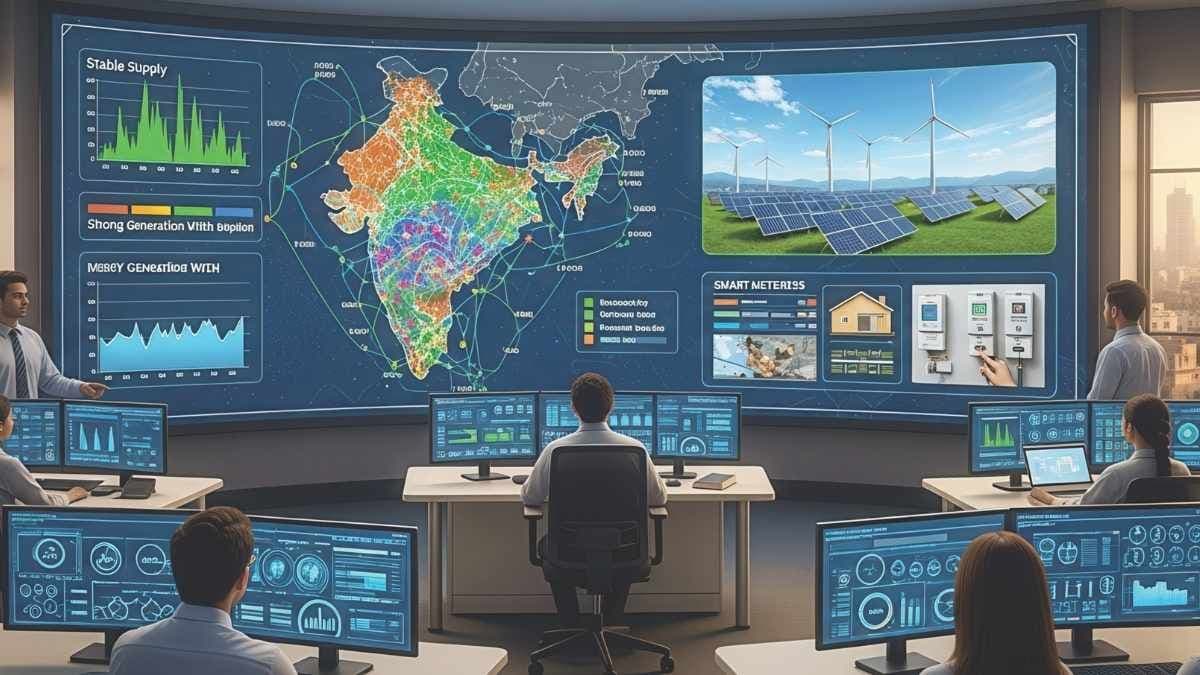
Discussions on coal emphasised realism. Ministry of Coal officials stated that as India works toward tripling per-capita energy consumption, affordable and dependable baseload remains essential. The focus, they said, is on a calibrated phase-down, supported by clean coal technologies, gasification and efficiency improvements. Parallel sessions on electrification highlighted grid expansion, smart metering and digitalisation as critical to integrating the country’s 267 GW of non-fossil capacity.
Data and AI:
Planning Ahead of Growth
At a session on energy data and economic policy, former MoPNG Secretary Pankaj Jain cautioned that Energy cannot play catch-up; energy has to anticipate. He called for integrating datasets across petroleum, power, coal and gas to support macroeconomic forecasting and infrastructure planning.
Industry leaders also presented AI applications in upstream analytics, pipeline monitoring and operational optimisation, signalling the growing role of digital tools in energy decision-making.
Strengthening Global Partnerships
IEW 2026 saw the relaunch of the India–Canada Ministerial Energy Dialogue, targeting cooperation in LNG, Liquified Petroleum Gas (LPG), crude supply, hydrogen, biofuels, critical minerals and AI. The UAE reaffirmed its role as a reliable supplier of crude, LNG and LPG, underscoring the depth of long-term India–UAE energy ties.
The closing session reflected a consistent theme: India has navigated geopolitical shocks while maintaining affordable supplies and expanding cleaner fuels. The MoPNG Secretary outlined twin priorities: strengthening domestic exploration and positioning India as a reliable global supplier of refined products, supported by digitalisation and logistics optimisation.
IEW 2026 affirmed that India’s transition will be plural and practical, blending multiple fuels and technologies rather than choosing a single pathway. The conclave portrayed the country as a steady actor capable of aligning growth with sustainability through investment, innovation and cooperation.
Leadership Imperatives from IEW 2026
- Invest across all fuels to avoid supply risks and protect affordability
- Target LNG affordability around $ 6–7/MMBtu to expand adoption
- Scale bioenergy through state policies linking feedstock with blending mandates
- Advance hydrogen deployment with demand creation and manufacturing capacity
- Integrate energy data for forward-looking economic planning
- Maintain baseload reliability while expanding renewables and grids
- Deepen international partnerships to secure resilient supply chains