India has 257 MMTPA of refining capacity and is eyeing to reach around 427 MMTPA by 2047. Yet global forces are moving faster than the country’s traditional growth model. Investment is pouring into low-carbon energy. While fossil fuels remain critical for fast-growing economies like India, clean energy investments globally surpassed $2 trillion in 2024.
At the same time, chemical-integrated mega refineries in Asia, especially in China are capturing more value by converting over half of each barrel into petrochemicals. In India, refining remains largely fuel-oriented. For instance, Indian Oil Corporation Ltd’s (IOCL) petrochemical intensity is about six percent. This gap matters. It shapes trade flows, prices and future capital allocation. The next decade will decide whether India remains a fuels powerhouse or evolves into a diversified, low-carbon chemicals and materials hub
Carbon Competitiveness as an Entry Ticket
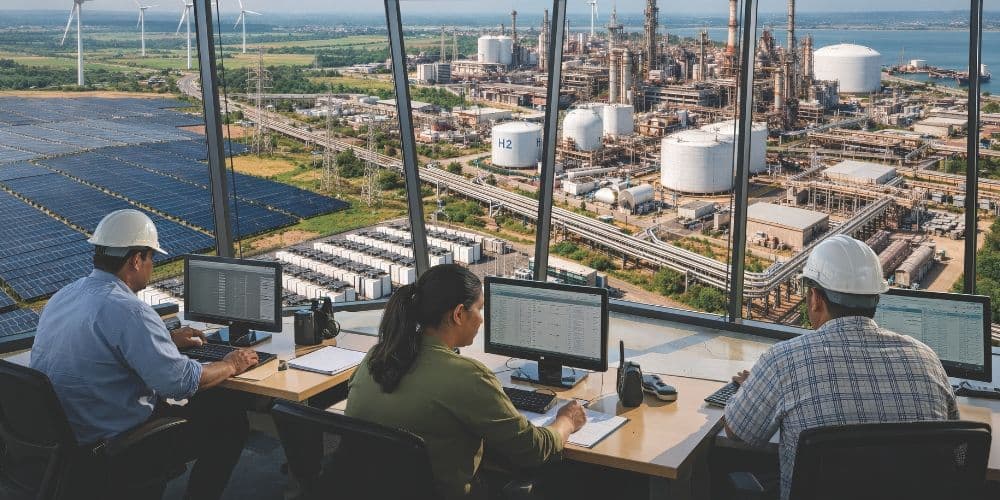
Decarbonisation has become a condition of market access. Indian refiners have started to build low carbon capacity into their core assets. Bharat Petroleum Corporation Ltd (BPCL) commissioned a 5 MW green hydrogen electrolyser at Bina with a 35 MW unit in progress. IOCL is developing its first major green hydrogen plant at Panipat within existing hydrogen networks and steam systems. Also, BPCL’s Kochi refinery is adding floating solar to curb grid dependence. Sector roadmaps also highlight electrified process heat as a key decarbonisation lever.
These initiatives sit alongside the National Green Hydrogen Mission, which aims to deliver five million tonnes of green hydrogen annually by 2030 with ₹19,744 crore of public investment for infrastructure and hubs. However, green hydrogen remains far costlier than grey, and financing is hampered by immature carbon markets. Clear carbon pricing and well-functioning credit trading systems will be essential before adoption can scale.
Sustainable Aviation Fuel (SAF) is emerging as a key decarbonisation lever. India is preparing a SAF blending roadmap targeting 1 percent in 2027 and 2 percent in 2028, with higher levels thereafter to reduce aviation’s carbon footprint. Building a viable SAF supply chain will require clear feedstock standards, BIS specifications for co-processing, viability-gap support, and market tools such as tradable SAF credits to de-risk early projects.
Chemicals Move to the Centre of Value
Fuel demand will persist, but India’s refiners are pivoting to chemicals to protect margins. IOCL aims for 15 percent in the medium term, and players such as Reliance and HPCL–Mittal are investing in integrated refinery–petrochemical projects, adding aromatics, olefins and propylene-rich FCC capacity. The technical underpinning is also advancing. While new catalyst systems reduce energy intensity, hybrid reactor beds and improved geometries push conversion deeper without unacceptable CO2 penalties.
Circular Feedstocks Emerge as Real Supply
The push to decarbonise and secure feedstock is also driving early circularity. Mangalore Refinery and Petrochemicals Ltd is developing depolymerisation technology for mixed plastics into monomers with about 70 percent lower emissions than pyrolysis. Start-ups such as Road Gold are converting waste asphalt into low-sulphur fuel oil and reusable aggregates. With IIT Mumbai, BPCL is piloting CO2 -to-bicarbonate, and IOCL is advancing plastic-to-fuel conversion and lubricant recycling in line with Extended Producer Responsibility (EPR) guidelines.
Technology pilots alone are not enough. Scaling circular feed stocks will require enforceable EPR-linked reverse logistics, reliable waste segregation, and clear national standards for pyrolysis and depolymerised oils; without these enablers, even proven technologies cannot scale.
Digital Maturity as Cost and Carbon Lever
Perational excellence increasingly depends on digital capability. Although Indian refineries generate vast data, only about 10 percent is effectively used. AI-driven platforms that combine process models with machine learning are enabling explainable, realtime optimisation. Digital twins of FCC and hydro processing units are moving from pilot to mainstream. Advanced Raman online analysers are improving product control, predictive maintenance, and energy efficiency. A key obstacle is human capacity. India faces a shortage of skilled engineers who can combine process knowhow with digital tools, and qualified EPC contractors are limited. Without systematic upskilling and vendor development, project execution and digital deployment will lag, undermining cost and emissions performance.
Execution and Market Risk
Ambition is clear but delivery is uneven. Green hydrogen and SAF remain expensive without carbon credits or predictable offtake. EPC and supply chains are stretched by simultaneous revamps, digitalisation and low-carbon retrofits, raising cost and delay risk. Feedstock reliability for circular projects is not yet bankable. And globally, highly integrated Asian complexes threaten to erode margins long before India completes its transition.
The Road Ahead
India’s downstream sector retains the scale and engineering depth that made it globally relevant. But competitiveness is being redefined. Carbon cost per barrel, chemical value per tonne, the ability to monetise waste reliably and the depth of digital operations will shape winners and losers. Over the next investment cycle, refiners that hard-wire decarbonisation, integrate chemicals from the start, secure feedstock resilience and build data fluency will keep India’s downstream globally competitive. Those that delay risk asset underperformance in a world pivoting to low-carbon, high-value molecules.