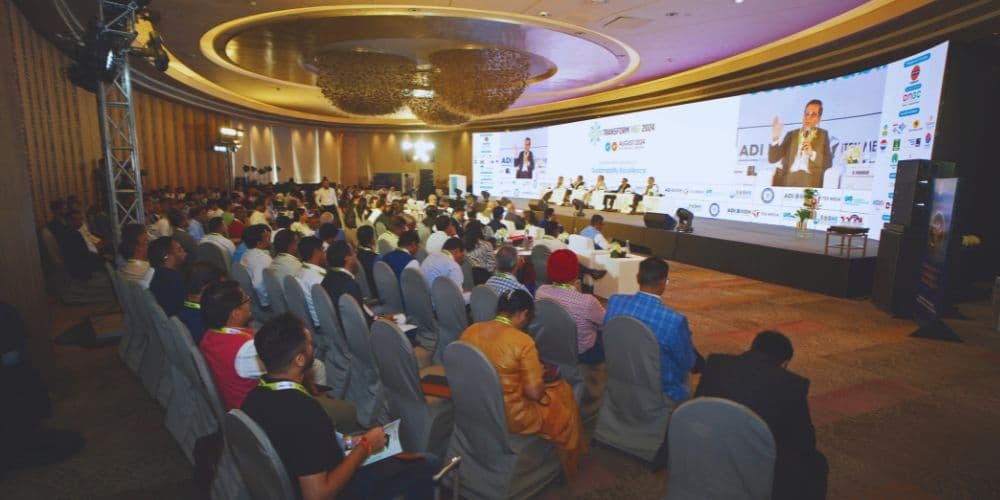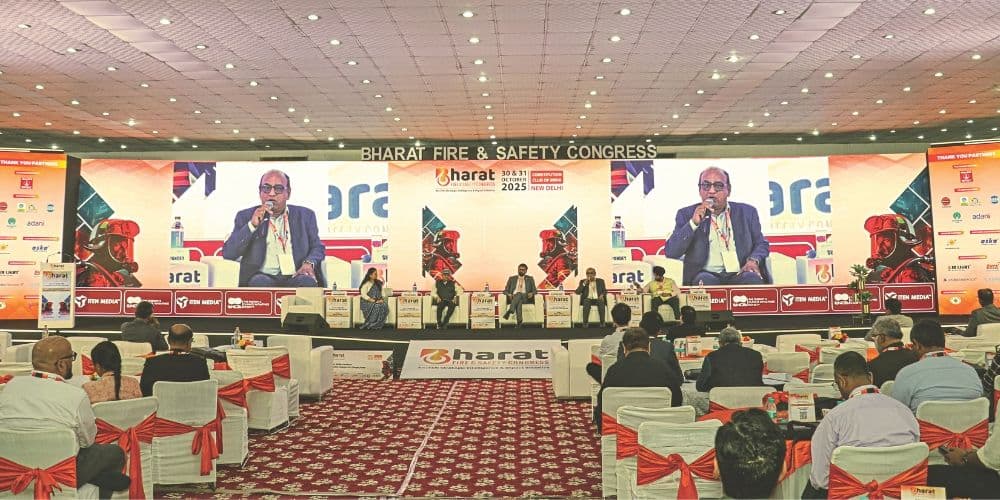
Fire safety in India is increasingly being examined as an integral part of how the country builds, operates and manages its assets. The Bharat Fire & Safety Congress, held on October 30–31, 2025 in New Delhi, was convened around the theme ‘Building Resilience: Fire Safety Strategies for a Changing Nation’. Organised by ITEN Media, in association with the Energy & Climate Initiatives Society (ENCIS), the Congress brought together policymakers, industry leaders, engineers, safety professionals and technology providers to reflect on evolving fire-risk landscapes shaped by urban growth, industrial expansion and changing operating environments. Over two days, discussions focused on strengthening prevention, improving system design, enhancing skills and training, and aligning leadership and institutions to build resilient, future-ready fire safety frameworks.
Setting the Frame
Ayush Gupta, Director, HR, GAIL India Ltd, remarked fire safety is a development and resilience issue rather than an emergency response function. With urbanisation and vertical growth altering risk profiles, he said that prevention must be embedded in planning, design, regulation and training, with people and institutional trust at the centre.
Fire safety fails when reduced to paperwork, observed Arvind Kumar, Director for Refineries at Indian Oil Corporation Ltd. Drawing on Indian Oil’s experience, he advocated for a shift to risk-based process safety, CCPS-aligned systems and digital monitoring, stressing that technology only works when supported by trained people and disciplined operational behaviour.
Vivek Srivastava, Former DG of Fire Services, Civil Defence & Home Guards, the Ministry of Home Affairs, highlighted India’s lack of a national fire database. He flagged manpower shortages, fragmented state laws and uneven training, calling for standardised curricula, uniform structures and a coherent national framework to strengthen fire governance.
Fire safety has long remained peripheral within HSSE discussions despite high human and economic costs, said Abhishek Bhatnagar, DG, ENCIS and CEO, ITEN Media. He observed that Bharat Fire & Safety Congress is an ecosystem, which aligns industry and policymakers, stressing that sustained progress depends on coordination and translating dialogue into institutional action.
From Reform to Reality
SP Garg, Former Executive Director, GAIL India Ltd, underscored the importance of integration between industry fire systems and state fire services. He said preparedness depends on coordination, shared protocols and regular joint drills, warning that even well-equipped facilities fail when agencies operate in silos during emergencies.
Executive Director for Corporate HSSE at Bharat Petroleum Corporation Ltd Sanjeev Raina said future fire management will be shaped by predictive intelligence and resource efficiency, particularly water use. He observed that leadership foresight and risk anticipation matter more than reactive firefighting in a resource-constrained environment.
Mukesh Mohan, Executive Director, HSSE, Indian Oil Corporation Ltd traced a decisive shift in refinery fire safety to post-2009 reforms. He cited OISD-driven standards, improved tank-farm design, sensors and audits, noting that the focus has moved from response to systematic prevention and mutual aid preparedness.
Fire prevention must begin at the design stage, not after commissioning, asserted Pawan Jalutharia, GGM & Head, Corporate HSE, Oil and Natural Gas Corporation Ltd. Drawing on upstream experience, he stressed that robust system integrity and early risk analysis can prevent ignition even during prolonged gas releases.
Rituraz Mehta, Group Safety Head, Adani Group, said effective fire safety collaboration exists in pockets, citing Mundra in Gujarat where industry and state authorities coordinated successfully during emergencies, including coastal incidents without loss of life. However, he stressed such collaboration is uneven nationally and argued that wider social sensitisation not just industrial compliance is essential for sustained safety behaviour.
Codes, Compliance and the Human Factor
SK Bose, CEO, Hydrocarbon Sector Skill Council drew attention to the gap between formal fire safety provisions and operational readiness. He stressed that preparedness depends on routine checks, drills and coordination with local fire services, warning that systems fail when maintenance and response protocols are treated as secondary tasks.
DLF Ltd’s Advisor for Fire Engineering Dr Devendra Shami cautioned against treating building codes as static documents. He said fire safety provisions often erode over time as evacuation routes are encroached upon and systems neglected, particularly in hospitals. Fire safety, he emphasised, must be enforced and maintained across a building’s entire life cycle.
Ali Lehry, MD, India, Jensen Hughes explained how the company supports large, complex projects by integrating fire and life safety strategies at the concept stage itself. Working with architects, developers and owners, the firm embeds global code expertise early in design to prevent safety gaps and avoid costly corrections during later project stages.
Sandeep Roy, Sr VP and Head of Central Design & Engineering at DLF Ltd spoke about fire safety from a large real estate developer’s perspective. He said compliance must extend beyond approvals to long-term upkeep, stressing that evacuation routes, staircases and fire systems in commercial and residential buildings require continuous monitoring to remain functional as occupancy and usage patterns change.
Schneider Electric’s Global EHS Director, Pawan Singh informed how the company is tapping into AI and IoT-driven technologies to predict electrical failures before they occur. He highlighted thermal imaging to detect hotspots, smart circuit breakers with remote tripping, and low-smoke, halogen-free cables, noting that early detection is critical as electrical faults remain a leading cause of fires globally.
Umit Bhatia, Sr Director, Sustainability Consulting Asia Pacific, JLL said that across Asia-Pacific, sustainability priorities in real estate are being shaped by rapid urbanisation, climate risk and long-term Net Zero commitments. The emphasis is on resilient buildings that can withstand physical climate risks, integrate strong fire safety, and reduce emissions. This includes decarbonising real estate portfolios through retrofitting existing buildings, improving energy efficiency, and embedding resilience and passive design strategies in new developments.
Skills, Leadership and Systems for the Next Phase
Hirak Dutta, Expert Advisor, Petroleum and Natural Gas Regulatory Board, emphasised skills, awareness and preparedness as the weak links in India’s fire safety chain. He argued that training must translate into employability and safe behaviour on site, warning that a casual attitude to safety undermines even well-designed systems.
Raman Srivastava, Sr VP, F&S and RCA and RM, Indraprastha Gas Ltd focused on leadership credibility and behaviour-based safety. He said safety systems fail when leaders send inconsistent signals, stressing that empowering workers to stop unsafe work and visibly backing those decisions is central to building trust and preventing incidents.
Sitanshu S Roychowdhury, VP, O&M, Mahanagar Gas Ltd explained how safety instrumented systems, embedded from the design stage through operation, help prevent and mitigate fires in hydrocarbon facilities. Using layered protection—basic controls, alarms, ESD systems and tested safety integrity levels—such systems detect abnormal conditions early, stop loss of containment and reduce fire risk through reliable, regularly tested automation.
DP Nanda, CGM, HSE, GAIL India Ltd spoke on future-ready fire management, advocating predictive planning through digital fire twins and precision suppression systems. He argued that policy alignment and technology must move together to shift fire safety from reactive response to anticipatory risk management.
Emergency Management in Practice
Jasbir Singh, Former Fire Officer, New Delhi Municipal Council outlined how fire safety is embedded at the approval stage through National Building Code–based classification of buildings, which determines mandatory safety provisions. He detailed requirements such as access for fire engines, wet risers, sprinklers, alarms, control rooms, water storage, trained staff and regular maintenance, stressing that design-stage compliance enables faster and safer fire response.
Vijay Goel, Regional Executive Director, Eastern Region – I, NTPC, Patna, outlined NTPC’s integrated, three-tier emergency management structure, aligned with India’s national disaster framework. He stressed that preparedness must precede panic, detailing how planning, resource allocation and execution are coordinated from plant to regional and corporate levels for fire and disaster response.
Pramod Pandey, Global Health & Safety Engineering Leader (Corporate), Philips, emphasised preventive cycles and continuous monitoring over episodic drills. He described Philips’ use of PDCA frameworks, tabletop exercises and cross-functional committees, arguing that emergency preparedness improves only when learning is captured, reviewed and acted upon routinely, not after incidents.
Sunil Jethani, GM, EHS & Chief Safety Officer, Honda Cars India Ltd Leader, detailed Honda’s integrated emergency management approach, particularly for fire-and explosion-prone operations. He described lifecycle-based equipment planning, mandatory global safety approvals, intensive training and evidence-based audits, stressing that automation is effective only when reinforced by disciplined human oversight.
Naveen Srivastava, Director for Operations, Power Grid Corporation of India Ltd said integrated emergency management is central to power-grid resilience, as electricity and communication underpin all disaster response. He outlined Power Grid’s focus on preventive design, electrical safety, disaster restoration systems and environmental safeguards, stressing that anticipation, preparedness and continuous audits have enabled high grid availability across extreme climatic conditions.
Operational Leadership and On-ground Preparedness
Ajoy Tiwari, DGM, HSE, Indian Oil Corporation Ltd said risk assessment frameworks such as Hazard Identification and Risk Assessment (HIRA) are useful but often become overly theoretical when limited to consequence–frequency matrices. Drawing on refinery experience, he argued for complementing them with practical vulnerability assessments, particularly for cyber risks to control systems, supported by IEC-aligned safeguards and strict access controls.
Rajendra Kumar, Head of Corporate Safety at Asian Paints highlighted institutional readiness and procedural clarity as core to emergency response. He pointed to the importance of drills, documentation and coordination between plant teams and local authorities, noting that systems fail most often at the interface between planning and execution.
Anshul Tiwari, GM, EHS, Solar Group Defence and Aerospace spoke from an execution lens, underlining that technology and systems must translate into usable on-site practices. He stressed training, routine checks and workforce familiarity with emergency protocols as essential to ensuring that response plans function under real conditions.
Jitendra Kumar, CEO & Founder, FET Solutions Pvt Ltd framed fire safety and national security through a risk-analysis lens, stressing prevention over reaction. He outlined a four-step approach, identifying what can go wrong, assessing severity and likelihood, and deciding whether risks are acceptable or must be reduced, arguing that anticipating threats such as cyber or drone attacks is central to building resilience.
Implementation, Risk Communication and Continuity
Jitendra Singh, Head of Product Safety at Battery Energy Storage System, Adani Group said climate change, rapid urbanisation and rising public expectations are converging forces reshaping fire risk. Together, they are increasing complexity, density and response demands, making technology-enabled, next-generation fire services a necessity rather than a choice. He added that India’s current growth phase makes this the right moment to strengthen fire resilience.
Shahzed Lehry, CEO, Ceasefire Extinguishers & Systems (I) Pvt Ltd spoke about risk ownership at the operational level, stressing that fire safety breaks down when responsibility is pushed outward. He underlined the need for site teams to understand hazards, maintain systems proactively and treat preparedness as a daily operational discipline rather than a periodic audit requirement.
Director for Projects at Zone4Solution Dr Nakul Kumar Tarun focused on clarity during emergencies, noting that confusion over command and communication often amplifies losses. He reinforced the importance of predefined escalation protocols, clear authority structures and routine drills to ensure decisions are taken quickly and coherently during fire incidents.
Shruti Goel, Director, Proion Consultants Pvt Ltd, highlighted the role of communication, awareness and training in sustaining fire safety outcomes. She noted that systems fail when users are unfamiliar with them, stressing continuous engagement, refresher training and simple, accessible safety communication to maintain readiness across organisations.
The Bharat Fire & Safety Congress also featured an innovation track led by Neeraj Gupta, CEO, IENERGY, which examined how digital transformation is being applied to fire safety and sustainability objectives, including the use of data and technology to improve anticipation and response.
Discussions on emerging tools continued in a technical session on ‘Fire 5.0: The Digital Fire Force’, chaired by Priyanka Katoch, VP, Asia, SHES, Orica Ltd, with Manan Shah, CEO, Ambetronics Engineers Pvt Ltd, and Nitin Ramamurthy, CEO, Cloudfinch Information Technologies, focusing on the operational use of AI, drones and automation.
Another technical session, ‘From Ashes to Action’, chaired by Pramod Pandey, Global Health & Safety Engineering Leader (Corporate), Philips, with contributions from Jay Kumar Gupta, Deputy Commandant (Fire), CISF Fire Service, and Nishith Dand, MD, Sure Safety India Ltd, examined learning from incidents and global experience. Also, a technical session on ‘Future-ready Firepower’ was chaired by Manish Kumar Pandit, DGM for Safety at Maruti Suzuki India Ltd, with Prof Nihal Anwar Siddiqui, Director, OHSF&E, GD Goenka University, and Raman Kumar, Senior Manager, Projects, BESS), Aska Equipments Pvt Ltd, focusing on skills and capacity-building for the future fire services workforce. The Congress was supported by the Bharat HSSE Council and the Society for Occupational Safety, Health and Environment Professionals (SOSHE), with the Adi Bodh Foundation as the social impact partner.
Leadership Imperatives
- Make Safety Visible in Decision-making: Leadership must demonstrate commitment through everyday choices, prioritising prevention, maintenance and preparedness, even when these affect timelines or productivity
- Embed Safety at the Design Stage: Leaders should ensure fire safety is integrated into planning, engineering and procurement, not retrofitted after assets are commissioned
- Align Words with Incentives: Safety culture weakens when performance is rewarded but safe intervention is discouraged. Consistent signals from leadership are essential
- Empower People to Act: Teams must be authorised and supported to stop unsafe work, raise concerns and trigger preventive shutdowns without fear of reprisal
- Move from Reaction to Anticipation: Leaders should champion predictive approaches, risk-based planning, vulnerability assessment and data-driven monitoring over reactive firefightin
- Institutionalise Learning: Lessons from incidents and near-misses must be captured, reviewed and translated into system and process improvements, not confined to reports
- Clarify Accountability during Emergencies: Clear ownership of roles and decisions is critical to avoid confusion and delay during fire and disaster situations
- Invest in Skills and Training: Leadership commitment is reflected in continuous training, drills and capability-building across all levels of the organisation
- Strengthen External Collaboration: Effective fire safety leadership extends beyond the organisation, requiring coordination with regulators, fire services and local authorities
- Treat Safety as Stewardship: Fire safety leadership was framed as safeguarding people, assets and public trust, not merely achieving compliance