As India’s energy and process industries expand in scale and complexity, the question of safety is no longer confined to compliance checklists or plant-level procedures. It is increasingly a test of leadership, system design and institutional foresight. The seventh edition of the International Process Safety Conference (INPSC) will be held on February 26 in New Delhi against this backdrop, positioning process safety as a strategic capability rather than a support function.
Organised by the Energy & Climate Initiatives Society (ENCIS) and co-organised by ITEN Media Pvt Ltd, with ENERGDIVE as the official host publication, INPSC 2026 arrives at a moment when industrial risk profiles are changing faster than legacy safety frameworks can adapt. The theme, ‘Process Safety 5.0: Intelligence. Integrity. Impact’, signals a shift away from reactive models towards systems that anticipate, absorb and prevent failure by design.
Why Process Safety is being Rewritten
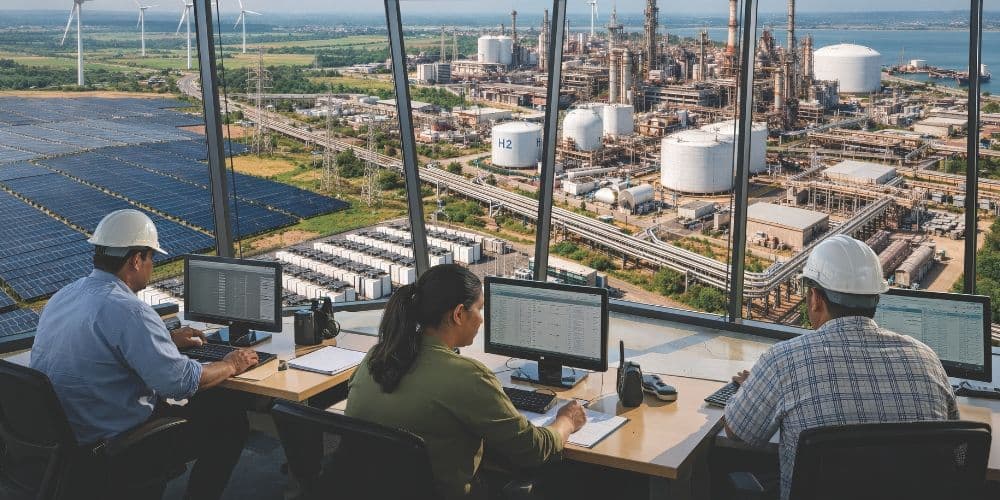
India’s industrial landscape is undergoing rapid transformation. Decarbonisation, digitisation and decentralisation are reshaping how energy and materials are produced, transported and consumed. New fuels such as hydrogen, the expansion of renewables, ageing brownfield assets and increased automation are introducing hazards that differ markedly from those of the past. At the same time, climate-driven extreme weather events and cyber-physical risks are stretching the assumptions on which traditional safety systems were built.
“In this environment, process safety is no longer a narrow technical discipline. It intersects with Environmental, Social, and Governance (ESG) performance, operational resilience and national industrial capacity,” says Abhishek Bhatnagar, Director General, ENCIS. He adds that the challenge before industry is not simply preventing the next incident, but building systems in which catastrophic failure becomes increasingly unlikely. That shift requires leadership ownership, real-time visibility and cultural alignment across organisations.
Compliance to Capability
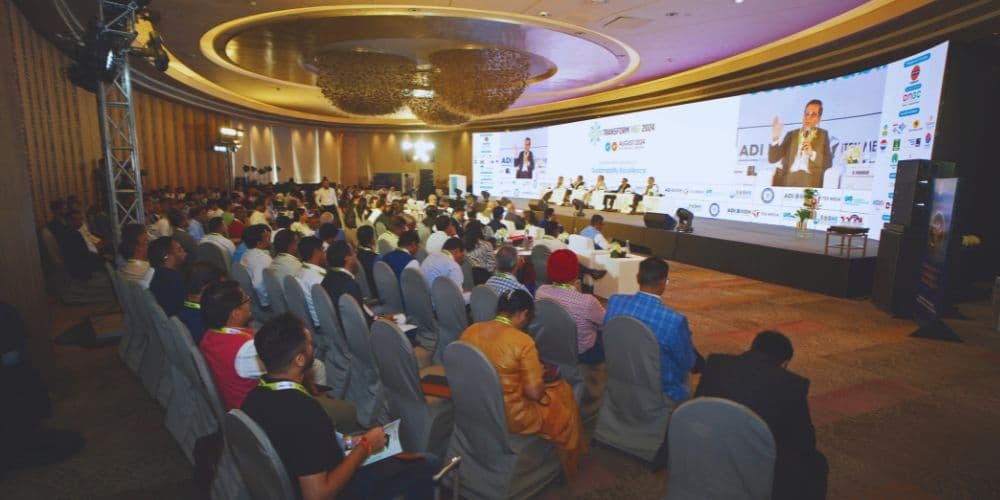
INPSC was established in 2017 with the aim of moving safety discussions out of silos and into the mainstream of industrial decision-making. Over six editions, it has evolved into India’s flagship cross-sectoral platform on process safety, bringing together regulators, asset owners, engineers, safety professionals and technology providers under one forum.
The 2026 edition sharpens that mandate. The theme frames safety as a value driver rather than a cost centre. It places intelligence, integrity and impact at the core of operational thinking. Intelligence refers to the use of data, analytics and AI to anticipate risk. Integrity speaks to leadership accountability and the health of barriers and assets. Impact extends the lens to public trust, environmental protection and long-term industrial competitiveness. The emphasis is deliberate. Global benchmarks and studies point to a persistent gap between the availability of safety technologies and their effective integration into operations. Many organisations continue to struggle with fragmented data systems, weak safety culture and shortages of skilled human capital. INPSC 2026 positions itself as a forum to confront these gaps directly.
What the 2026 Agenda Reflects
The structure of the conference reflects the evolving nature of process safety itself. Leadership discussions are designed to situate safety within broader questions of national resilience, sustainability and organisational culture. Technical sessions focus on how intelligence is embedded into systems, from real-time risk visibility and barrier health monitoring to Artificial Intelligence (AI)-augmented decision-making and predictive safety tools.
There is also a strong emphasis on learning from failure. Translating incidents into institutional wisdom remains a persistent challenge across industries. INPSC 2026 treats this not as a retrospective exercise but as a design principle, asking how systems, processes and behaviours can be reconfigured to reduce the probability of recurrence. Crucially, the agenda acknowledges that technology alone is insufficient. High-trust cultures, empowered frontline workers and clear ownership at senior levels are repeatedly highlighted as determinants of safety outcomes. This blend of technical depth and organisational focus is what distinguishes the forum from narrower, compliance-driven events.
A Platform Shaped by Cross-sector Reality
One of INPSC’s defining features is its cross-sector reach. While rooted in energy and process industries, its scope extends across oil and gas, chemicals, power, manufacturing and allied sectors. This breadth matters because many of today’s risks cut across traditional boundaries. Lessons from one sector increasingly inform safety practices in another, particularly as technologies converge and supply chains interlink.
The conference’s legacy metrics reflect this reach, with participation from hundreds of organisations, senior speakers and industry partners across previous editions. The significance lies less in numbers than in the perspectives assembled. Regulators, operators, technology developers and advisors engage within the same framework, creating a shared language around risk, responsibility and resilience.
Where Practical Clarity Emerges
Beyond formal sessions, INPSC places strong emphasis on practical engagement. The exhibition environment is positioned as a working space where solutions are examined in operational context rather than abstract terms. Decision-makers interact directly with system designers and technology developers, testing assumptions around scalability, integration and reliability. For a sector where safety improvements often hinge on the alignment of equipment, data systems and human behaviour, such engagement is not peripheral. It is often where early-stage ideas are stress-tested and where partnerships begin to form around real operational needs.
A Calibration Point for Industrial Safety
INPSC 2026 takes place at a time when the consequences of safety failures are amplified. Public scrutiny is sharper, regulatory expectations are evolving and the economic cost of disruption has risen. In this context, process safety becomes inseparable from business continuity and national industrial credibility. The conference does not present safety as the absence of incidents, but as the presence of foresight. That framing reflects a maturing understanding within industry: that resilience is built over time through leadership commitment, system intelligence and cultural integrity.
For India’s energy and process sectors, INPSC 2026 functions as more than an annual gathering. It serves as a calibration point, where assumptions are questioned, capabilities are benchmarked and the next phase of safety thinking begins to take shape. The conversations at the conference will influence how organisations design systems, train people and define accountability in an industrial era marked by complexity and consequence.