The discourse around Health, Safety and Environment (HSE) is undergoing a decisive shift. No longer confined to regulatory compliance or operational necessity, HSE is emerging as a central pillar of strategic decision-making. Transform HSE 2026 arrives at a moment when industries are navigating overlapping disruptions: climate-linked risks, geopolitical shifts, supply chain fragility and the rapid infusion of digital technologies.
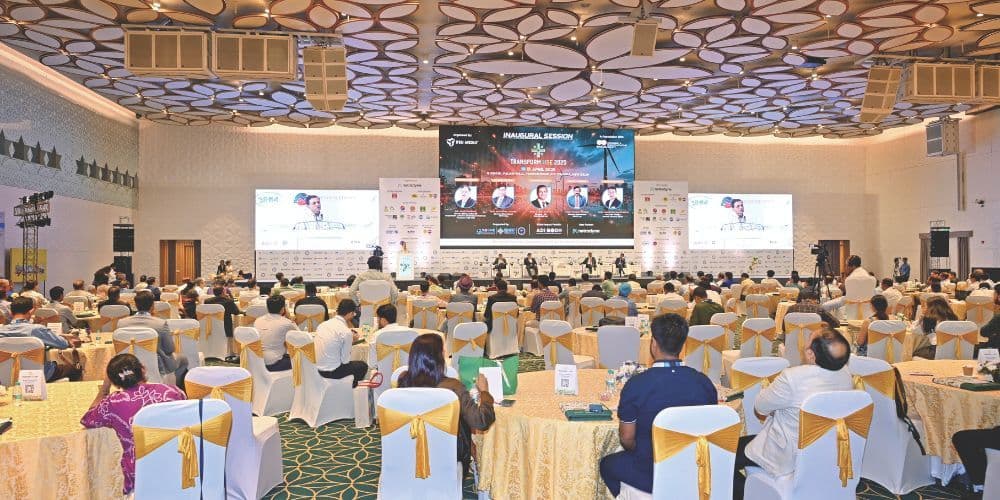
To be held on August 6 and 7, 2026 in Hyaat Regency, New Delhi, the third edition of Transform HSE signals a transition from incremental improvement to systemic reimagination. Organised by ITEN Media Pvt Ltd and in association with The Energy & Climate Initiatives Society (ENCIS), the conference signals a transition from incremental improvement to systemic reimagination. The event frames resilience not merely as the capacity to withstand shocks, but as an organisational capability to anticipate, adapt and evolve. This repositioning elevates HSE leaders from functional custodians to architects of sustainable growth and transformation.
The Resilience Imperative
At the core of the 2026 edition lies a clear provocation: traditional HSE frameworks, designed for stability, are increasingly inadequate in a world defined by volatility. The conference theme underscores the need for adaptive thinking, predictive intelligence and collaborative ecosystems that transcend organisational silos. Resilience, in this context, is reframed as a forward-looking capability. It demands that organisations redesign processes, re-evaluate risk architectures and embed sustainability into their operational DNA. The emphasis shifts from reactive mitigation to proactive and regenerative approaches that safeguard both people and ecosystems while unlocking new avenues for value creation.
“A Laboratory for Scalable Solutions”
The country’s industrial and economic trajectory lends particular relevance to this dialogue. “As India country advances towards its long-term development ambitions and strengthens its position in clean energy and sustainability, it presents a complex yet fertile landscape for HSE innovation,” remarks Abhishek Bhatnagar, Founder & CEO, ITEN Media Pvt Ltd and Director General, ENCIS. He adds that diverse sectors, ranging from energy and infrastructure to manufacturing and transport, offer a microcosm of global challenges. “This diversity enables the conference to function not merely as a forum for discussion, but as a laboratory for scalable solutions that can be contextualised across geographies.”
Technology, Risk and the New HSE Architecture
A defining feature of Transform HSE 2026 is its focus on the convergence of digital transformation and safety systems. The integration of artificial intelligence, predictive analytics and digital HSE frameworks signals a shift towards data-driven decision-making and anticipatory risk management. Simultaneously, the evolving contours of risk such as black swan events to complex crisis scenarios necessitate a reconfiguration of traditional safety paradigms. The conference foregrounds the importance of intelligent systems, crisis preparedness and future-ready architectures that can operate effectively in high-velocity environments.
Human-centred Leadership and Cultural Transformation
Beyond systems and technologies, the transformation of HSE is deeply human. The emphasis on workforce well-being, occupational health and safety culture reflects a broader recognition that resilience is built through people as much as processes. Leadership, therefore, assumes a critical role—not only in setting direction but in fostering cultures of accountability, adaptability and shared responsibility. The conference positions HSE leaders as catalysts who can align organisational purpose with societal expectations, ensuring that safety and sustainability are embedded at every level.
The Leadership Imperative
Resilience is a Boardroom Priority, not a Backend Function
HSE is no longer confined to compliance; it is emerging as a strategic lever that shapes business continuity, competitiveness and long-term value creation.
Prediction will Outperform Prevention
The future of safety lies in anticipating risk through data, AI and intelligence, moving organisations beyond reactive responses to foresight-led decision-making.
HSE Leaders are Becoming Transformation Architects
Their role now spans operations, sustainability and technology, designing systems that are adaptive, intelligent and aligned with evolving global risks.
Culture will Determine Resilience more than Capital
Organisations that embed safety as a shared value, driven by trust, accountability and continuous learning, will outperform those relying solely on systems and protocols.
Collaboration is the New Competitive Advantage
Resilience cannot be built in isolation. Cross-sector partnerships, knowledge exchange and collective problem-solving will define the next era of HSE leadership.
A Platform for Convergence and Influence
With participation from over 60 thought leaders, more than 400 delegates, 150-plus organisations and representatives from more than 10 countries, Transform HSE 2026 is designed as a high-impact convergence of ideas, expertise and influence. It brings together policymakers, industry leaders, technologists and researchers to co-create solutions, exchange global best practices and shape the future trajectory of HSE. The platform extends beyond dialogue, aiming to influence policy thinking, accelerate innovation adoption and drive measurable impact across sectors.
Transform HSE 2026 ultimately reframes the narrative of safety and sustainability. It positions HSE not as a constraint, but as an enabler of resilient, future-ready industries. In doing so, it articulates a broader vision: one where resilience becomes both method and outcome, where organisations do not merely endure disruption but harness it to innovate, and where the pursuit of safety aligns seamlessly with the imperatives of growth, responsibility and long-term value creation.