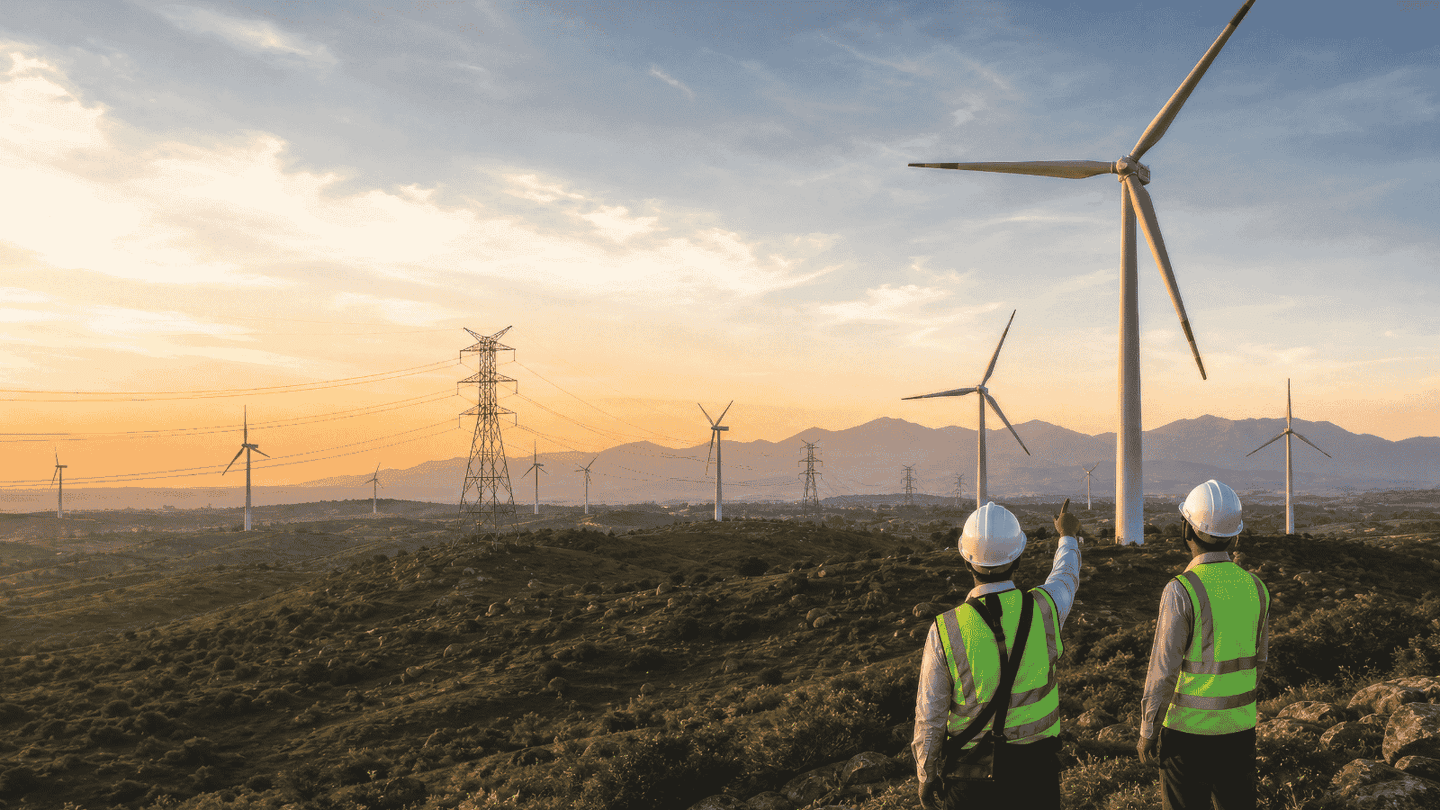
The country’s wind sector has recorded its best year so far, as India added 6.05 GW of new wind capacity in FY 2025–26. The highest-ever single-year addition has taken the total installed capacity to surpass 56 GW (56.09 GW as of March 31 this year), as per the Ministry of New and Renewable Energy (MNRE). This addition was almost 46 percent higher than FY 2024–25 and crossed the previous record of 5.5 GW set in FY 2016–17.
India now stands fourth in installed wind capacity, only behind China, the US and Germany. Within the country, Gujarat, Karnataka and Maharashtra were the major contributors to FY26 growth. This is driven by an expansion of the wind-solar hybrid projects pipeline, and has led wind to contribute around 20 percent of the country’s total renewable energy capacity behind solar’s almost 55 percent share.
Resource Potential vs Realisation
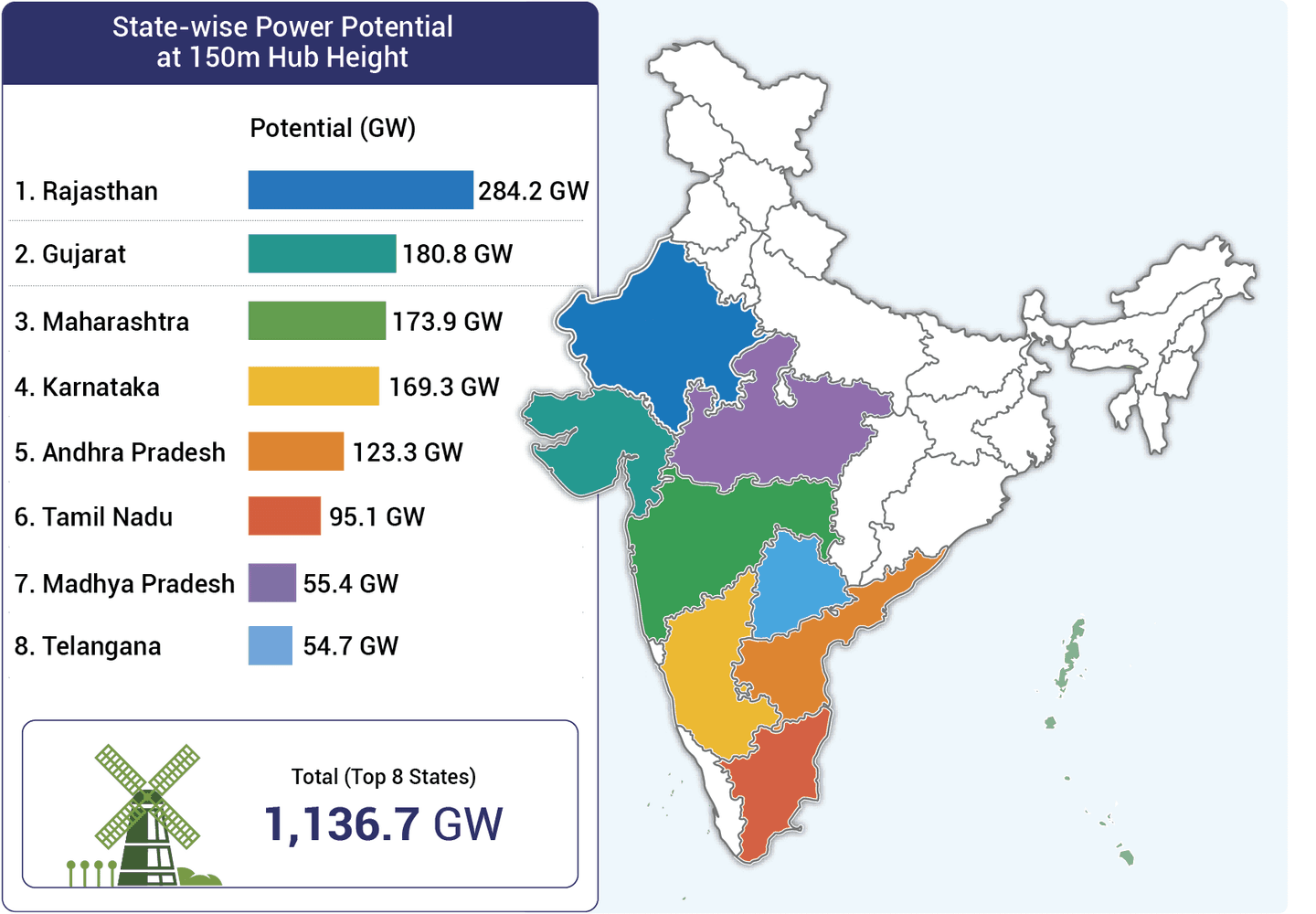
India’s exploitable wind resource is far larger than what has been tapped. The country’s gross wind power potential is estimated at 695.5 GW at 120-metre hub height and 1,163.9 GW at 150 metres. This is based on assessments from over 900 wind-monitoring stations run by the National Institute of Wind Energy (NIWE).
A breakdown of state-level potential at 150m will be Rajasthan (284.2 GW), Gujarat (180.8 GW), Maharashtra (173.9 GW), Karnataka (169.3 GW), Andhra Pradesh (123.3 GW), Tamil Nadu (95.1 GW), Madhya Pradesh (55.4 GW) and Telangana (54.7 GW).
Against this, the installed capacity of 56 GW represents under 5 percent of the higher-end potential, a gap industry experts frequently flag. India has reportedly installed wind capacity using less than 5 percent of its estimated 1,164 GW potential at 150m hub height, even after the record FY26 addition.
India now stands fourth in installed wind capacity, only behind China, the US and Germany. Within the country, Gujarat, Karnataka and Maharashtra were the major contributors to FY26 growth
Targets and Policy Architecture
The government's overarching goal remains 500 GW of non-fossil fuel capacity by 2030, a milestone India says it is tracking towards after reaching its Nationally Determined Contributions (NDC) target of 50 percent non-fossil capacity well ahead of schedule. The wind-specific target within this is 100 GW by 2030 and 156 GW by 2036, with an additional 28 GW currently under implementation.
Key policy levers supporting this trajectory include: a graded waiver of Inter-State Transmission System (ISTS) charges for wind and solar projects commissioned by June 30 2028. A dedicated Wind Renewable Consumption Obligation (Wind RCO), separate from the solar RPO to create assured demand for wind power among large consumers. Tariff-based competitive bidding guidelines for grid-connected wind procurement. A 500 MW pilot under a Contracts-for-Difference (CfD) mechanism to reduce price-volatility risk for developers. ₹500 crore disbursed in FY 2025–26 under the Generation Based Incentive (GBI) scheme. A Task Force constituted in January 2026, involving Grid India, the Central Transmission Utility, NIWE, state departments and industry bodies to resolve land, right-of-way, grid-allocation and execution bottlenecks. Streamlined Ministry of Defence clearance processes, after roughly 66 GW of windy-state sites were classified into clearance zones to de-risk siting.
Offshore Wind: Renewed Push
India's earlier attempt at offshore wind stumbled. The Solar Energy Corporation of India (SECI) had reportedly cancelled two offshore tenders totalling 4.5 GW in 2025 due to weak developer interest. A detailed post-mortem by Ember, the energy think tank, found that even with viability gap funding, the levelised cost of the Gujarat pilot project was around ₹5/kWh above the fixed tariff of ₹4.5/kWh, while the tendered site's capacity utilisation factor (around 36 percent) lagged international benchmarks of 40–50 percent. Ember also points to the absence of a domestic offshore supply chain — Indian manufacturers have so far built turbines mainly in the 2–3 MW onshore range — as a structural deterrent.
The government has since relaunched the push with a ₹6,853 crore Viability Gap Funding allocation for the first 1,000 MW phase (500 MW each in Gujarat and Tamil Nadu). LiDAR-based resource assessment off the Tamil Nadu coast has indicated capacity utilisation factors of 45–50 percent, notably higher than Gujarat, according to reporting on MNRE Secretary Santosh Kumar Sarangi's remarks at Windergy India 2025. India has also formalised an India–UK Offshore Wind Taskforce (launched February 2026) and renewed cooperation agreements with Denmark and Belgium on offshore technology transfer and grid integration. Even so, India has zero commissioned offshore capacity to date, a gap that contrasts with its strong onshore standing.
Domestic Manufacturing and Exports
Manufacturing capacity has scaled alongside policy support. India's annual wind turbine manufacturing capacity rose from about 10 GW in 2014 to roughly 24 GW by March 2026, with 70–80 percent indigenisation achieved across key components and the establishment of domestic supply chains for blades, towers, and gearboxes. Besides, Wind turbine manufacturing capacity is 20.49 GW and blade manufacturing capacity is 15.57 GW as of March 2026; domestic demand is only about 7–8 GW a year, leaving significant spare capacity for exports.
To formalise this, MNRE launched the Wind Turbine Supply Chain Management (WT-MARUT) portal to track component sourcing and support the Approved List of Models and Manufacturers (ALMM) compliance and export readiness. Wind equipment exports crossed ₹12,000 crore in FY 2025–26, and the government has set an ambition of capturing 10 percent of global wind turbine exports by 2030 and 20 percent by 2040.
The government has relaunched the push with a ₹6,853 crore Viability Gap Funding allocation for the first 1,000 MW phase (500 MW each in Gujarat and Tamil Nadu)
Structural Challenges
Despite the record FY26 addition, independent analysts caution against reading the growth as a structural fix. A strong year after a prolonged slowdown is welcome but does not substitute for a genuinely bankable project pipeline; delays in finalising power purchase agreements with state distribution companies continue to create uncertainty, with JMK Research estimating around 44 GW of awarded renewable capacity (across technologies) stranded without signed PSAs as of September 2025.

Other Recurring Constraints
The following are constraints that are recurring in nature:
Land and Transmission Bottlenecks: A Centre for Science and Environment (CSE) report on wind repowering describes an “electrical bottleneck” in which repowering replaces smaller turbines with much larger ones, but the connecting transmission infrastructure remains sized for decades-old, lower-capacity machines. It also notes that financiers and regulators often treat repowering like greenfield construction, even though the underlying wind resource and site access are already proven, a mismatch that discourages investment.
Stalled Repowering: Turbines installed before 2000 typically run below 500 kW with hub heights under 50m and plant load factors below 20 percent, while raising hub height by 140 percent (to 120m).
Despite a 2016 repowering policy and a 2023 National Repowering and Life Extension Policy, uptake has lagged; an estimated 25 GW of outdated sub-1.5 MW turbines from the 1990s are still awaiting replacement.
Turbines installed before 2000 typically run below 500 kW with hub heights under 50m and plant load factors below 20 percent, while raising hub height by 140 percent (to 120m)
Land and Water Constraints at Scale: A broader CEEW land-water-climate nexus study maps India's renewable potential against real-world land access, population density and climate-risk constraints, concluding that land conflicts and water availability could cap practical RE capacity well below the theoretical resource of over 24,000 GW.
The 100 GW-by-2030 target is ambitious but not implausible if the FY26 run rate (6 GW/year) is sustained and scaled — the same document signals priorities of expanding into emerging wind states (Madhya Pradesh, Telangana, Odisha), integrating wind into round-the-clock and storage-linked renewable products, and deploying AI-based forecasting to manage grid integration.
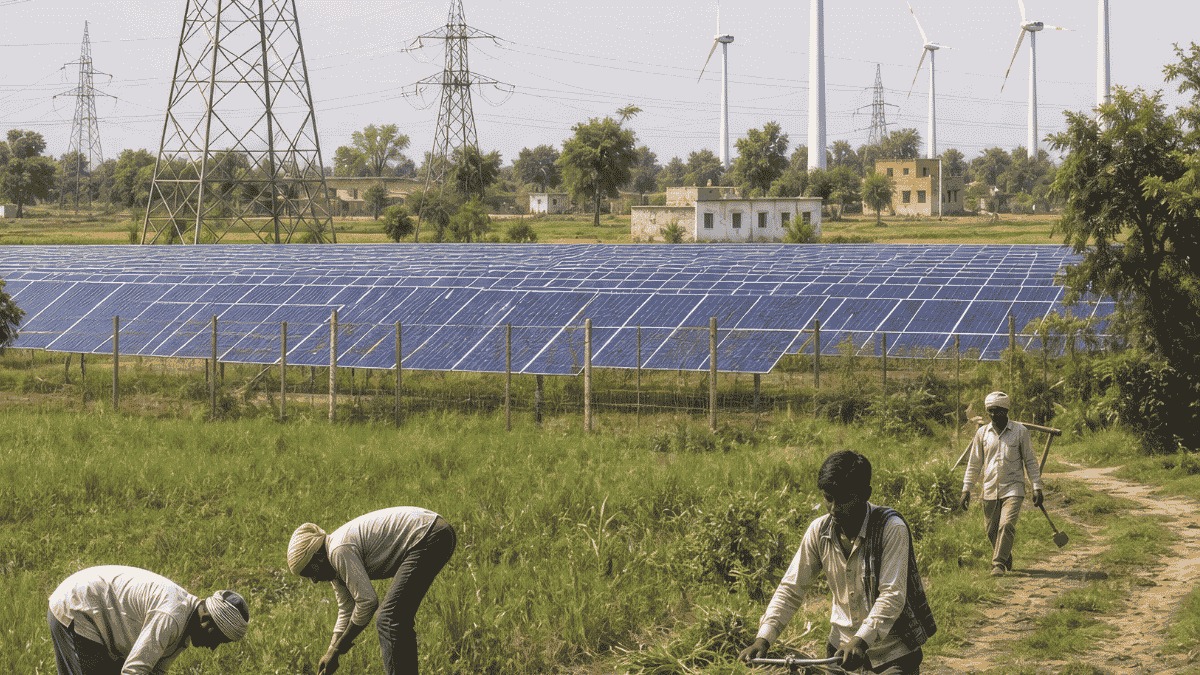
India’s wind sector appears to be entering a genuine acceleration phase after a decade of relatively muted growth: installed capacity has grown 2.66-fold from 21.04 GW in March 2014 to 56.09 GW in March 2026, and a further 28 GW is already under implementation.
The principal swing factors are whether transmission build-out keeps pace with both new capacity and repowering of legacy sites. If offshore wind tenders (Gujarat, Tamil Nadu) attract credible developer interest this time, given the economics gap as per Ember. Whether discom-side delays in signing power purchase agreements ease, given the backlog mentioned by JMK Research. If land-acquisition and right-of-way reforms (the subject of the January 2026 Task Force) translate into faster project execution on the ground.