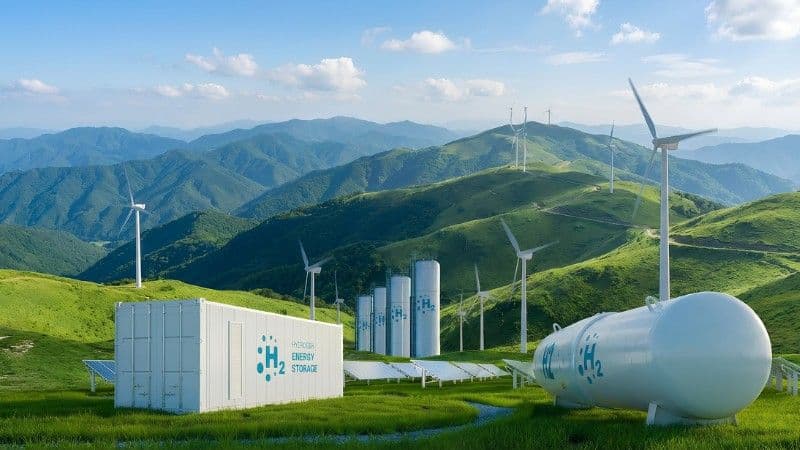
Global decarbonisation requires rapid adoption of clean technologies such as green hydrogen, biofuels, Carbon Capture, Utilisation and Storage (CCUS), and energy efficiency. Their deployment not only supports climate goals outlined in the Paris Agreement but also enhances energy security and creates new economic opportunities.
Indian Oil Corporation Ltd (IOCL), India’s largest downstream oil company, has committed to achieve Net Zero by 2046, well before India’s national Net Zero 2070 target. Its Research and Development (R&D) leads innovations in low-carbon pathways that reduce emissions, valorise waste, and support farmers, industries, and municipalities.
The company’s R&D Centre is actively working on a diverse portfolio of low-carbon solutions, including green hydrogen production, fuel cells, biofuels, waste-to-energy, CCUS, solar energy, and Sustainable Aviation Fuels (SAF). Also, it is working on innovating refining processes, development of advanced catalysts, and renewable energy integration to reduce the carbon intensity of its operations.
Challenges
India faces multiple challenges in its clean energy transition: dependence on imported oil, air pollution from stubble burning, rising municipal waste and sewage-related methane emissions, and technological gaps in hydrogen storage, blending, and fuelling infrastructure. Addressing these issues requires indigenous R&D, scalable demonstration projects, and integration of clean fuels into the broader energy ecosystem.
Solutions
Green Hydrogen
For over two decades, IOCL’s R&D has been at the forefront of India’s hydrogen journey, pioneering innovations in hydrogen production, storage, and mobility. The company commissioned India’s first Hydrogen–Compressed Natural Gas (HCNG) station at Faridabad in 2005. Since the use of neat hydrogen at that time was limited due to the status of technology, the blending of hydrogen in CNG was considered an intermediate step towards a gradual transition to the hydrogen economy.
Initial studies, in collaboration with leading Indian automotive OEMs, concluded that 18 percent hydrogen in CNG (v/v) gives the best performance in terms of power, fuel economy, and mass emissions. The vehicles were further optimised on 18 percent HCNG before they were put on long-term durability trials on-road for 50,000 km. In 2015, IOCL’s R&D commissioned India’s first solar-powered Green Hydrogen facility at Faridabad. It also established state-of-the-art research facilities to pursue research in electrolysers such as Proton Exchange Membrane (PEM), Anion Exchange Membrane (AEM), Solid Oxide Electrolyser Cell (SOEC), fuel cells, including Proton Exchange Membrane Fuel Cell (PEMFC), Solid Oxide Electrolyser (SOFC), and advanced hydrogen storage materials.
Further, IOCL R&D, in collaboration with Indian Institute of Technology (IIT) Kharagpur, developed an indigenous Type 3 composite cylinder for hydrogen storage at 350 bar. Hydrogen refuelling stations were set up at Faridabad and Vadodara, supporting India’s first fleet-scale hydrogen fuel cell bus trials, covering over 3 lakh km in the National Capital Region (NCR).
In partnership with the Indian Institute of Science (IISc), Bangalore, IOCL developed an efficient biomass gasification-based hydrogen generation technology for the production of fuel cell grade hydrogen from biomass. An innovative oxy-steam biomass gasification process coupled with Vacuum Pressure Swing Adsorption (VPSA) has been adopted for the generation of hydrogen-rich syngas and separation of hydrogen with purity >99.97 percent.
IOCL has issued an order for a green hydrogen generation unit of 10 KTPA capacity on a Build-Own-Operate (BOO) basis to L&T Energy GreenTech at its Panipat Refinery Petrochemical Complex. The plant will supply 10,000 tonnes of green hydrogen annually to IOCL for 25 years at ₹397 per kg and is set to be India’s first such largest facility.
Bio Ethanol
Under the Biofuel Policy 2018, ethanol blending is seen as both an air quality solution and a way to increase farmer incomes. IOCL has invested ₹909 crore to set up second-generation (2G) bio-refinery at Panipat, which produces 100 KL of ethanol per day from rice straw. The bio refinery is based on M/s Praj Industries’ second-generation biomass-to-ethanol technology. It enables effective breakdown of biomass to produce fuel-grade ethanol as the main product and a variety of by-products in a sustainable way. This initiative reduces stubble burning, cuts vehicular emissions, and supports rural economies.
The Bioenergy Research Centre at IOCL R&D has developed an indigenous technology for the conversion of lignocellulosic biomass to 2G ethanol. The centre has optimised the pretreatment process at a 250 kg/day pilot plant based on acid technology to minimise the cost of chemicals with respect to similar acid-based technologies.
The company’s R&D Centre has developed a cost-effective and high- performance enzyme technology tailored for a given biomass pretreatment. It has integrated its pretreatment, followed by the patented Simultaneous Saccharification and Co-Fermentation (SSCF) process using an indigenously developed low-cost and efficient enzyme cocktail with a low HRT (reaction time) of 60 hours versus the conventional 120 hours for separate hydrolysis and fermentation. More than 30 patents have been filed on 2G ethanol technology in India and abroad by IOC R&D.
Also, an integrated 2G ethanol demonstration plant of 10 TPD scale (dry biomass basis) with onsite enzyme production is being set up at Panipat for the conversion of lignocellulosic biomass to 2G ethanol to establish the process at a higher scale based upon indigenously developed pretreatment, SSCF, and 2G enzyme, by Q4 2023.
To improve the financial viability of the 2G ethanol plants, IOC R&D has taken up research projects to convert lignin residue generated from 2G ethanol production to value-added chemicals and products. On successful demonstration of the 2G ethanol technology at demo scale, it is planned to set up a commercial plant based on 2G ethanol technology along with integrated enzyme production.
More than 30 patents have been filed on 2G ethanol technology in India and abroad by IOC R&D
Compressed Biogas (CBG)
Waste or biomass sources such as agricultural residue, cattle dung, sugarcane press mud, municipal solid waste and sewage treatment plant waste, chicken litter, among others produce biogas through the process of anaerobic decomposition.
The biogas is purified and compressed to produce Compressed Biogas (CBG). Biomethanation provides a complete solid waste management and wastewater treatment solution. It not only treats the waste but also produces useful end products instead of uncontrolled Greenhouse Gas (GHG) emissions from crop burning, landfills, and unorganised disposal sites.
In this direction, IOC R&D has developed a promising biomethanation technology for producing high biogas yields with high methane content. The technology has two parts, high- performing bioinoculant (BioXeed) and reactor design technology (IBG- Plus and IBG-Max). The BioXeed technology can be retrofitted with any existing operating process.
BioXeed retrofits are running at various locations: A 5 TPD plant that uses organic fraction of Municipal Solid Waste (MSW) in Varanasi, M/s IOT Biogas Ltd’s 240 TPD plant based on press mud and chicken litter in Namakkal, and M/s Anaerobic Energy Pvt Ltd’s 180 TPD plant based on sewage in Haridwar.
Also, IOCL has set up a 5 TPD demo plant at Faridabad using food waste/ organic fraction of MSW, a 200 TPD plant using biomass as feedstock at Gorakhpur, and 100 TPD plant using cattle dung as feedstock at Gwalior and Jaipur.
Key Learnings and Way Forward
The advancements achieved by IOC R&D in the domains of biomethanation, hydrogen and ethanol production underscore the organisation’s dedication to developing comprehensive sustainable energy solutions. The successful implementation of new technologies across various scales and feedstocks not only demonstrates their adaptability but also sets the stage for improved efficiency and reliability. As these innovations continue to be adopted, they are poised to significantly contribute to India’s pursuit of cleaner energy sources and effective waste management, thereby advancing the nation’s broader goals of environmental stewardship and energy security.