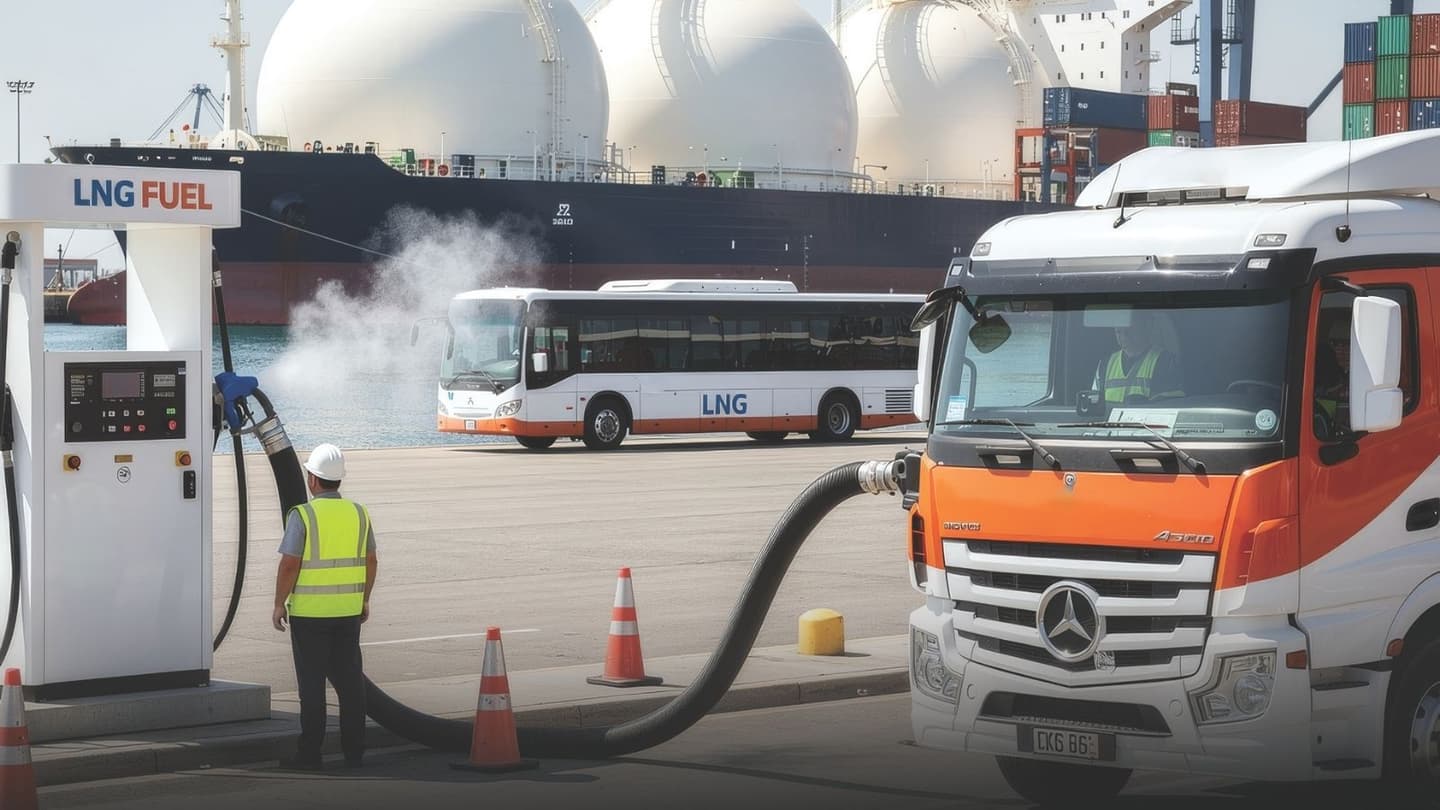
Electric mobility (E-mobility) has limited effectiveness in heavy-duty trucking and inter-state bus movement. Large economies such as China have instead shifted this segment from liquid petroleum products towards less carbon-intensive fuels such as Liquified Natural Gas (LNG) and natural gas. LNG imports are 20–30 percent cheaper than crude oil on an energy-equivalent basis, and adopting LNG serves India's twin objectives of cutting local air pollution and reducing its dependence on imported crude oil. Notably, the country imported 89 percent of its crude requirement in the FY 2024–25. LNG delivers local health benefits by cutting tailpipe particulate matter and pollutants, and macro-level benefits by lowering crude oil demand, the import bill, and exposure to global oil-price shocks.
The Economic Opportunity
India consumed 91.4 MMT of diesel in FY25, of which 62 MMT went to the transport sector. Current LNG consumption in transport is only around 50,000 TPA — the infrastructure is still nascent — but the sector could reach roughly 6 MMTPA by 2030.
Under a scenario in which 10 percent of diesel-fuelled vehicles switch to LNG, 6.2 MMT of diesel (equivalent to 5.9 MMT of LNG) would be displaced. At current Brent-linked LNG contract prices (around $8.10 per million British thermal units, delivered ex ship basis, with Brent at $60 per barrel), this would cost approximately $2,500 million, but because LNG is 22–30 percent cheaper than crude on an energy basis, it would save India's crude import bill an estimated $0.75–1 billion per year.
A further 30–40 percent of diesel use could shift to LNG within 5–7 years by converting intra-city and inter-city buses, mining machinery and long-haul trucks.
[table: Crude-Oil-vs-LNG-Import-Cost]
Note: one barrel of crude oil is taken as equivalent to 5.8 MMBTU of energy.
End-consumer Savings
A bottom-up price comparison was built for the fuel value chain in Noida, Uttar Pradesh, assuming gas sourced via pipeline from the Dahej LNG terminal, and incorporating import duty, cess, regasification, Goods and Services Tax (GST), Value Added Tax (VAT), excise duty and marketing margins for the 2024–25 financial year.
On this basis, the end-consumer price works out to approximately ₹85.80 per kilogram for LNG and ₹87.35 per litre for diesel, equivalent to around ₹1,863 per MMBTU for LNG against ₹2,391 per MMBTU for diesel. Switching 10 percent of diesel vehicles to LNG would therefore save consumers roughly ₹528 per MMBTU (about 22 percent), translating to approximately ₹14,000 crore in annual savings to Indian consumers, based on FY25 diesel consumption.
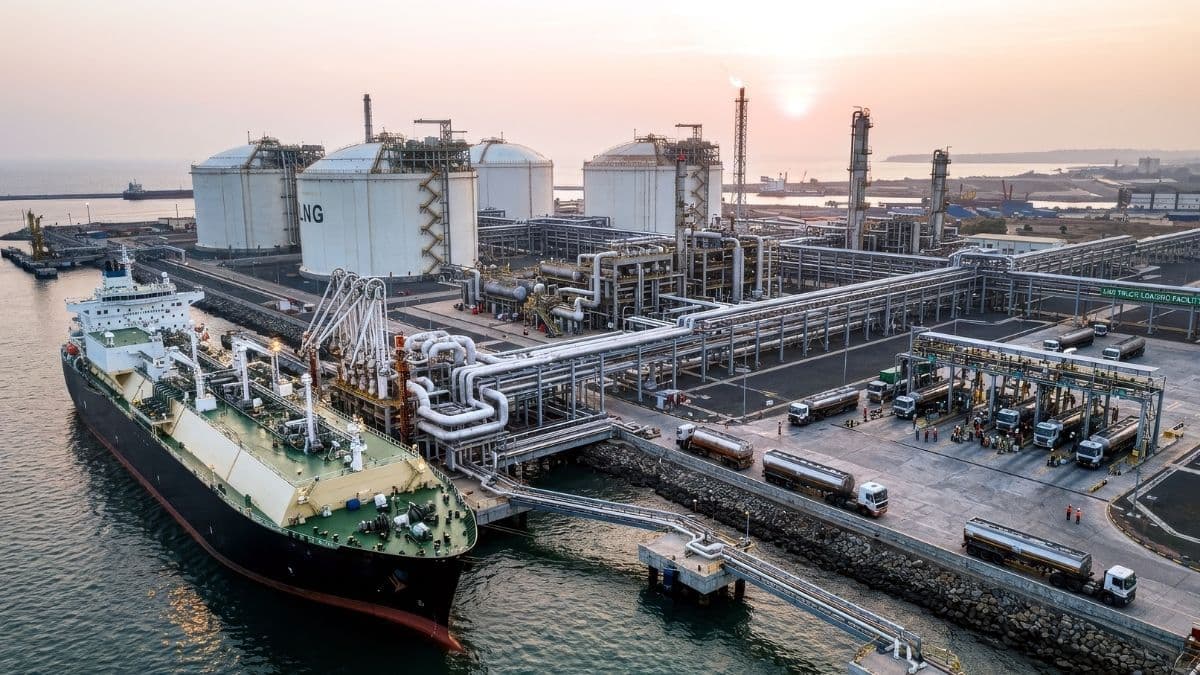
India’s LNG terminal infrastructure stands at 52.7 MMTPA capacity, but utilisation is currently below 50 percent. Directing an additional 5.9 MMT of LNG towards the transport sector would raise overall terminal utilisation by around 11 percentage points
The trade-off is government revenue: tax collection on LNG (₹220 per MMBTU) is lower than on diesel (₹830 per MMBTU), implying a fiscal shortfall of roughly ₹600 per MMBTU switched. However, this may be offset over time by a stronger balance of payments, lower public healthcare costs from reduced pollution, and progress towards India's Conference of Parties (COP) climate commitments — while fiscal policy could gradually shift from high per-unit fuel excise towards mechanisms such as carbon-linked levies or road-user charges to protect public revenue.
Infrastructure Utilisation
India's LNG terminal infrastructure stands at 52.7 MMTPA capacity, but utilisation is currently below 50 percent. Directing an additional 5.9 MMT of LNG towards the transport sector would raise overall terminal utilisation by around 11 percentage points. Many terminals have under-used truck-loading facilities, and new dispensing stations built by oil and gas marketing companies, private entities and City Gas Distribution (CGD) companies remain under-utilised, generating boil-off gas (BOG) — unwanted vapourised gas — as a result. Some southern terminals also face limited pipeline connectivity due to delays in securing Right of Use (ROU). LNG retail to the transport sector is identified as a practical route to improving utilisation.
Environmental and Health Benefits
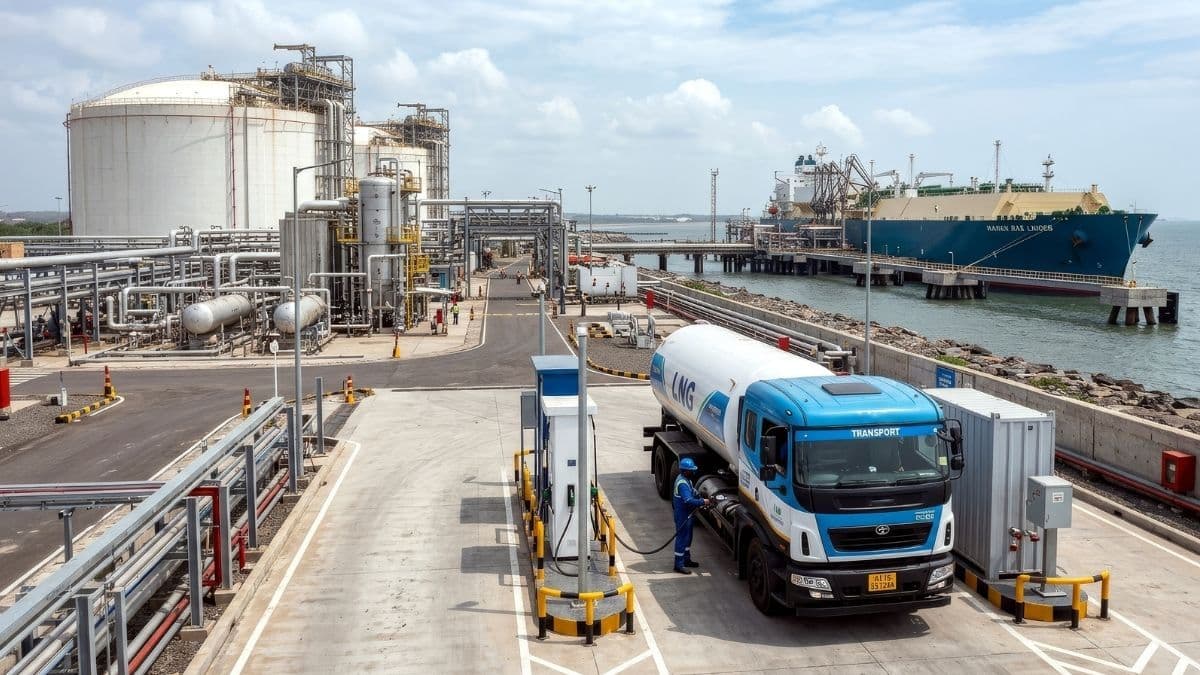
LNG combustion is 15–30 percent lower in carbon dioxide emissions than diesel on a well-to-wheel basis, owing to natural gas's higher hydrogen-to-carbon ratio. It also produces up to 80–90 percent lower nitrogen oxide emissions, more than 90 percent lower particulate matter (PM), and near-zero sulphur oxide emissions, given LNG's negligible sulphur content. These reductions are especially significant in urban areas and freight corridors, help compliance with Bharat Stage VI (BS VI) and future emission norms, and can also lower vehicle maintenance costs by reducing soot-related engine wear.
Regulatory support from the Petroleum and Natural Gas Regulatory Board (PNGRB) The Petroleum and Natural Gas Regulatory Board (PNGRB) has taken several steps to enable LNG adoption:
Standalone Small-scale LNG (SS-LNG) Stations: A 2020 regulatory clarification permits any entity to set up LNG dispensing stations anywhere in the country, independent of Geographical Area (GA) authorisation or CGD exclusivity, subject to compliance with the PNGRB Act, 2006 and applicable technical and safety standards.
Boil-off Gas Guidelines: In 2023–24, following stakeholder roundtables and a dedicated working group, PNGRB issued guidelines requiring operators to minimise boil-off gas generation, permitting its use for captive power at LNG stations, and enabling it to be sold to CGD entities at a negotiable rate within defined price bounds.
Stakeholder Engagement: PNGRB has run roundtables with the Society of Indian Automobile Manufacturers (SIAM) and GAIL (India) Ltd (GAIL) on LNG and Compressed Natural Gas (CNG) adoption in commercial vehicles, and has worked with banks, financial institutions, retrofitters, fleet owners and Original Equipment Manufacturers (OEM) to improve financing access for LNG vehicle conversions.
Digital Infrastructure Mapping: SS-LNG stations are being plotted on the National Hydrocarbon Infrastructure Monitoring System (NHIMS), a Geographic Information System (GIS)-based platform, to improve transparency and planning of LNG infrastructure nationally.
LNG offers India a pragmatic, lower-emission bridge fuel that can deliver near-term economic and public-health benefits while reducing exposure to volatile global oil prices. The case rests on three reinforcing benefits: substantial import-bill and consumer cost savings, better utilisation of already-built but under-used LNG terminal infrastructure, and meaningful cuts in carbon and pollutant emissions compared with diesel. PNGRB has already removed several regulatory bottlenecks to support the sector's growth. The way forward is to treat LNG as a disciplined, conditional bridge fuel, capturing its immediate economic and health advantages now, while the fiscal savings and reduced import dependence it generates are reinvested towards India's longer-term net-zero and energy-security goals.
This case study is based on a Petroleum and Natural Gas Regulatory Board (PNGRB)-supported study authored by Sunit Verma and Balaji Sehgal. The views expressed in it are meant to inform consumers and stakeholders for efficient decision making. They do not represent the considered views of the Board and are only meant to promote public debate.