India’s renewable energy landscape has undergone a transformation over the last decade, thanks to utility-scale solar parks! Solar energy emerged as a mainstream source of electricity, as massive projects in Rajasthan, Gujarat and other states came up. The country has been able to position itself as the world’s fastest growing renewable energy market, as tariffs fell, policies supported and large monies poured in.
Now, a second revolution is heralding! Earlier, the focus was on setting up large-scale projects hundreds of kilometres from the consumer market to generate energy. This is no longer the only approach, as policymakers are increasingly decentralising energy generation itself, which is encouraging communities to play an active role in the clean energy transition. Rooftops are transforming into power plants, farmers are also becoming power producers and rural feeders are being connected to solar assets.
This shift is beyond renewable capacity, as it alters the citizens' power relationship fundamentally. Large power stations have been a source of electricity for consumers for decades. Under the new model, consumers generate electricity as farmers participate in power markets and villages become energy infrastructure stakeholders.
India is witnessing increased penetration of air conditioners, the proliferation of data centres, and the adoption of Electric Vehicles (EV), alongside macroeconomic growth, leading to new sources of electricity demand
Why Decentralisation Now?
The country’s power sector is undergoing structural changes, with the government’s intensive focus on distributed solar. With the rise of urbanisation and industrialisation, as well as heightened digitalisation and cooling requirements, electricity demand continues to increase. India is witnessing increased penetration of air conditioners, the proliferation of data centres, and the adoption of Electric Vehicles (EV), alongside macroeconomic growth, leading to new sources of electricity demand.
However, utilities are experiencing financial pressure, infrastructure requires major investments and large renewable energy projects face complexities in land acquisition. Several of these challenges are simultaneously addressed by distributed solar.
While cutting down pressure on distribution networks, rooftop solar systems slash bills for consumers. With agricultural solarisation, dependence on diesel and subsidies is reduced. Moreover, rural power quality improves with feeder solarisation, besides transmission losses reduces and system resilience enhances with distributed generation. Decentralisation, in effect, can help the nation to pursue energy security, climate goals, and affordability, besides rural development.
Learning from the Past
India’s past experience has shaped the government’s ongoing push for solar rooftop adoption. In preceding renewable energy programmes, the country’s goal was simply to reach the 40 GW target in rooftop solar capacity by 2022. What ensued was the expansion of utility-scale solar power, not residential rooftop deployment. This is owing to complexity in procedure, lack of awareness, uncertainty in regulation and constraint in financing.
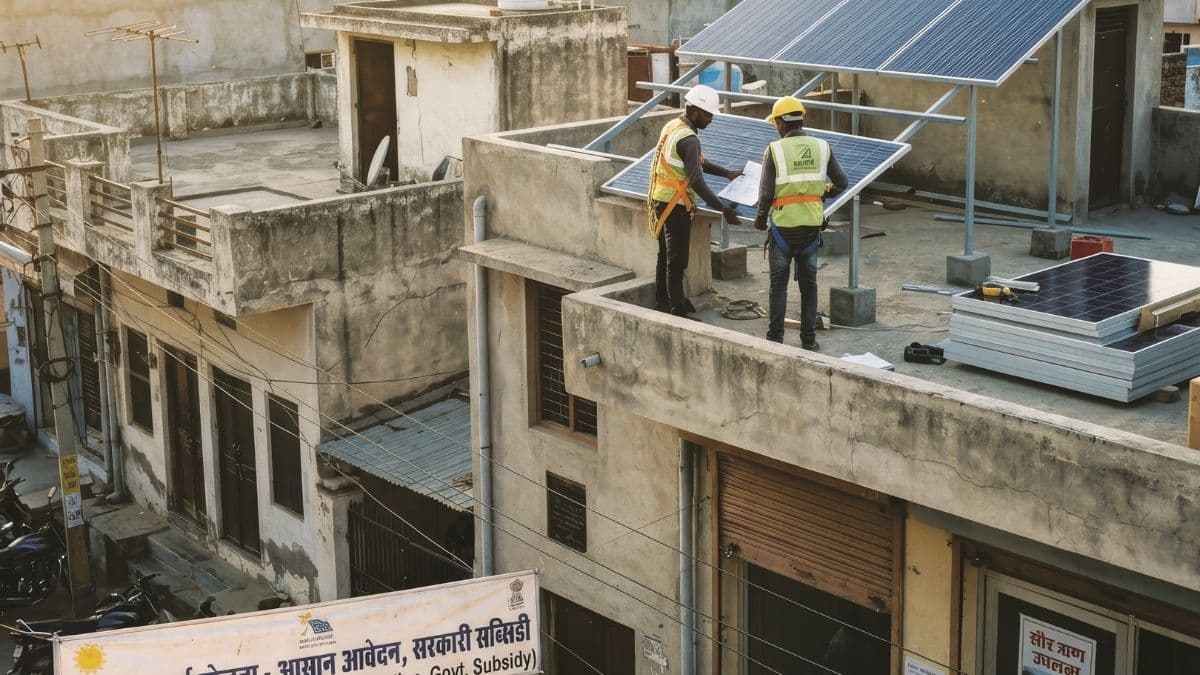
Evidently, adoption does not rely on technology alone, as consumers need to be supported financially, procedurally and institutionally. Drawing this lesson, PM Surya Ghar: Muft Bijli Yojana (PMSG: MBY) was launched in 2024, which combines subsidies, digital systems, financing support and direct consumer engagement instead of relying on targets. Therefore, PMSG: MBY redesigned the country’s rooftop solar strategy and not merely a new initiative.
Devising Citizen-facing Solar Energy Programme
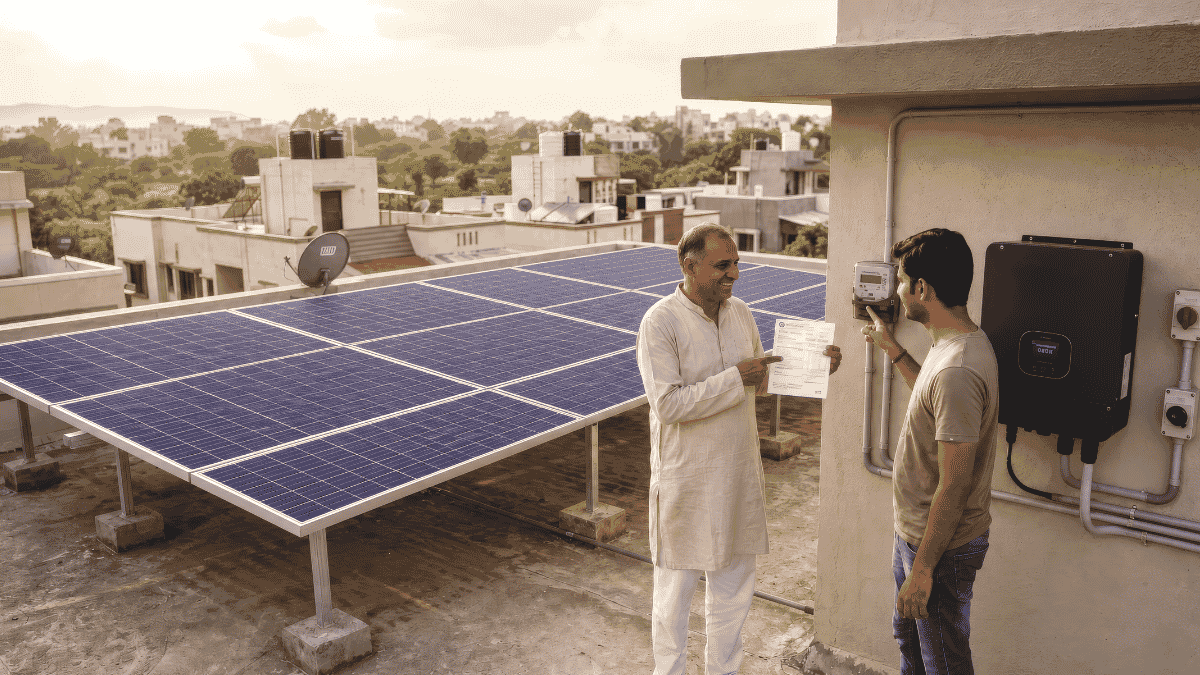
The PMSG: MBY is one of the world’s largest residential rooftop solar initiatives. With an outlay of ₹75,021 crore, the scheme aims to solarise one crore households enroute subsidies, significantly improving project economies. Thus far, substantial progress has been recorded, as 20,85,514 rooftop solar systems have been installed across the country, which has benefited 26,14,446 households by December last year. Over ₹14,771 crore has been disbursed under central financial assistance for the scheme, and more than 63 lakh applications had been received through the national portal. What initially was a niche energy solution, it became one of the largest citizen-facing renewable energy programmes within two years.
The Consumer Economics
The success of rooftop solar power generation stands on economics. As consumers receive subsidies from ₹30,000 for 1 kW system to ₹78,000 for 3 kW and above under PMSG: MBY, this goes a long way in reducing requirements for upfront investments. The benefits are visible as over 7.7 lakh households have been billed zero amount when they installed the systems under the scheme. What is more, many have been able to offset a significant share of their daytime electricity consumption with self-generation. When observed over the life of a system, the economics improve further. Solar installations can provide electricity generation for decades. This positions the systems as long-term household assets instead of coming across only as investments to achieve environmental sustainability.
Reimagining Agri-Energy Relationship
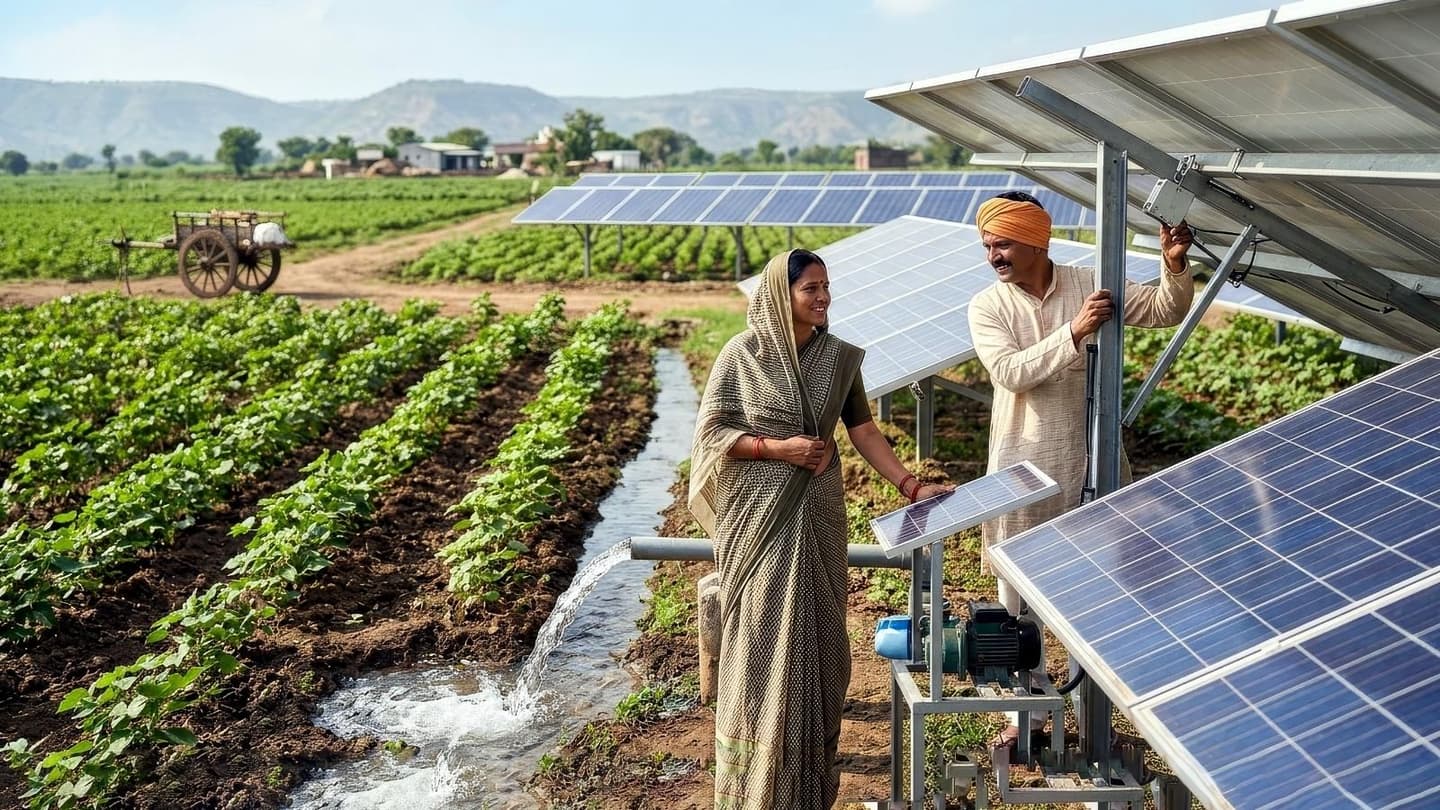
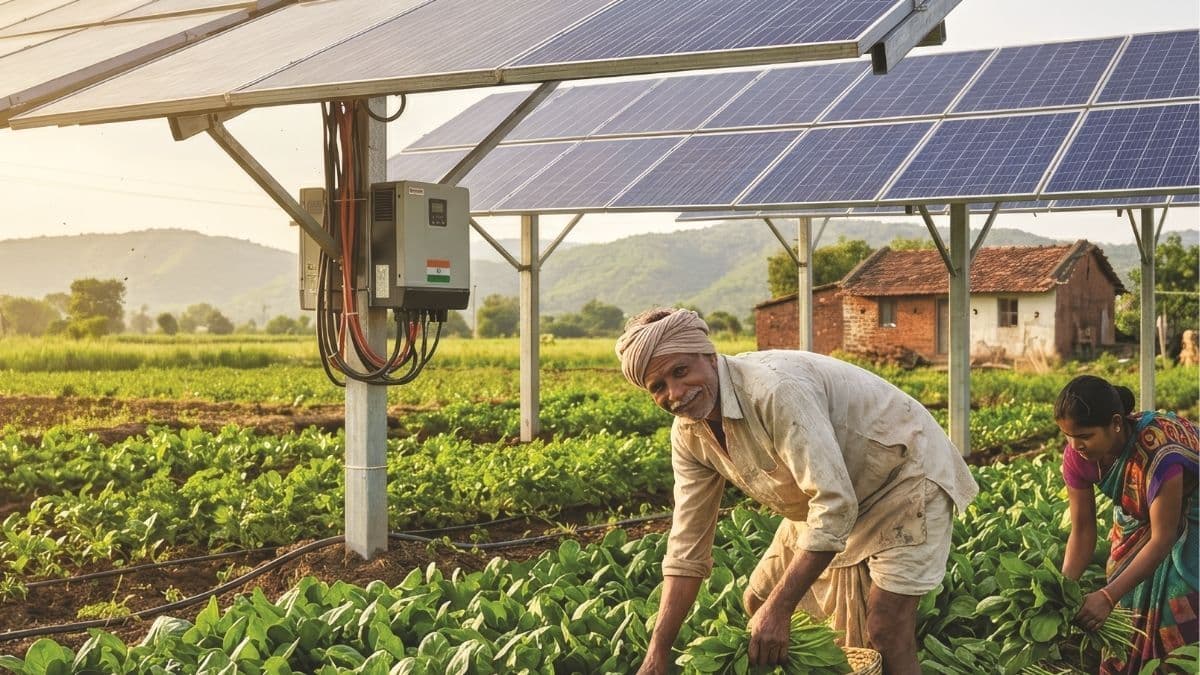
If PMSG: MBY eyes to solarise households, the Pradhan Mantri Kisan Urja Suraksha evam Utthan Mahabhiyan (PM-KUSUM) scheme seeks to create solar farmers. Launched in 2019, the scheme aims to add 34,800 MW solar capacity by 2026 with ₹34,422 crore central financial support, including service charges to the implementing agencies through decentralised renewable energy assets linked to agriculture.
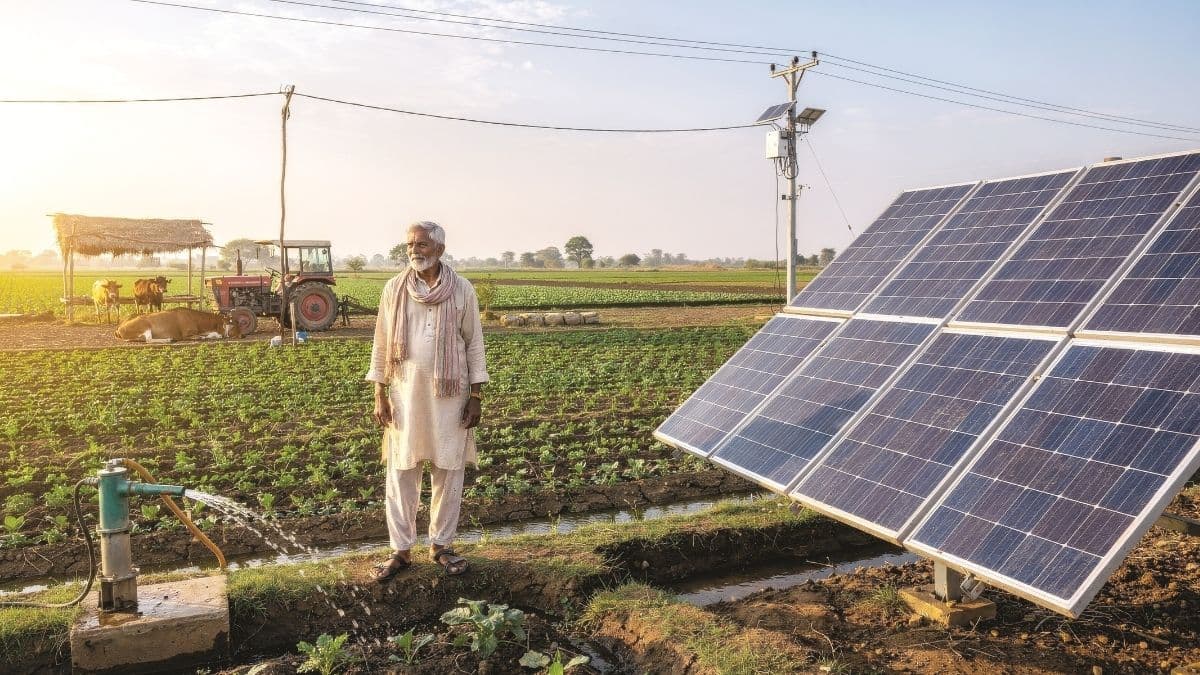
PM-KUSUM has three components: setting up 10,000 MW of decentralised ground/stilt-mounted grid-connected solar or other renewable energy-based power plants. Installing 14 lakh standalone solar agriculture pumps. Solarisation of 35 lakh grid-connected agriculture pumps, including feeder-level solarisation. The objective extends beyond renewable energy deployment, as the scheme seeks to transform the relationship between agriculture and electricity.
Creating a New Income Source for Farmers
Farmers have been traditionally consumers of subsidised power. However, PM-KUSUM brings forth a different model, wherein energy emerges as a productive asset moving beyond an agricultural input. Irrigation powered by solar slashes operating costs and enhances dependability. As distributed generation creates opportunities for supplementary income, energy production becomes an additional economic activity alongside agriculture. Ultimately, this transformation may prove to be one of the most crucial outcomes of the decentralised energy transition of India.
Feeder Solarisation: A Quiet Reform
Undoubtedly, rooftop solar draws public attention, but feeder solarisation could be the most consequential reform underway. Feeder solarisation links agricultural feeders with dedicated solar generation assets. This enables reliable daytime power supply simultaneously reducing dependence on conventional power procurement. The entire ecosystem emerges as a beneficiary, as farmers get more predictable power, utilities can reduce procurement costs and governments gain a pathway to cut subsidy burdens. Without requiring extensive transmission investments, renewable energy deployment expands. Feeder solarisation, in many respects, represents the convergence of energy policy, agricultural reform and rural development.
Feeders with dedicated solar generation assets. This enables reliable daytime power supply simultaneously reducing dependence on conventional power procurement
Hybrid Architecture is the Future
The rise of distributed solar does not indicate the fall of utility scale renewable energy, as providing a low-cost generation at scale by large solar parks remains essential. But the former offers benefits that cannot be easily replicated by the latter. Distributed systems are designed to ensure participation, gain resilience and create local value. So, the future of the country’s power system is unlikely to be either this or that; it will be a hybrid architecture wherein both systems will play complementary roles.
Agrivoltaics: Two Harvests, One Field
As renewable energy is rapidly deployed, land availability is becoming a critical issue. Offering a potential solution is agrivoltaics, which ensures that solar power generation and agri production go hand-in-hand in the same land parcel. Instead of forcing a choice between food and energy production, the system ensures maximising land’s productivity by allowing both activities. As agriculture is the main source of earning livelihood of most Indians and core to the domestic economy, agrivoltaics offers a pathway for renewable energy expansion and is aligned with the broader decentralisation agenda, even if it is still in its infancy.
The Energy Security Dividend
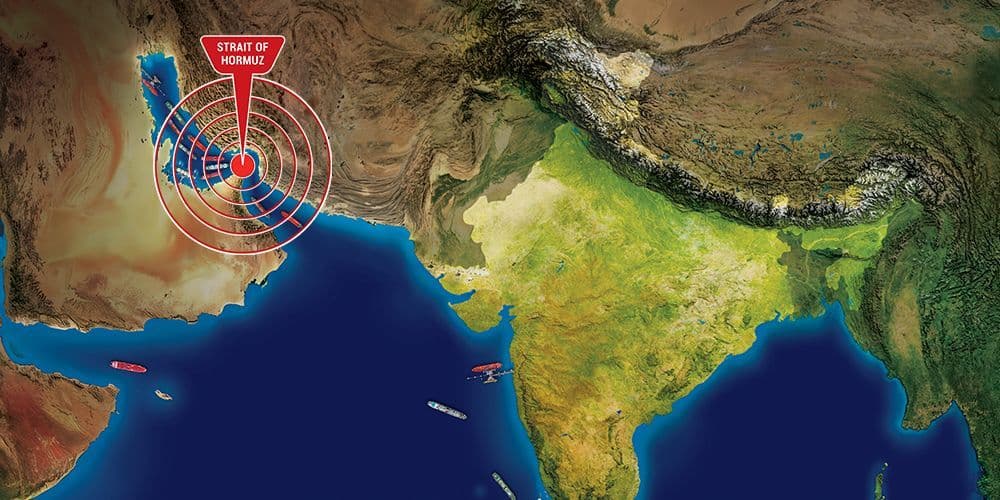
India is the world’s third largest energy consumer and is heavily dependent on imported crude oil and gas. It imports around 89 percent of its crude oil and half of its natural gas, making the country vulnerable to several geopolitical factors, such as the effective closure of the Strait of Hormuz, the narrow waterway through which India’s 35-50 percent of crude oil imports pass.
This energy requirement can be domestically generated with a distributed network comprising millions of rooftop solar systems, solar pumps and local renewable assets. When viewed at scale, its significance appears. If PMSG: MBY reaches one crore households and PM-KUSUM achieves its stated target, the country will be a major distributed energy network globally. The system would be more resilient compared with one that depends on large generation assets.
A New Role for Discom
Distribution companies (Discom) face a complex problem. While distributed solar systems can reduce technical losses, lower procurement costs and improve operational efficiency, they can impact discom’s revenues, as high-paying consumers generate more of their own power, creating a paradox. The solution in the long-run may lie in evolving discoms from power sellers into grid-service companies and distributed energy managers. The management of this transition will influence the future trajectory of decentralised energy in the country.
If PMSG: MBY reaches one crore households and PM-KUSUM achieves its stated target, the country will be a major distributed energy network globally
Prosumer Economy in the Offing
Arguably, decentralised solar’s major implication is that the consumer is also the electricity producer, also known as ‘Prosumer’. In the electricity value chain, households and farmers were in a single position: end users. This traditional model has been disrupted by distributed solar, which enables consumers to generate, consume, and sometimes even export power. This new model presents an opportunity for millions of Indians to gradually evolve into active participants from passive power users with the expansion of rooftop solar, smart meters, battery storage and digital energy platforms. Not only will this shift have implications for utilities and regulators, but also for market design, tariff structures, and future electricity trading models.
Advent of a New Energy Value Chain
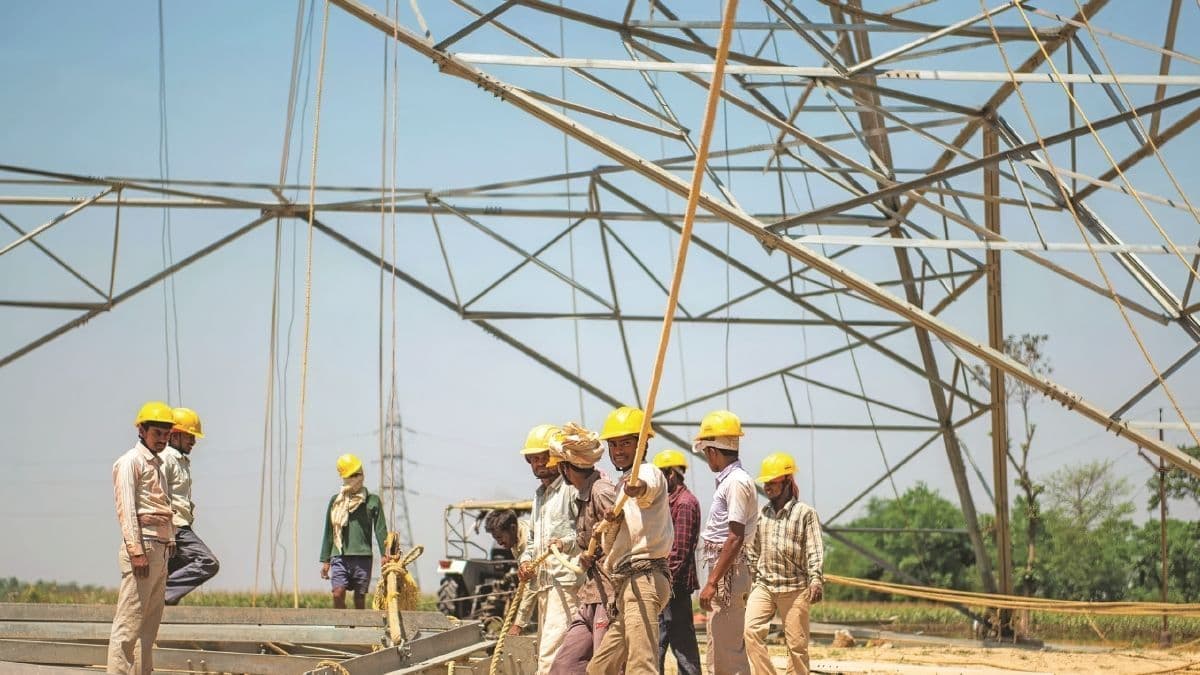
The distributed solar is rising, which is creating opportunities across the clean energy value chain. A wide ecosystem of manufacturers, installers, technology providers, financiers and service companies are required by decentralised energy systems. This is unlike utility scale projects, which are concentrated among a limited count of developers and contractors. Not only demand is expected to grow for solar modules and inverters but also for batteries, smart meters, mounting structures, monitoring platforms and energy management solutions. With the expansion of rooftop solar, agricultural solarisation and feeder-level projects, local installation and maintenance services are also likely to emerge as crucial growth segments.
A wide ecosystem of manufacturers, installers, technology providers, financiers and service companies are required by decentralised energy systems
Storage, Digitalisation and the Next Frontier
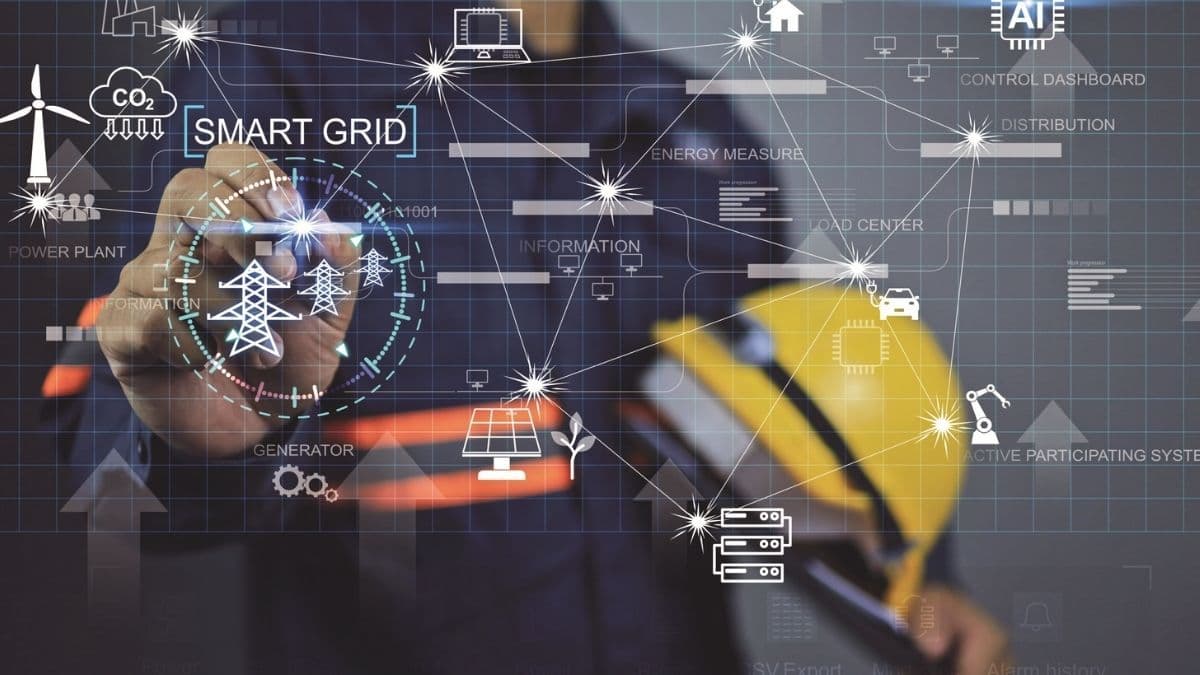
The next phase of the country’s decentralised energy transition will be shaped as much by storage and digitalisation as by solar panels. Rooftop solar generates power in the day, but demand for electricity peaks after sunset. This gap can be bridged by Battery Energy Storage Systems (BESS), which store surplus solar power for later use, improving reliability and increasing self-consumption. To support growing renewable energy capacity integration, the government plans to add over 47 GW of battery storage capacity by investing around ₹3.5 lakh crore by 2032.
Equally crucial will be digital infrastructure. Smart meters enable real-time monitoring, support net metering and provide the foundation for a more flexible electricity system. The government, under the Revamped Distribution Sector Scheme (RDSS) launched in 2021, has set a target to install 25 crore smart prepaid meters by March 2028. What could further transform the electricity landscape would be technologies: virtual power plants, peer-to-peer energy trading and community energy networks. In the future, the grid will not simply be cleaner, but will be smarter, more connected and increasingly driven by consumers engaged in generating, storing and managing their own electricity.
Imagining an Indian household in 2030, solar panels are hosted by rooftops, excess electricity stored by a battery, energy flows managed by a smart meter and an EV is charged by renewable power. Imagining a farm, costs are reduced by solar-powered irrigation, supplementary income is provided by energy generation and crops and power production together enabled by agrivoltaics systems. Imagining a village, reliability is improved by solarised feeders and resilience is strengthened by distributed generation. This is the vision of the country’s decentralised solar.