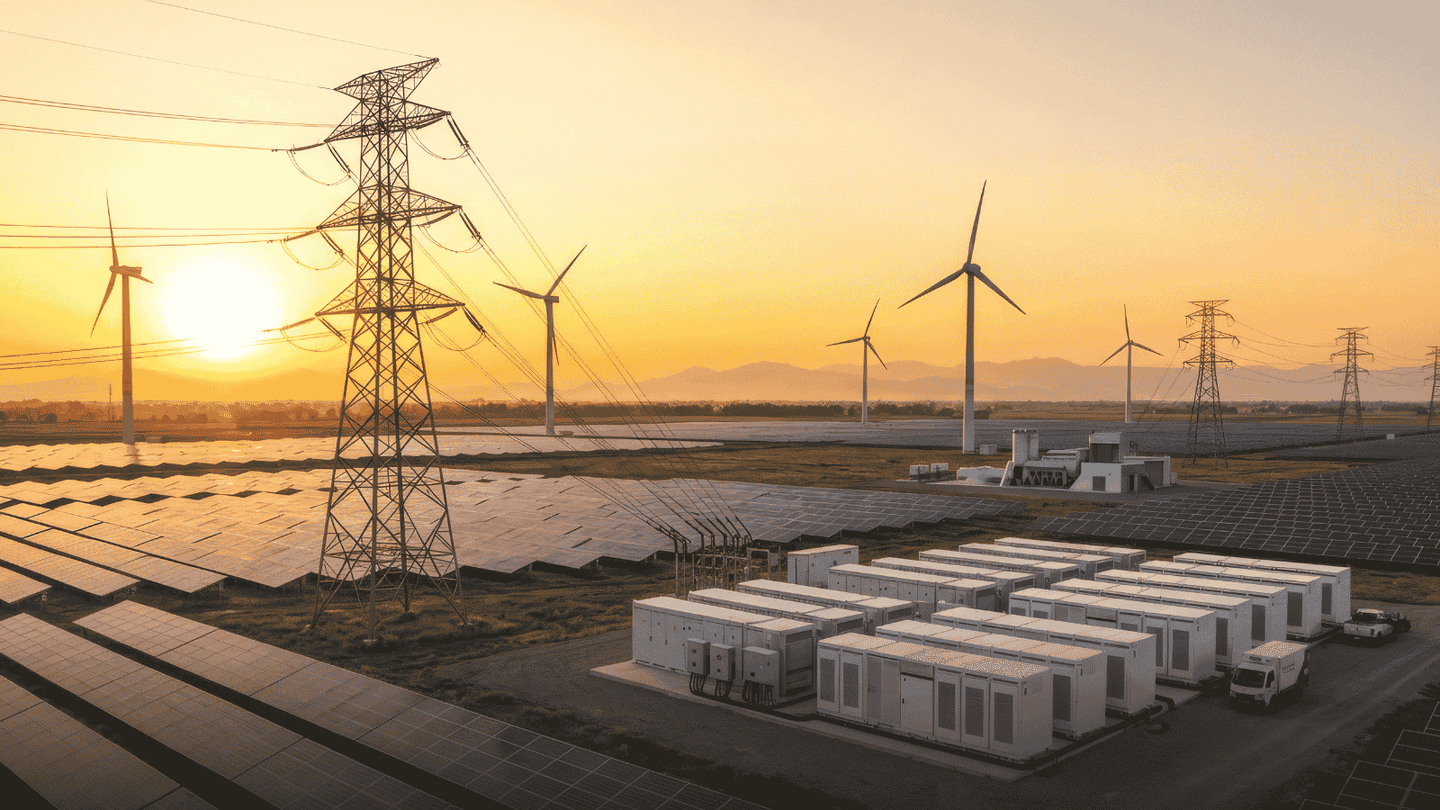
India has scripted one of the world’s fastest clean energy transitions. Its non-fossil generation capacity has reached 283.46 GW by March this year. Renewable energy comprised 274.68 GW and nuclear energy 8.78 GW, with a record 55.3 GW added in FY 2025-26, including around 45 GW of solar, almost doubling the year-over-year addition.
This achievement has formed a solid ground for the government to assert of meeting its Paris Agreement pledge of 50 percent non-fossil capacity five years ahead of the deadline set for 2030.
However, a different story is unfolding on the wires: the pace of expansion in transmission networks, battery and pumped storage installations, and grid balancing reform is yet to catch up with the speed of renewable capacity addition.
With solar and wind installations gaining steam, the bottleneck is travelling from generation to grid integration, which can increasingly generate clean energy, but cannot always be efficiently evacuated, balanced and delivered.
When Renewables Outrun the Grid
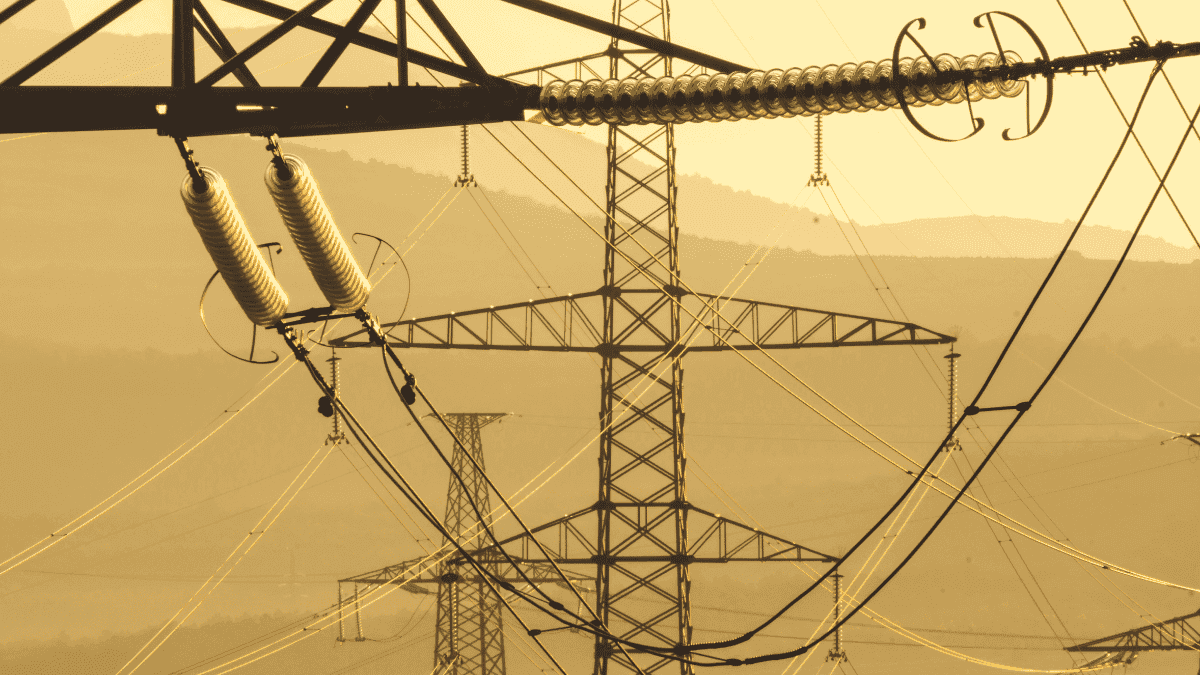
According to the Central Electricity Authority’s (CEA) report, ‘Transmission System for Integration of over 500 GW Non-fossil Capacity by 2030,’ the national grid has been planned to evacuate around 537 GW of renewable capacity by 2030, requiring roughly 50,890 circuit kilometres of new inter-state transmission lines and 4,33,575 MVA of substation capacity, at an estimated cost of ₹2,44,200 crore.
The report notes explicitly that the gestation period for wind and solar generation projects is much shorter than that of the associated transmission system — the structural mismatch at the heart of India's evacuation problem.
Nonetheless, there is genuine progress to set against this. As per a Ministry of Power announcement, India's national transmission network crossed 5 lakh ckm in January 2026, with transformation capacity reaching 1,407 GVA and inter-regional transfer capacity rising to 1,20,340 MW — a network that has grown 71.6 percent, adding 2.09 lakh ckm of lines, since 2014.
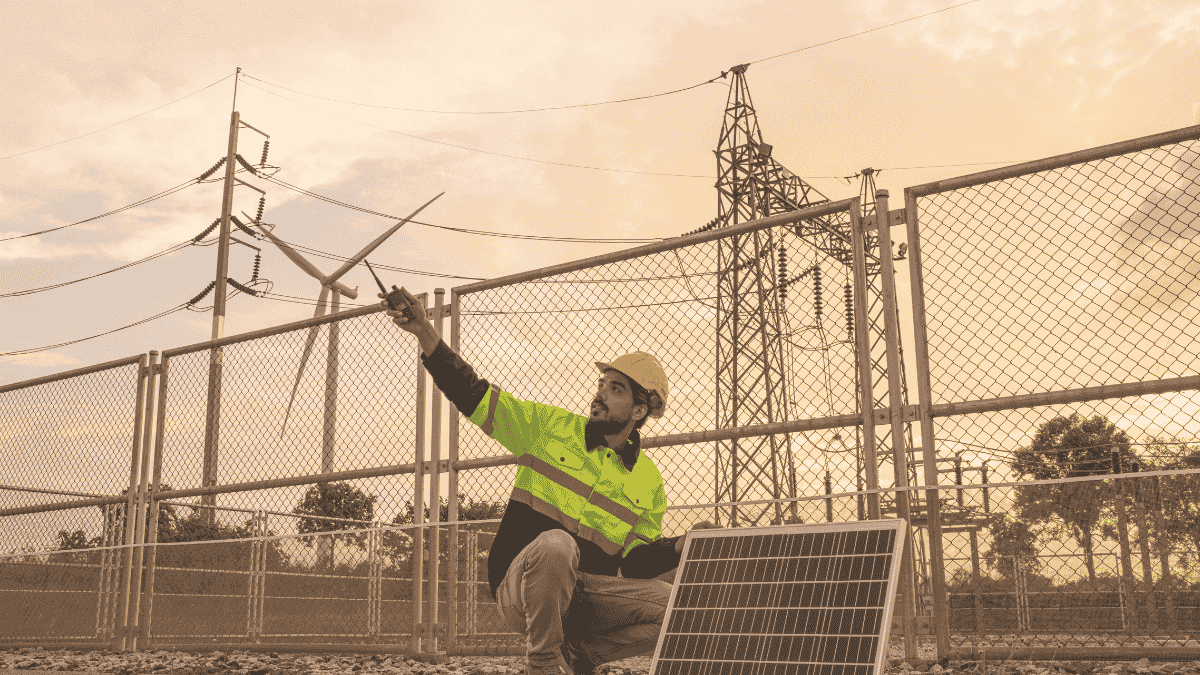
As per a Ministry of Power announcement, India’s national transmission network crossed 5 lakh ckm in January 2026
Power Secretary Pankaj Agarwal has reportedly said that transmission constraints are gradually easing in specific corridors. This is after the commissioning of new lines such as Khetri-Narela, now evacuating over 4.5 GW, with the Badla-Sikar line in Rajasthan expected to be commissioned by end-2025.
Meanwhile, global think tank Ember estimates that transmission constraints alone was around 300 GWh of lost renewable generation in the January-March 2026 quarter. This is out of around 470 GWh total curtailment with Rajasthan and Gujarat worst affected, which is a reminder that network-level growth has not yet resolved localised evacuation bottlenecks.
closing this gap, the power ministry’s Green Energy Corridor (GEC) programme, which is in implementation since 2015, runs on two parallel tracks of Inter-State Transmission System (ISTS) component and an Intra-State Transmission System (InSTS) component.
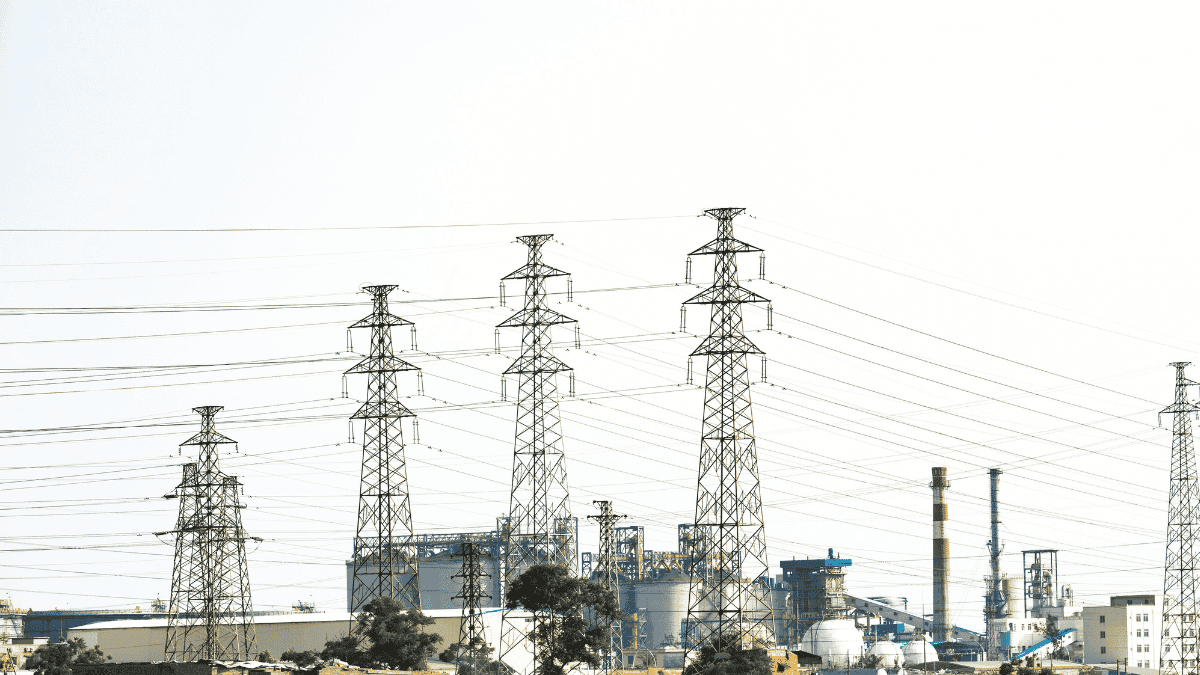
The Cabinet Committee on Economic Affairs’ (CCEA) approval for GEC phase-II added a further 10,750 ckm of intra-state lines across seven states for around 20 GW of evacuation
The InSTS leg of phase-I, comprising 3,200 ckm of lines and 17,000 MVA of substation capacity to evacuate around 6 GW, was commissioned in March 2020; the broader InSTS phase-I, running across eight states, targets a larger 24 GW of evacuation. The Cabinet Committee on Economic Affairs’ (CCEA) approval for GEC phase-II added a further 10,750 ckm of intra-state lines across seven states for around 20 GW of evacuation, while a separate CCEA approval sanctioned a dedicated ₹20,773.70 crore High-voltage Direct Current (HVDC) link for 13 GW of renewable capacity in Ladakh, routed through Himachal Pradesh, Punjab and Haryana, targeted for FY 2029-30. Government officials have since indicated that a far larger GEC phase-III and IV are now planned, designed to handle some 150 GW of renewable evacuation — eight to ten times the scale of the earlier phases combined.
The Grid Flexibility Challenge
A more structural challenge lies not just in wires but in how the grid balances itself. As per a Ministry of Power written reply in the Rajya Sabha on July, 20 this year, coal (including lignite) based generation capacity stood at around 230.8 GW, supplying 69.54 percent of total electricity between April and June 2026, with maximum generation from these plants reaching about 188.8 GW.
This is nearly 75 percent of total generation during non-solar peak demand hours. The same reply confirms that the CEA (Flexible Operation of Coal-based Thermal Power Generating Units) Regulations, 2023 now mandate coal-based units to operate down to a minimum technical load of 40 percent, as per the CEA's phasing plan, a direct regulatory response to the swings in coal output driven by rising solar generation.
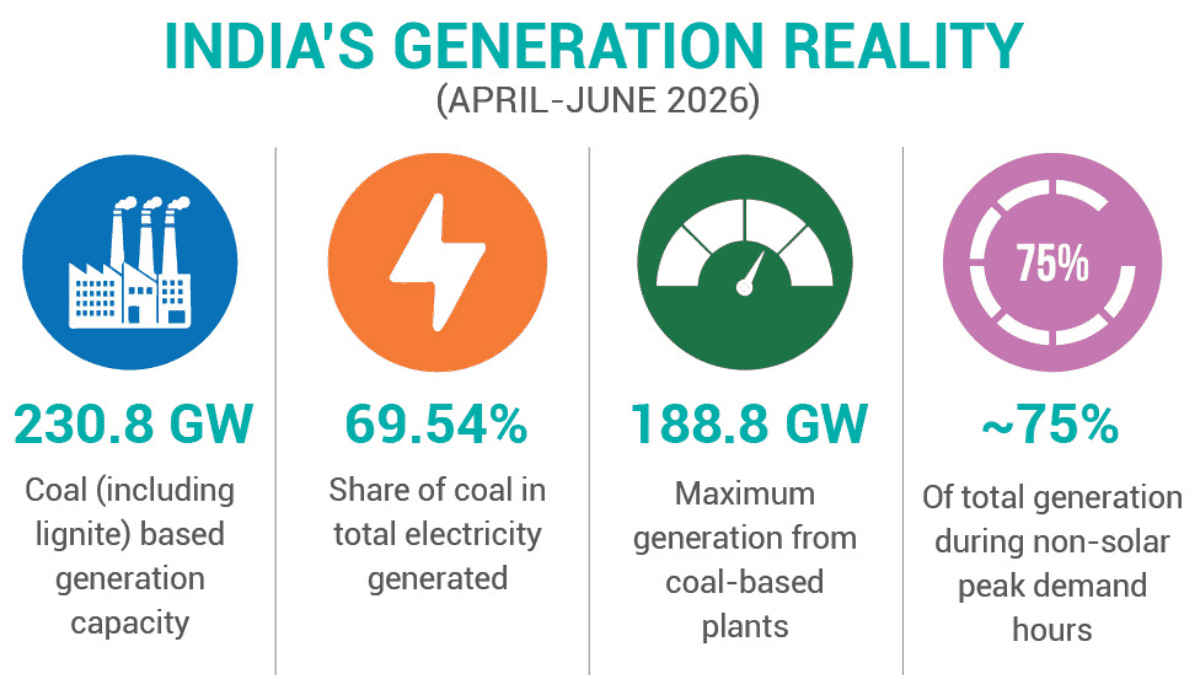
As per a Ministry of Power written reply in the Rajya Sabha on July, 20 this year, coal (including lignite) based generation capacity stood at around 230.8 GW, supplying 69.54 percent of total electricity between April and June 2026
Independent grid-despatch analysis by Ember illustrates why this matters: on days of high solar output, coal-fired capacity is cycled down sharply at midday and ramped back up as solar fades. On March 6 this year, coal output reportedly fell by around 49 GW within six hours before climbing back by 51 GW as the sun set. Once coal-fired units reach their technical minimum load, they can no longer absorb further surplus, forcing solar and wind output itself to be curtailed instead, a dynamic the CEA’s own flexible operation regulations are designed to gradually ease as the 40 percent minimum-load mandate is phased in nationally.
Storage: The Missing Link
To address the imbalance, the government’s plan encompasses Battery Energy Storage Systems (BESS) and Pumped Storage Projects (PSP). The plan, according to CEA’s Roadmap to 100 GW of Hydro Pumped Storage Projects by 2035-36, envisages a cumulative 100.8 GW of pumped-storage capacity by 2035-36. This is an average addition of 9 GW per year against an estimated national potential of 267 GW, which comprises 58 GW on-stream and 209 GW off-stream, requiring an investment of around ₹5.8 lakh crore. As of July 20 this year, around 2,669 MW of BESS and 7,426 MW of PSP capacity had been commissioned, as per the power ministry’s statement in the Rajya Sabha.
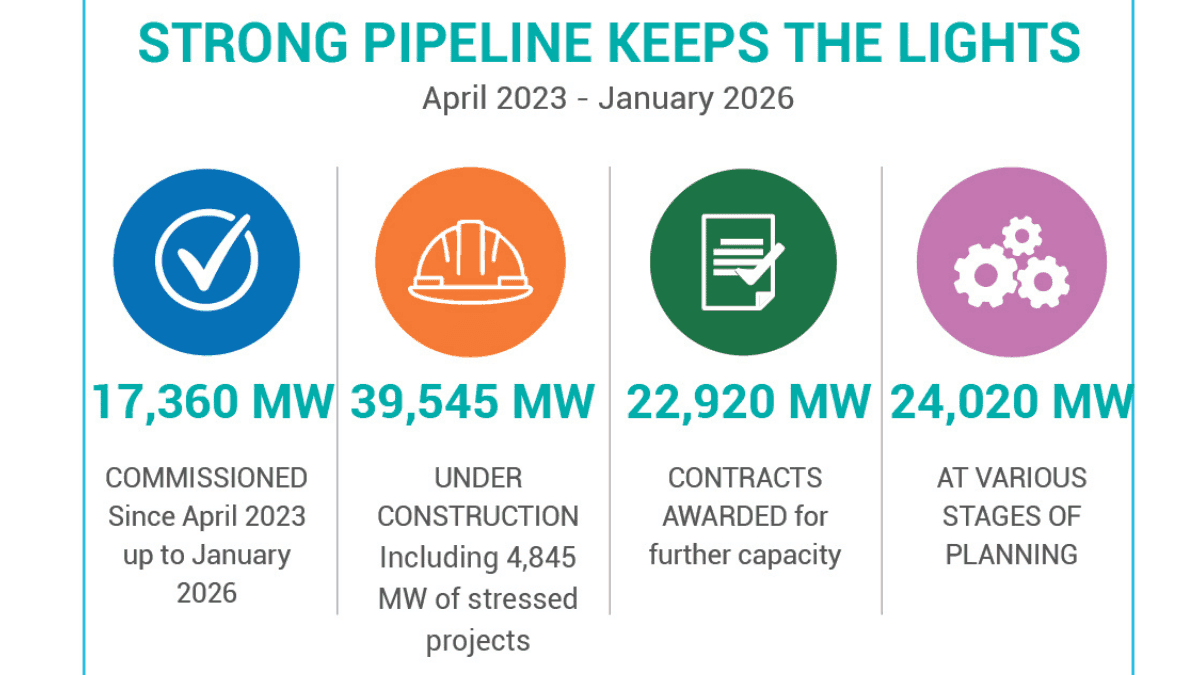
About 17,360 MW had been commissioned since April 2023 up to January 2026, with 39,545 MW under construction, contracts for a further 22,920 MW were awarded
These developments mark the beginning of India’s storage build-out journey and show the considerable scale of deployment required to meet CEA’s long-term objectives.
The roadmap's incentive package includes a 100 percent waiver of ISTS charges for PSP projects awarded by June 2028, alongside the April 2023 guidelines for PSP development and eased concurrence norms for off-stream closed-loop schemes.
Low-carbon Thermal's Renewed Role
As per the power ministry’s statement, about 17,360 MW had been commissioned since April 2023 up to January 2026, with 39,545 MW under construction, including 4,845 MW of stressed projects, contracts for a further 22,920 MW were awarded, and 24,020 MW at various stages of planning. Besides, coal-based plants’ projected Plant Load Factor (PLF) is estimated to be around 61 percent by 2031-32.
Pairing with this are efficiency gains: newer supercritical and ultra-supercritical technology, capable of 42-45 percent thermal efficiency against 30-35 percent for older subcritical units, is expected to reduce specific carbon emissions per unit of power generated even as overall coal capacity grows.
Even as storage scales up, coal is not disappearing from India's energy mix. Coal is rather being modernised and, in the near term, expanded. The thermal, including coal and lignite capacity, as per the power ministry’s statement that referred to the CEA generation-expansion planning studies in the Rajya Sabha, is projected to rise around 3,07,000 MW by 2034-35, as opposed to 2,11,855 MW installed capacity as of March 31, 2023. This necessitates a minimum additional 97,000 MW of coal and lignite-based capacity.
According to power secretary Pankaj Agarwal, the government plans to maintain around 307 GW of coal-based thermal capacity by 2035 to secure future power demand. He has also affirmed that current average power tariffs of ₹3.30 per unit remain reasonable and transmission constraints are gradually easing as new corridors are commissioned.
Large Hydro and Nuclear as Long-Term Anchors
The solar and wind energy have long overshadowed large hydro in India’s clean energy narrative. Now, the role of large hydro is being reassessed for the firm, flexible capacity it can offer, both as conventional generation at 52.06 GW, including 7.43 GW pumped storage, of installed capacity as of June this year, as per the Ministry of New and Renewable Energy’s (MNRE), and the backbone of the pumped storage build-out.
Meanwhile, the government is positioning nuclear power as a pillar of decarbonised baseload supply. In the Union Budget 2025-26, the government announced the Nuclear Energy Mission with the objective to achieve 100 GW nuclear power generation capacity by 2047 to support the goal of Net Zero carbon emissions by 2070.
The mission also aims to develop and operationalise at least five indigenous Small Modular Reactors (SMR) by 2033. In this direction, The Bhabha Atomic Research Centre (BARC) has undertaken design and development of SMRs: a 220 MWe Bharat SMR-200, a 55 MWe SMR-55; and Up to 5 MWth High Temperature Gas Cooled Reactor (HTGCR) for hydrogen production.
To bolster the mission, the Parliament has enacted the Sustainable Harnessing and Advancement of Nuclear Energy for Transforming India (SHANTI) Act, 2025, which also opens the nuclear energy sector to the private participation. For reaching the 100 GW nuclear power capacity by 2047, the government has drawn up a roadmap, which spells out expectation of attaining from the current nuclear power capacity of 8.78 GW to about 22 GW by 2031-32 on progressive completion of projects presently at various stages of implementation.
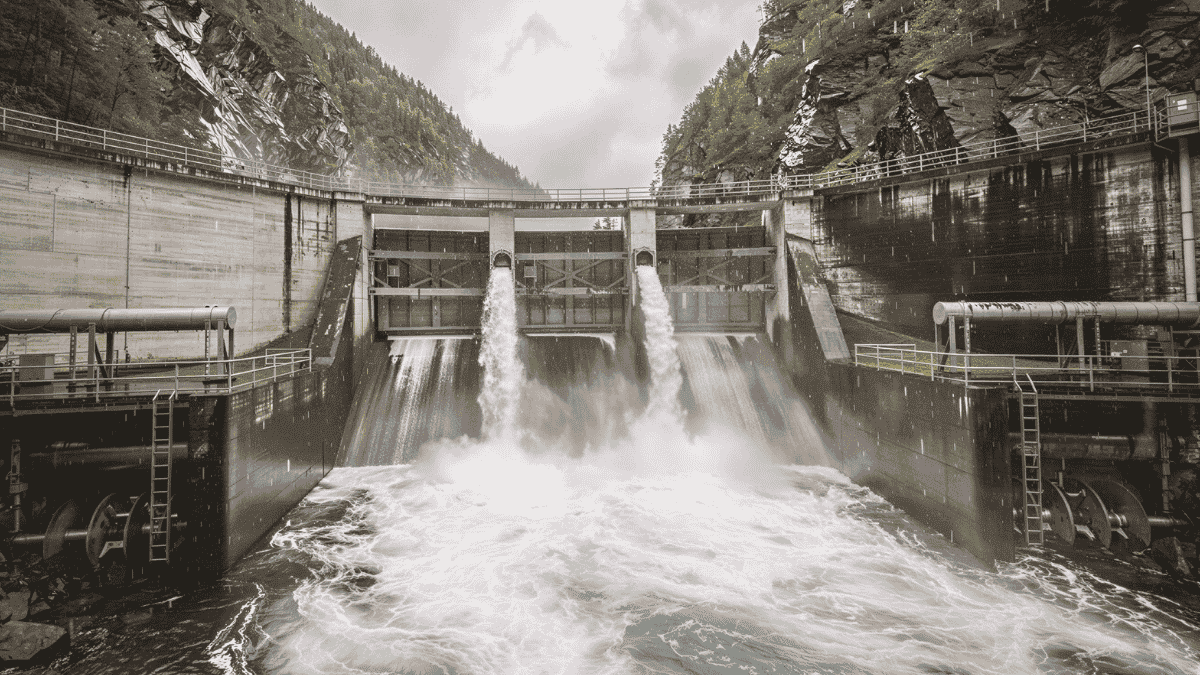
The government, aligning with Prime Minster Narendra Modi’s announcement at COP26 in Glasgow, continues to target 500 GW of non-fossil fuel-based installed electricity capacity by 2030
Besides, 32 GW of nuclear power capacity is envisaged to be set up beyond 2032 by the Nuclear Power Corporation of India Ltd (NPCIL), comprising indigenous Pressurised Heavy Water Reactors (PHWR) and Light Water Reactors (LWR) by 2047 taking the capacity to about 54 GW. As per the roadmap, the balance 46 GW is expected to be set up by other centre and state public sector enterprises, state governments, private sector and joint ventures in different business models, comprising reactors of different technologies.
A Balancing Act, Not a Retreat
None of this indicates a retreat from renewable energy. The country’s non-fossil installed capacity, as per MNRE, has reached 297.4 GW as of June this year from around 76 GW in 2014. The government, aligning with Prime Minster Narendra Modi’s announcement at COP26 in Glasgow, continues to target 500 GW of non-fossil fuel-based installed electricity capacity by 2030.
The re-emergence of low-carbon thermal, large hydro and nuclear is a recalibration, which is visible in the government’s documents. This acknowledges that intermittent renewables cannot themselves deliver reliable, round-the-clock power a growing economy needs, and that the transmission and storage infrastructure required to fully unlock solar and wind is still, by the CEA’s targets and timelines, several years behind the generation capacity it is meant to serve.
This recalibration has emerged in long-term government planning. As per NITI Aayog's report ‘Scenarios Towards Viksit Bharat and Net Zero — Sectoral Insights: Power’, the country total installed capacity is projected to rise from 535 GW in 2024-25 to between 4,650 GW and 4,750 GW by 2070 under a current policy scenario. The variable renewables’ combined share is projected to rise from 26 percent in 2023-24 to around 88 percent by 2070. However, the projection will materialise only if matched by a corresponding scale-up in battery storage, from under 50 GW in 2030 to 1,300-1,400 GW by 2070, alongside strengthened transmission networks and modernised grid operations.
The report explicitly identifies clean, firm power sources — nuclear, large hydro and low-carbon thermal among them — as critical to system reliability precisely because variable renewable growth on this scale cannot be integrated safely without them.
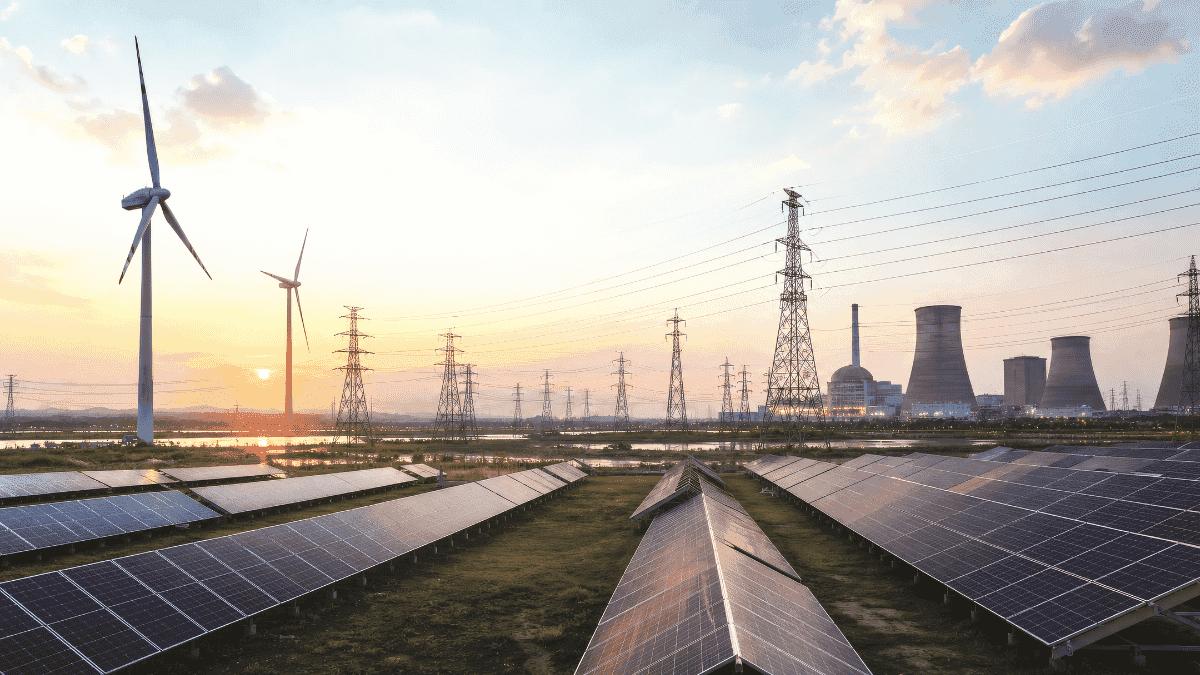
The variable renewables’ combined share is projected to rise from 26 percent in 2023-24 to around 88 percent by 2070
For India's power planners, the challenge ahead is less about choosing between clean and conventional energy than about sequencing them correctly: building the wires, the batteries and the pumped-storage reservoirs fast enough to let renewables do the job they were always meant to do, while using thermal, hydro and nuclear power to bridge the gap in the meantime. Whether the grid can keep pace with the generation boom it enabled may prove to be the defining infrastructure question of India's energy decade.