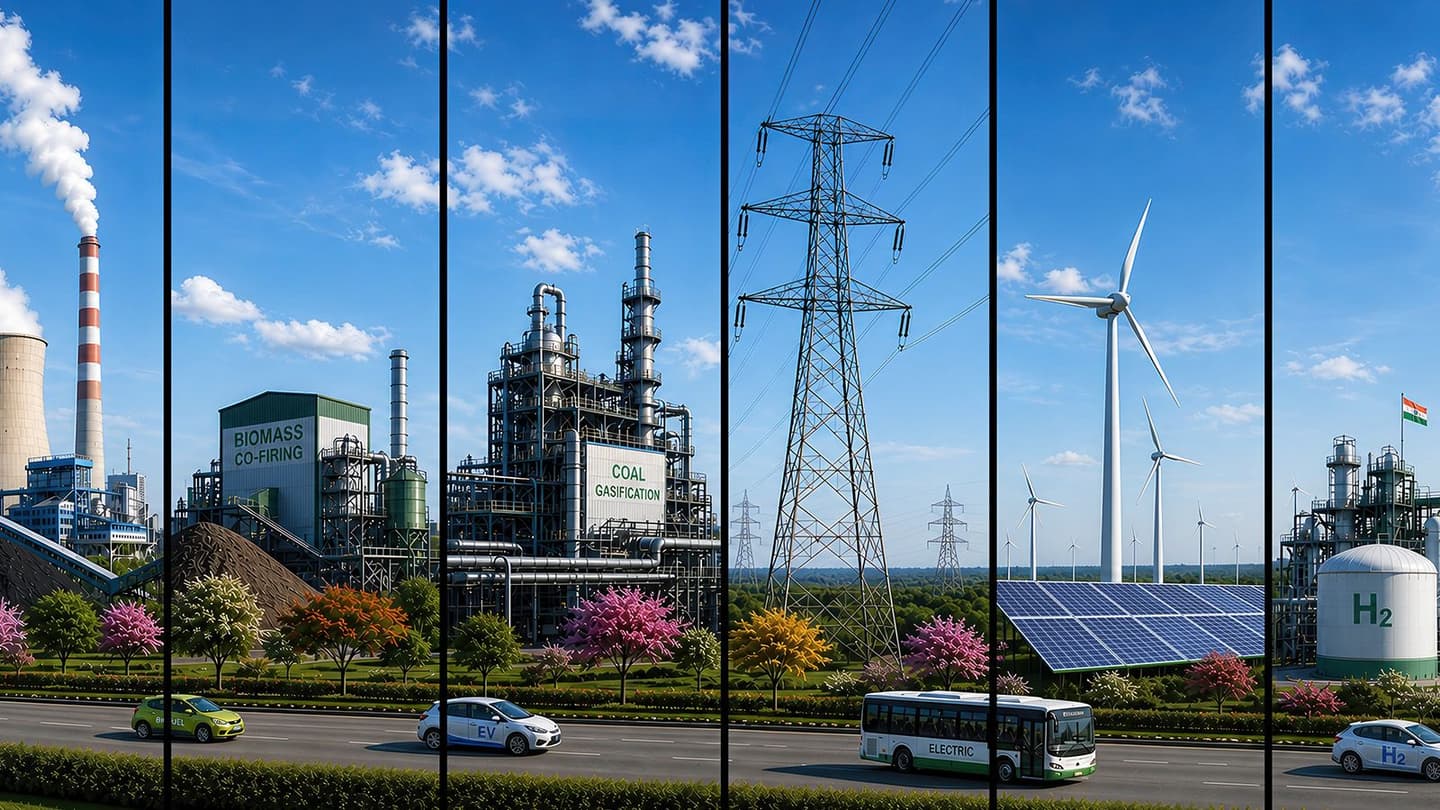
India’s energy transition is a calibrated restructuring of its energy system without a linear move away from coal. As the country expands renewable capacity rapidly, coal continues to anchor the electricity supply. Biomass co-firing, coal gasification and green hydrogen are rolled out in a phased manner, creating a hybrid system shaped by demand growth, policy direction and implementation constraints.
The government is pushing thermal plants to achieve higher efficiency by embracing supercritical technologies, and at the same time making these plants operate flexibly
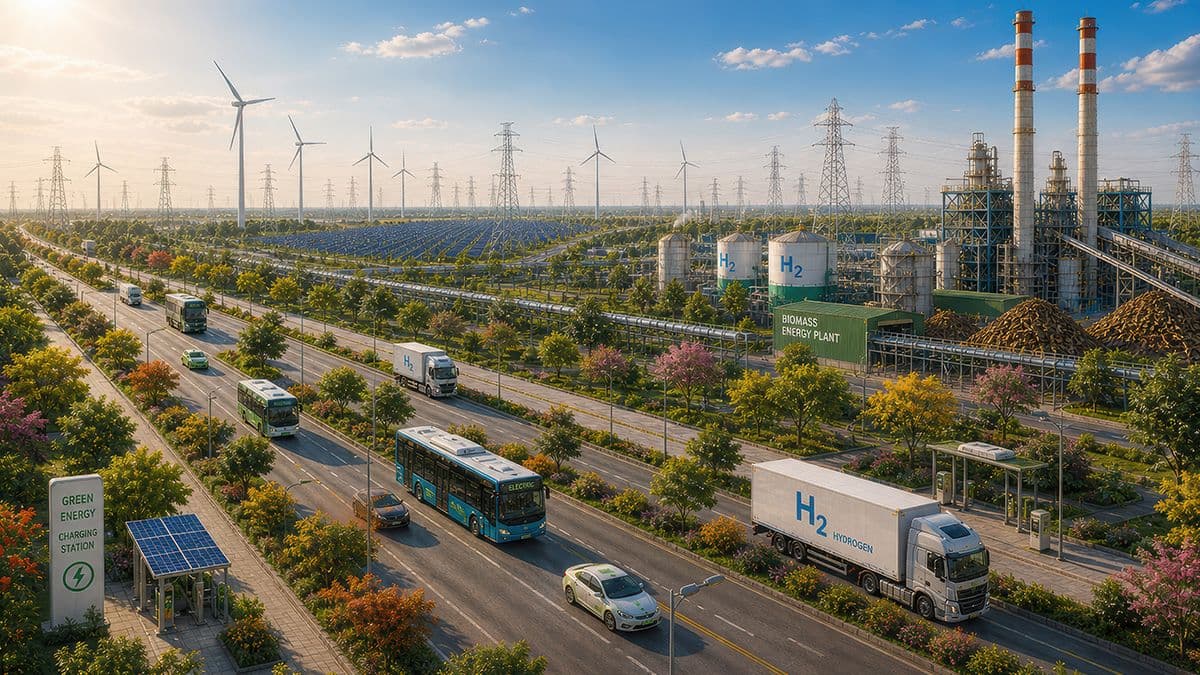
Towards Transformation, not Phasing Out
Rather than retiring coal from its energy mix, India is recalibrating its strategy to position the black diamond into its rapidly evolving energy system. Coal remains the country’s mainstay of electricity generation, accounting for around 70 percent of power generation, despite India’s rapid expansion of renewable energy. According to the Central Electricity Authority (CEA), this situation is unlikely to change in the short term, as coal capacity will continue to expand to meet baseload demand and grid reliability requirements.
This is in the light of the country’s steep demand curve, an evolving grid and a yet-to-be-matured storage ecosystem. Therefore, the policy response is towards transformation and not phasing out. The government is pushing thermal plants to achieve higher efficiency by embracing supercritical technologies, and at the same time making these plants operate flexibly to ramp up and down for balancing intermittent renewable generation.
Moreover, emission norms enforced by the Central Pollution Control Board require coal plants to install pollution control systems such as flue gas, desulphurisation systems and nitrogen oxide controls, which are changing the operational system.
Biomass: The Transition Lever
Biomass has emerged as a transition lever, which is backed by policy and can also be deployed immediately. The Ministry of Power’s mandate requires coal plants to use biomass for co-firing of 5 percent from 2024–25 and eventually increasing to 7 percent. Seemingly, this is a simple intervention, which entails replacing a fraction of coal with agricultural residue converted into pellets. However, it is a complex process.
Despite the policy that mandates biomass co-firing in thermal plants, its adoption is not even. While dozens of plants have implemented the policy, several are yet to comply. Biomass pellets supply chains are in the developing phase with fragmented logistics and work-in-progress of plant’s operational adjustments. This indicates that the system has not scaled yet but is expanding.
Coal Reimagined
The country’s coal landscape is undergoing a tectonic shift. However, it is in chemical conversion, not in power plants. The Ministry of Coal’s target of 100 million tonnes of coal gasification by 2030 under the National Coal Gasification Mission underscores the process, converting coal into syngas, which can then be used to produce methanol, ammonia and hydrogen.
India is dependent on imported chemical feedstocks and fuels. With gasification, the country can reduce its dependence on them, besides setting up new industrial value chains.
In this direction, public sector units such as Coal India Ltd are moving, however, in transition narratives, often a critical distinction gets blurred. In certain context, coal gasification is cleaner than direct combustion, but not as low-carbon as it redistributes them across processes and does not eliminate emissions. Therefore, its role is not to decarbonise coal, but to reposition it.
India is dependent on imported chemical feedstocks and fuels. With gasification, the country can reduce its dependence on them, besides setting up new industrial value chains
Hydrogen: The Long Game
Under the Ministry of New and Renewable Energy, the National Green Hydrogen Mission (NGHM) aims to create a green hydrogen ecosystem in the country. Anchored in renewable energy and domestic manufacturing, the NGHM signals a long-term structural shift in sectors where electrification is difficult. These sectors include refining, fertilisers, steel and heavy industry.
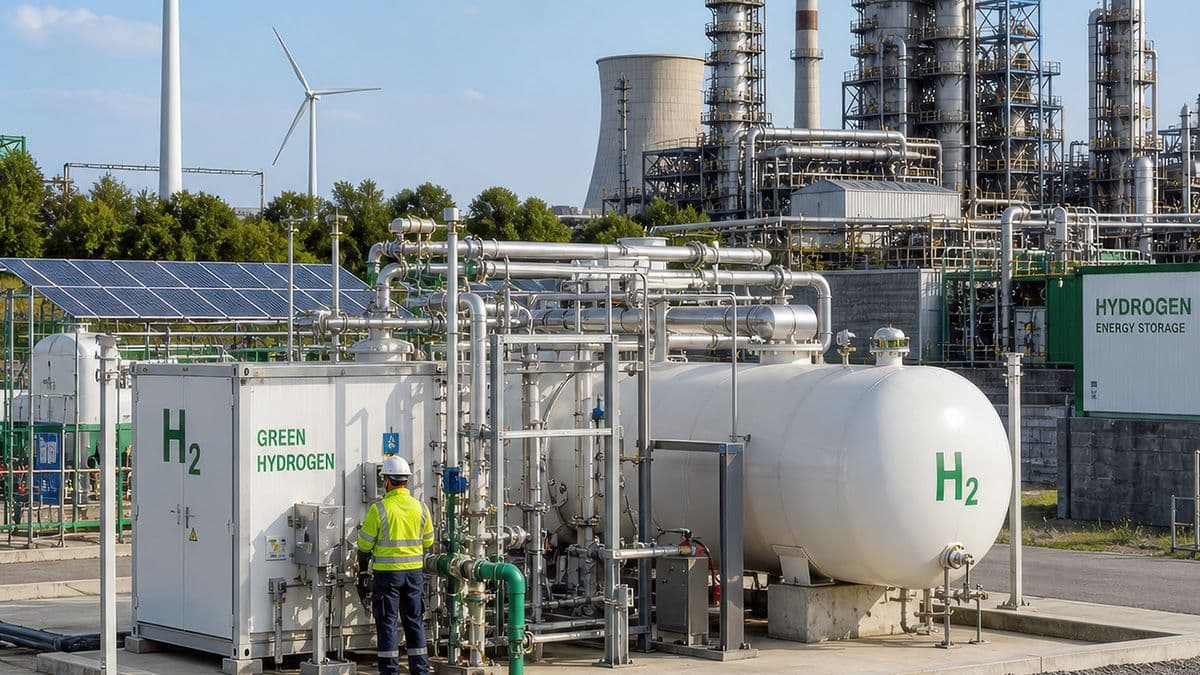
At present, hydrogen is at the edge of the system, not at its core as pilots are ongoing, industrial trials are beginning, and infrastructure (storage, transport, distribution) is in work-in-progress stage. So, hydrogen is yet to transform the system.
The Constraint of Reality
India’s Net Zero ambitions has a clear direction that has been articulated in its climate commitments. However, the path to achieving it is constrained by the scale of the system it seeks to transform. As electricity demand rises, industrial energy use expands and urbanisation accelerates, these bring additional pressure for maintaining reliable, affordable energy even as emissions must decline. Consequently, the transition appears layered instead of linear.
Even as renewable energy is witnessing its rapid addition to the system, coal is not seeing its decline at the same pace. Biomass is witnessing integration, however, not uniformly yet. Gasification is strategically promoted, not purely for environmental reasons, and hydrogen is being created but for future deployment. The outcome is not a clean shift from one system to another, but is an overlay.
India’s transition is defined not by speed but by structure. Coal remains integral, biomass is expanding, gasification is strategic, and hydrogen is emerging. The shift is gradual, layered and constrained by infrastructure and demand realities. Net Zero, in this context, is less a destination and more an evolving process shaped by execution capacity.