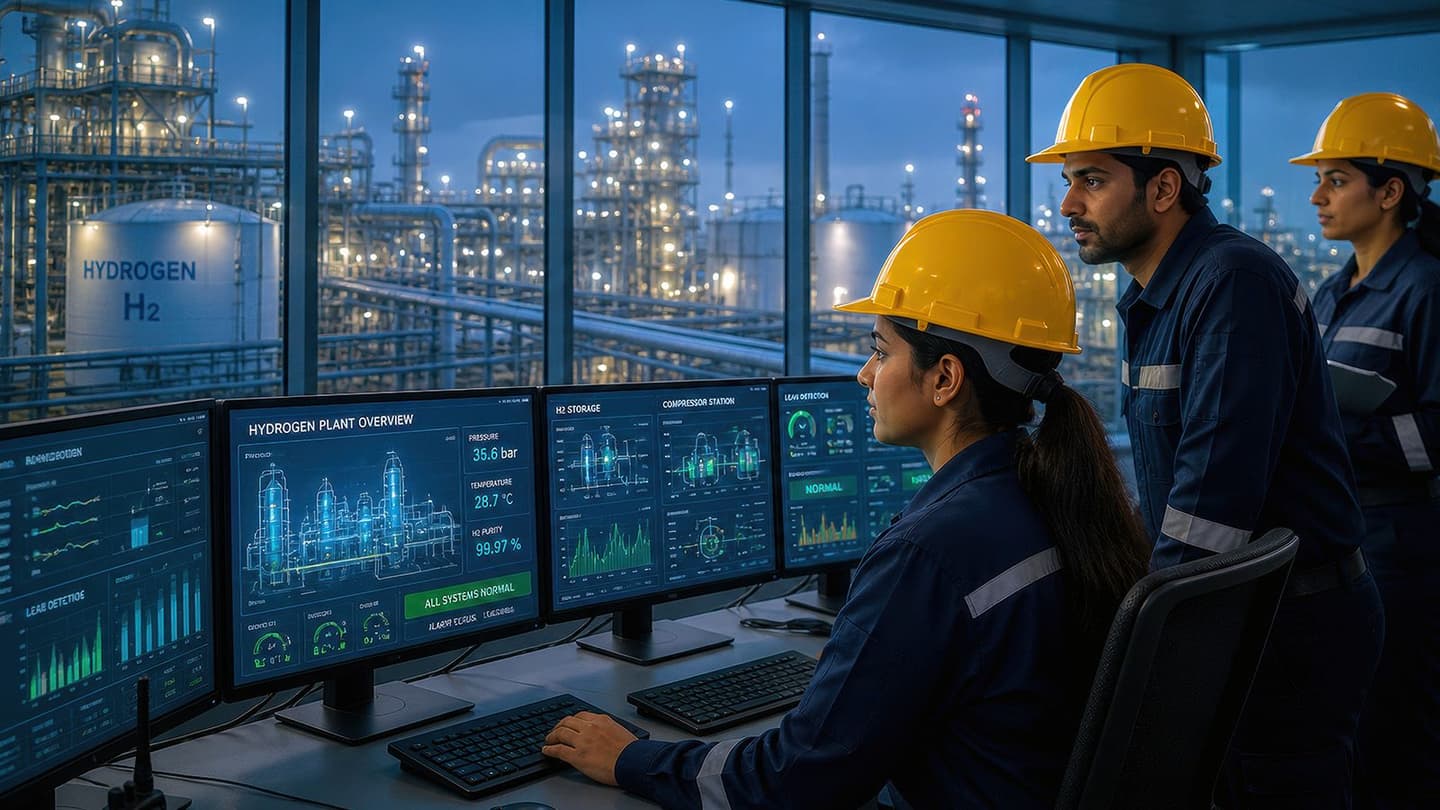
Hydrogen enters distributed systems from industrial clusters as India gears towards a clean energy transition. This shifts safety challenges from controlled environments to complex, real-world interfaces involving people, systems and unpredictable conditions.
Workers entering confined spaces where hydrogen may be present must use proper atmospheric monitoring equipment and follow confined space entry procedures to prevent oxygen deficiency incidents
Risk Profile
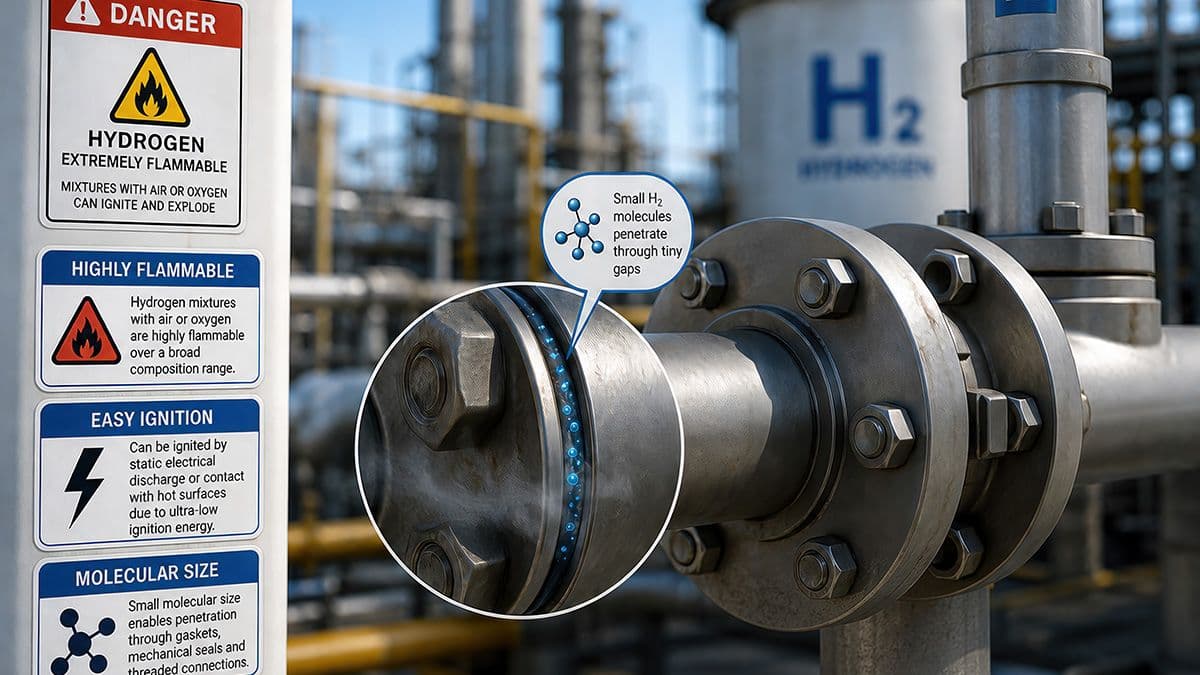
Hydrogen mixtures with air or oxygen are highly flammable over a broad composition range. This makes them extremely dangerous in industrial settings with an upper flammability limit in air of 4 percent and oxygen 94 percent. It has an ultra-low ignition energy with static electrical discharge or contact. Owing to its exceptionally low minimum ignition energy (0.02 mJ), hydrogen can be ignited by static electrical discharge or contact with hot surfaces.
Its small molecular size enables penetration through gaskets, mechanical seals and threaded connections. As it is lighter than air, it rapidly rises and accumulates beneath roof canopies and overhead structures.
Hydrogen also affects the integrity of materials. High Temperature Hydrogen Attack (HTHA) and hydrogen embrittlement degrade steel integrity over time, potentially causing sudden catastrophic failure of pressure vessels, piping systems and welded joints without visible warning.
It has a negative Joule–Thomson coefficient at room temperature. This means hydrogen heats up during expansion instead of cooling. So, throttling hydrogen at normal conditions increases its temperature rather than reducing it.
While non-toxic, hydrogen can lead to a serious asphyxiation hazard in confined spaces by displacing oxygen, often without any sensory warning.
An Invisible Threat
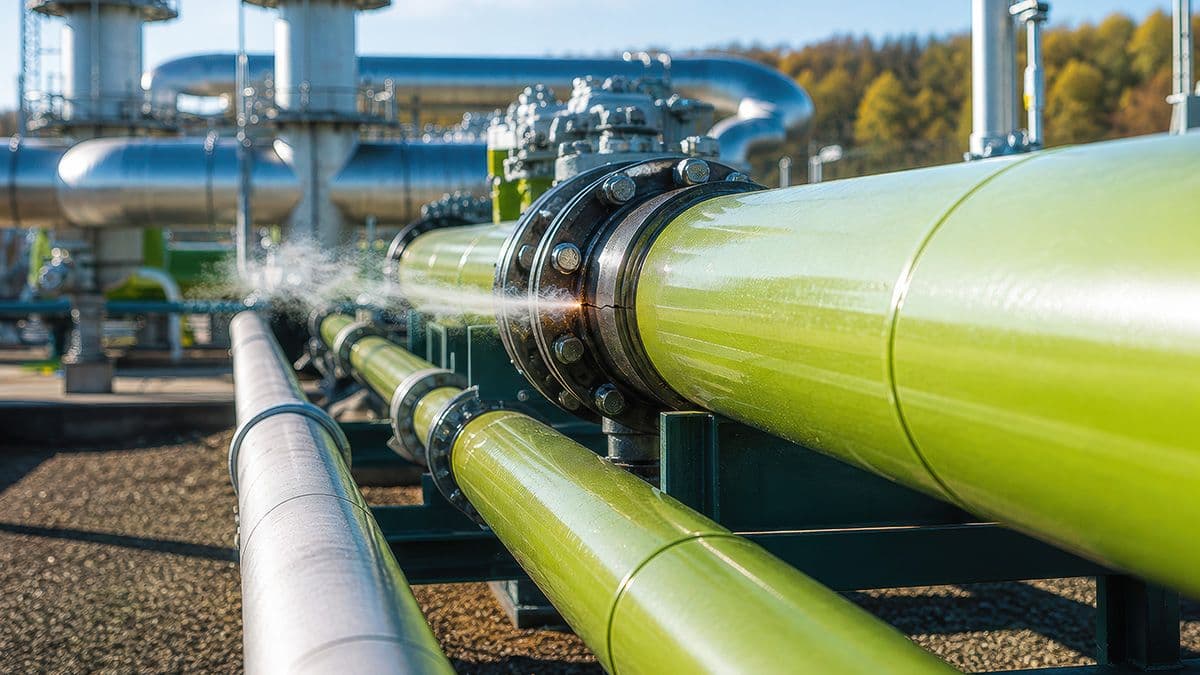
Hydrogen burns with a nearly invisible flame in daylight, making fire detection extremely difficult. The flame propagates upward with a minimal radiant heat signature, providing little warning to personnel.
Hydrogen diffuses nearly four times faster than air, which makes its leak spread quickly throughout an area. Air turbulence further increases diffusion rates.
As it is lighter than air, hydrogen rapidly rises and accumulates beneath roofs, canopies and overhead structures. While hydrogen is non-toxic and environmentally benign, it has a serious asphyxiation hazard in confined spaces. When hydrogen accumulates in enclosed areas, it displaces oxygen, reducing the oxygen concentration below safe breathing levels. Therefore, workers entering confined spaces where hydrogen may be present must use proper atmospheric monitoring equipment and follow confined space entry procedures to prevent oxygen deficiency incidents.
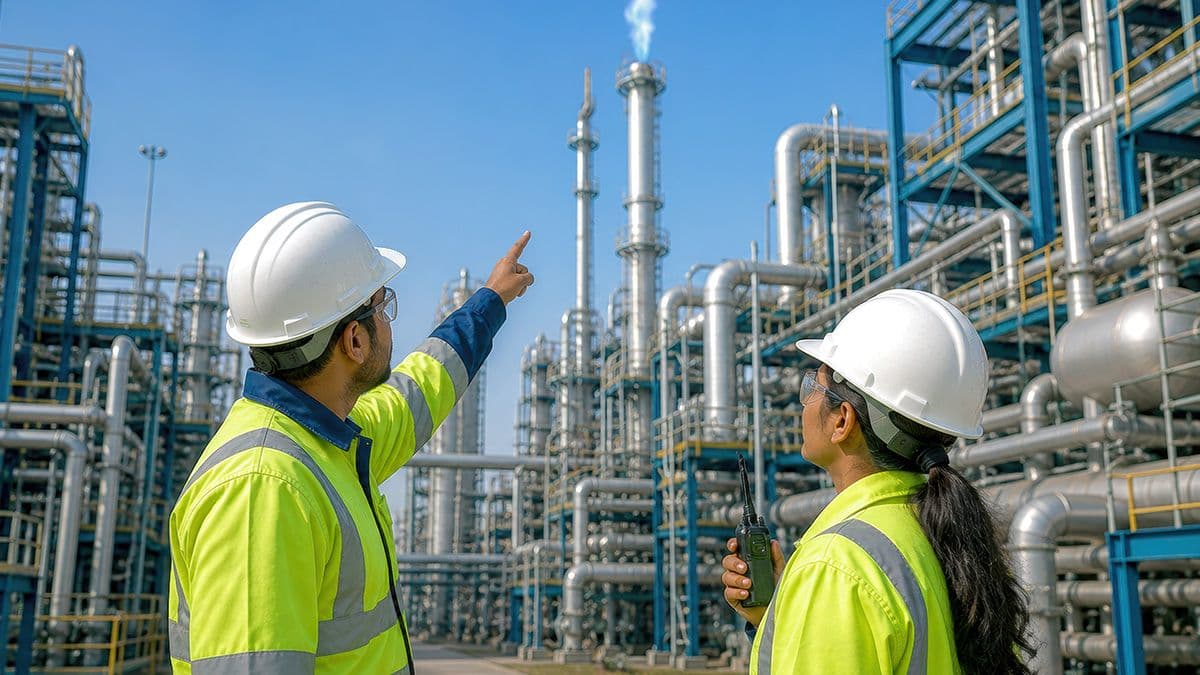
In petroleum refining environments, hydrogen presents unique and severe hazards. Its widespread use across various process units, combined with its physical and chemical properties, creates multiple pathways for catastrophic incidents. Extensive high-pressure service hydrotreaters, hydrocrackers, and reformers operate with hydrogen under extreme pressure and temperature conditions, significantly increasing leak probability and explosion severity upon ignition.
From Fire to Detonation
Detonation is the most severe form of hydrogen combustion. It is where the flame and shock wave travel at supersonic speeds, creating extreme overpressures and devastating consequences.
Its velocities range from 1,700-3,000 m/s for gas explosions and 4,000-10,300 m/s for solid explosives. Pressure ratio across a detonation wave is about 20 (300 PSI at atmospheric pressure).
Extensive high-pressure service hydrotreaters, hydrocrackers, and reformers operate with hydrogen under extreme pressure and temperature conditions, significantly increasing leak probability and explosion severity upon ignition
When striking obstacles, ratios reach 40-60. A confined hydrogen-air mixture can be detonated by a relatively small ignition source, making containment critical.
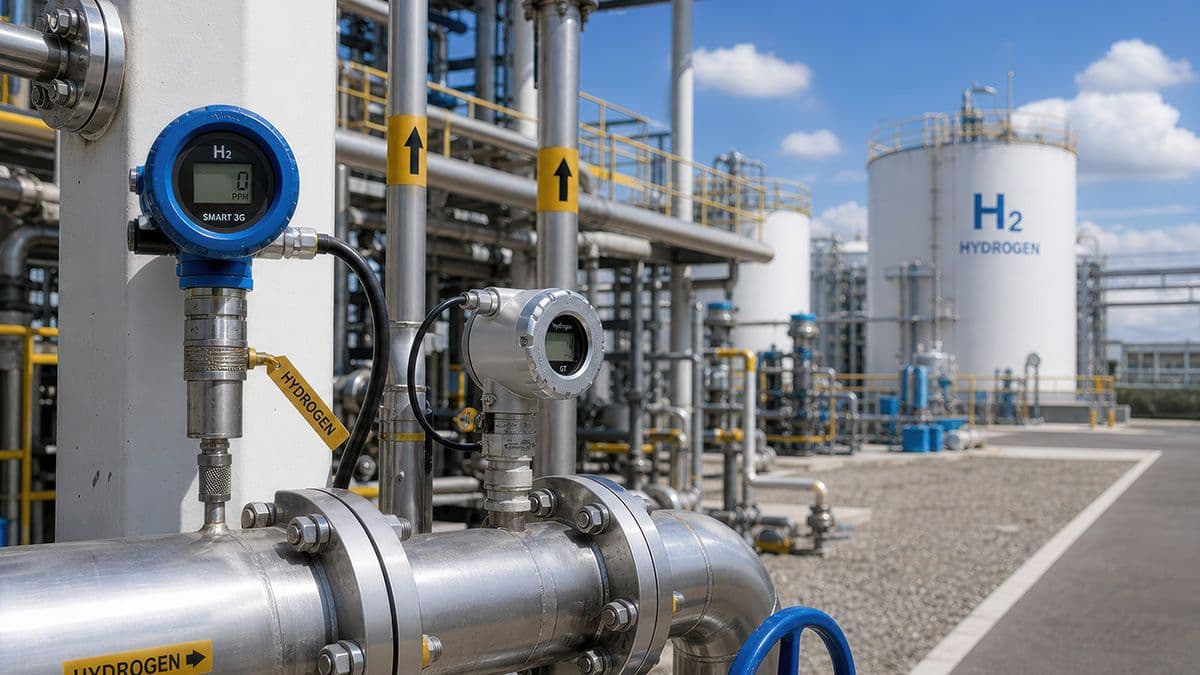
Safety Systems
In practice, hydrogen safety depends on a layered and real-time system instead of static compliance alone. Safety programmes are held to reduce accidents and their severity, aligned with a comprehensive, layered strategy.
NGHM has a focus on government funding and support for manufacturing and infrastructure development.
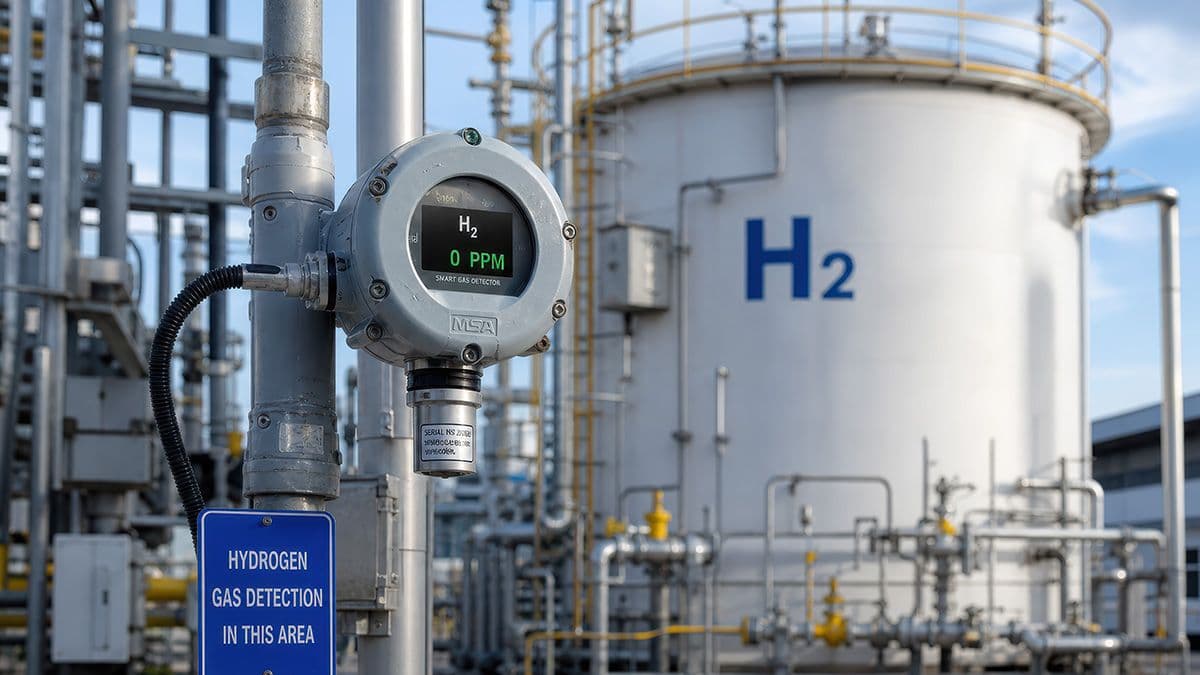
Leak detection systems entail automated hydrogen gas detectors that continuously monitor for leaks. This gives an early warning before dangerous concentrations accumulate. A multi-stage alarm system facilitates an evacuation and emergency response as it alerts personnel to an adverse situation. When dangerous conditions are detected, an automated shutdown system isolates hydrogen sources and stops the flow.
Risk Exposure with Infrastructural Expansion
The NGHM has a “clear” focus on government funding and support for R&D, besides measures for demand creation and financial support for manufacturing and infrastructure development.
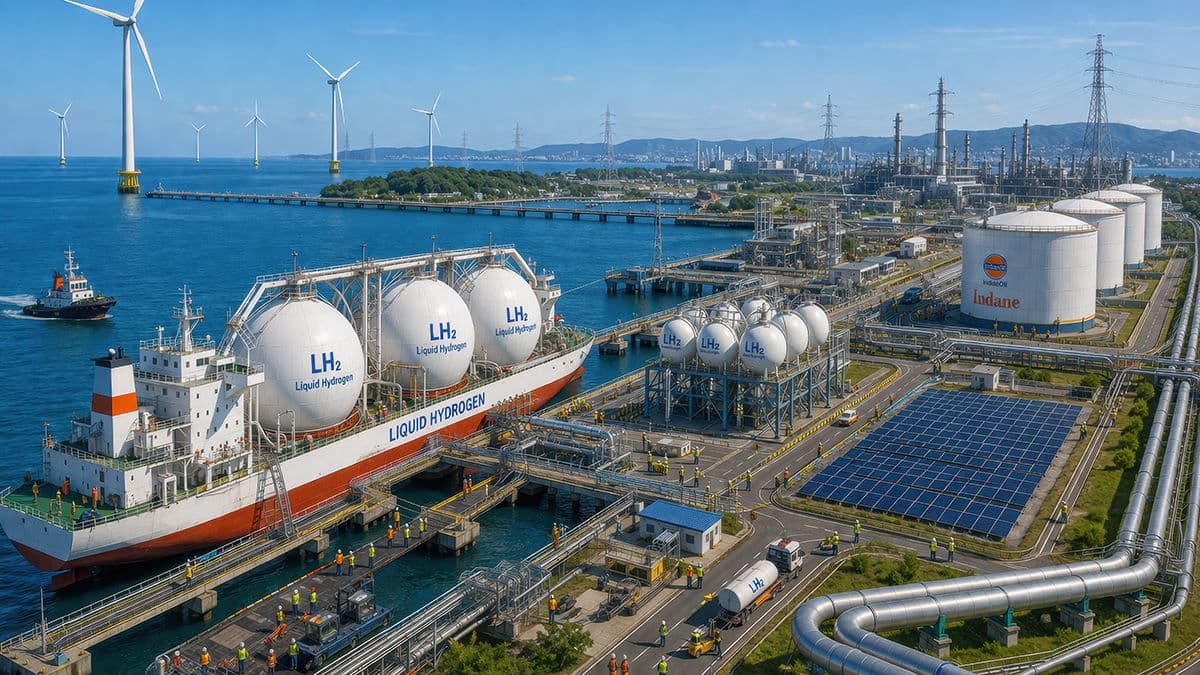
It says that the mission will support and facilitate the building of the required infrastructure for the storage and delivery of green hydrogen and its derivatives. Besides, port infrastructure required to enable exports of green hydrogen derivatives and pipelines to facilitate bulk transport of green hydrogen will also be developed. Further, the producers and consumers of green hydrogen and its derivatives will be encouraged to pool resources and develop projects in a coordinated manner in the form of large-scale hydrogen hubs.
Although these infrastructure expansions are essential for scale, they concentrate risk owing to hydrogen expansion into public-facing environments.
Risk Involved in Decentralised Process
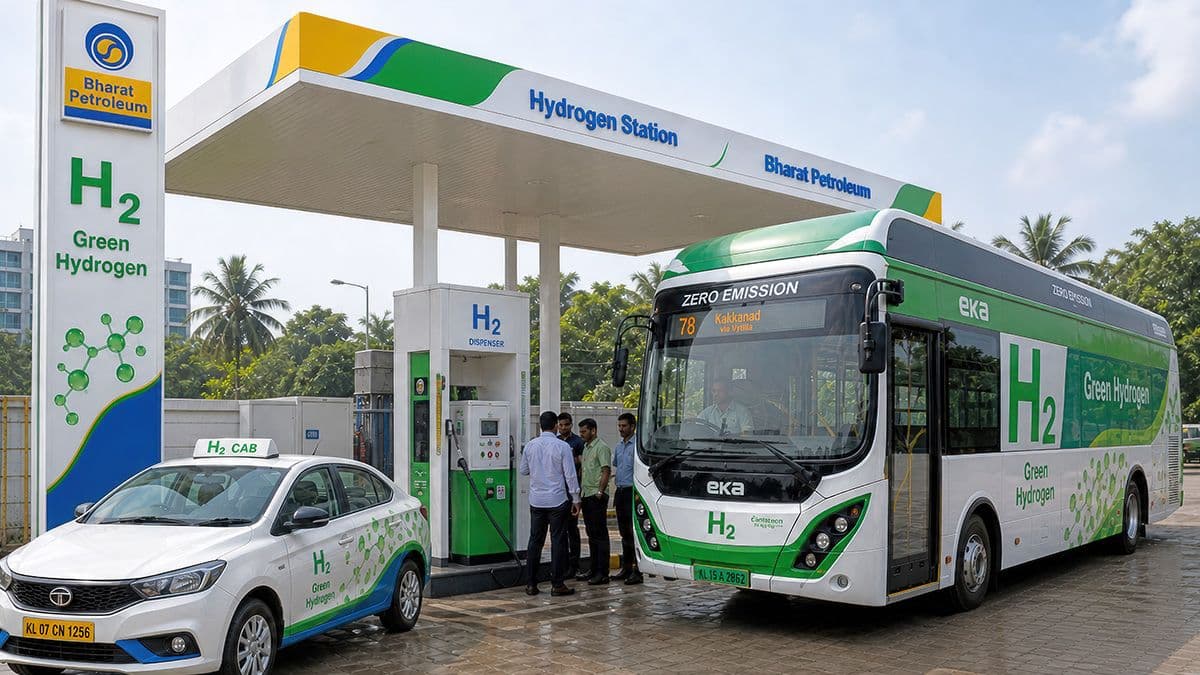
The NGHM encourages decentralised hydrogen production and deployment across sectors, including mobility and energy systems, as it views the process will be advantageous to reduce the requirement for long distance transportation for end-use. This would also allow an optimal utilisation of various resources such as land, water and renewable energy potential. However, this shift moves hydrogen beyond controlled industrial environments into public infrastructure. Hydrogen refuelling stations and mobility corridors extend hydrogen into public infrastructure, increasing exposure and complexity of risk management.
NGHM acknowledges that any sunrise industry requires a robust regulatory architecture, safety codes and relevant quality and performance standards
Need for a “Robust” Regulatory Architecture
Hydrogen safety in India is governed under legacy frameworks such as the Explosives Act, 1884; SMPV(U) Rules, 2016; Gas Cylinder Rules, 2016; and MSIHC Rules, 1989. The National Green Hydrogen Mission (NGHM) recognises the need for a robust regulatory architecture, safety codes and standards.

It acknowledges that any sunrise industry requires a “robust” regulatory architecture, safety codes and relevant quality and performance standards. These will not only guide the technology developments but also anchor the long-term investment outlook for the private sector.
“The Mission will, thus, seek to coordinate various efforts for the development of regulations and standards in line with industry requirements for emerging technologies. Existing statutory approvals and permissions procedures will be streamlined, and new processes will be established, as required,” NGHM says.
According to NGHM, the imperative of Ease of Doing Business will be kept in view and efforts will be made for simplified processes and expeditious approvals leveraging technology.
The effort will be to harmonise regulations and standards with internationally accepted norms to ensure interoperability of technologies and incorporation of global best practices.
The challenge posed by hydrogen is beyond managing known risks. The challenge is about ensuring systems perform reliably under real-world conditions.
As deployment scales, safety will depend on how well engineering, regulation and operations anticipate failure points. Besides, how quickly they respond when systems are pushed beyond design assumptions.