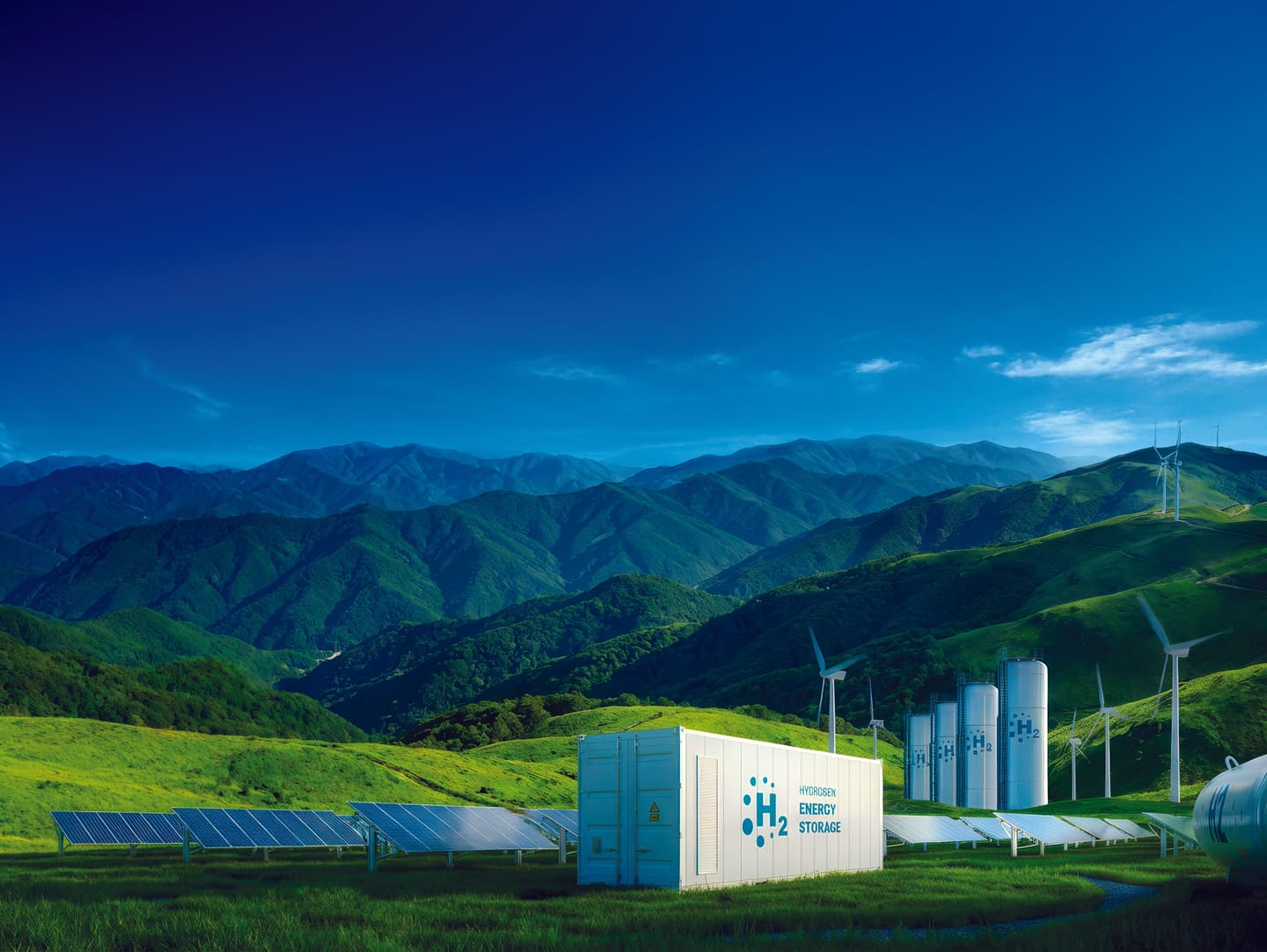
India is gearing up to reduce its dependence on fossil fuels and increase domestic clean energy production. The country’s energy transition has entered a decisive phase, aligning with its vision of a developed nation by 2047 and achieving Net Zero by 2070.
As the country undergoes an energy transition, green hydrogen is emerging as a clean and scalable alternative to traditional fuels. Capable of decarbonising hard-to-abate sectors and reducing import dependence on fossil fuels, Green hydrogen is supporting India’s goals for energy security and industrial growth.
Positioned as an umbrella programme, NGHM aims to evolve a green hydrogen ecosystem and catalyse a systemic response to the opportunities and challenges in the sector.
Recognising the potential, the Modi government launched the National Green Hydrogen Mission (NGHM) in 2023. Aptly positioned as an umbrella programme, the NGHM aims to evolve a green hydrogen ecosystem and catalyse a systemic response to the opportunities and challenges in the sector. Going beyond an energy initiative, the mission is seen as a strategic pathway towards industrial competitiveness, import reduction and long-term energy security, connecting sustainability with self-reliance.
Evolving an Ecosystem
The NGHM aims to build the capacity and ecosystem required to position the country as a global leader in clean hydrogen. The government states that the mission is to be supported by about 125 GW of new renewable energy capacity dedicated to green hydrogen production, along with investments exceeding ₹8 lakh crore by 2030.
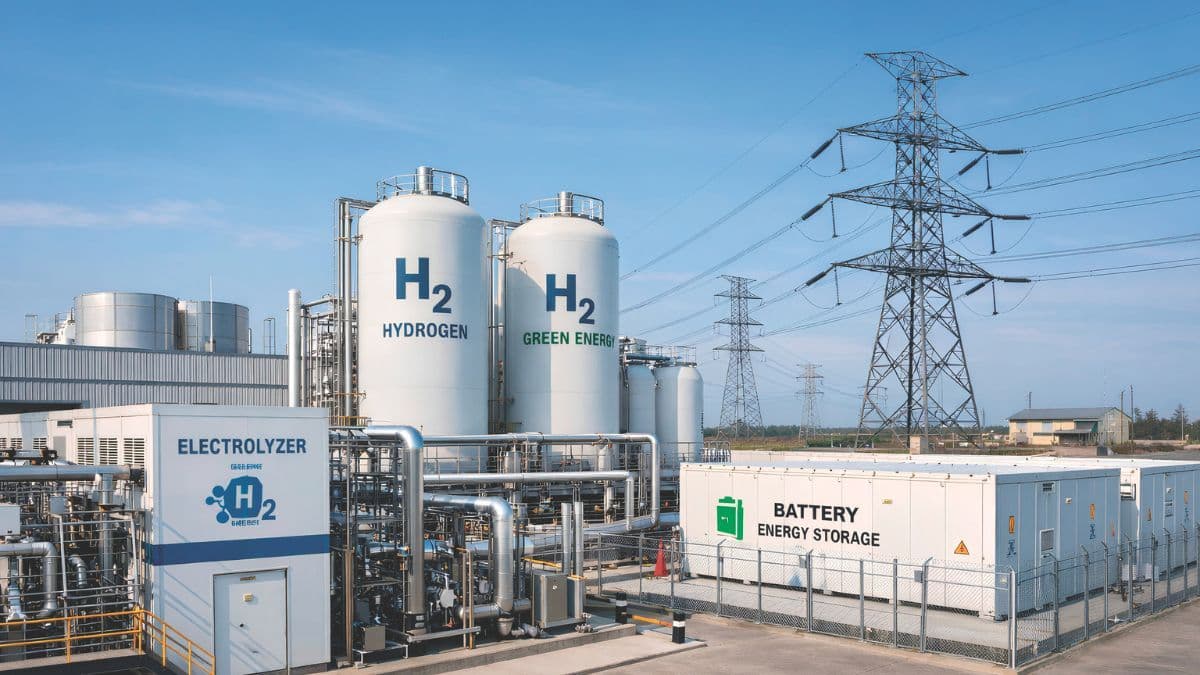
Furthermore, the NGHM is expected to generate over six lakh jobs, reduce fossil fuel imports by more than ₹1 lakh crore and avoid nearly 50 million tonnes of greenhouse gas emissions every year by 2030.
Creating a Financial Framework
With an initial outlay of ₹19,744 crore till Financial Year 2029–30, the mission includes ₹17,490 crore for the Strategic Interventions for Green Hydrogen Transition (SIGHT) programme, ₹1,466 crore for pilot projects, ₹400 crore for Research and Development (R&D) and ₹388 crore towards other components.
The Early Movers
As many as 19 companies have been allocated a cumulative annual production capacity of 8,62,000 tonnes of green hydrogen every year, and 15 firms have been awarded a 3,000-MW annual electrolyser manufacturing capacity as of May 2025. Also, pilot projects have begun in steel, mobility and shipping sectors, indicating initial moves towards commercial adoption.
Slew of Scheme
To boost the mission, the government has launched various schemes, which are expected to accelerate production and use of green hydrogen, promote domestic manufacturing and exports, ensure regulatory compliance and strengthen public–private partnerships.
SIGHT Programme
With an outlay of ₹17,490 crore up to 2029-30, the SIGHT is a financial mechanism, providing incentives for the manufacturing of electrolysers used for the production of green hydrogen.
Green Hydrogen Hubs Development
The Ministry of New and Renewable Energy (MNRE) has recognised three major ports, Deendayal Port Authority in Gujarat, VO Chidambaranar Port Authority in Tamil Nadu and Paradip Port Authority in Odisha as Green Hydrogen Hubs in October 2025. These coastal gateways are expected to serve as integrated centres for production, consumption, and future export.
Standards, Certification and Safety
The government launched the Green Hydrogen Certification Scheme of India (GHCI) in April 2025 to provide a national framework to certify hydrogen as ‘Green’ by assessing its greenhouse gas emissions across the entire production cycle.
The scheme ensures that only hydrogen produced using renewable energy, and within the prescribed emission limits, can be officially labelled as ‘Green Hydrogen’. It provides transparency, traceability and credibility for producers, buyers and export markets.
Under the GHCI, obtaining a ‘Final Certificate’ is mandatory for any green hydrogen production facility in India that receives subsidies or incentives from the union or state governments, or sells or uses the hydrogen domestically. The Bureau of Energy Efficiency (BEE) is the nodal authority responsible for accrediting agencies that monitor and certify projects.
Strategic Hydrogen Innovation Partnership
With Strategic Hydrogen Innovation Partnership (SHIP), the mission fosters public-private partnerships for R&D.
It is designed to support the development of advanced, globally competitive hydrogen technologies through collaborative research involving government institutions, industry and academic organisations. Moreover, to drive innovation across the green hydrogen value chain and support domestic manufacturing capability, the programme includes the creation of a dedicated R&D fund with contributions from both the government and industry.
Under SHIP, consortium-based research will be encouraged to leverage the strengths of national scientific institutions such as Bhabha Atomic Research Centre (BARC), Indian Space Research Organisation (ISRO),
The Council of Scientific & Industrial Research (CSIR), Indian Institute of Technology (IITs), Indian Institute of Science (IISc), and other partners.
Besides, a dedicated ₹400-crore R&D scheme under the mission is already powering 23 cutting-edge projects across areas such as hydrogen production, safety systems, storage and industrial applications.
Additionally, a ₹100-crore Call for Proposals has been launched to support start-ups working on innovative technologies for hydrogen production, storage, transport and utilisation, with funding of up to ₹5 crore per project. These initiatives are aimed at developing globally competitive technologies and reducing costs across the hydrogen value chain.
The second round of R&D proposals, launched in July 2025, focuses on collaborative research and industry participation, with over 30 joint proposals internationally submitted under the EU–India Trade and Technology Council.
Pathways for Adoption
The roadmap is not just limited to forming policies and providing subsidies, as the government stresses that green hydrogen is also being introduced in key sectors to reduce emissions, supporting domestic manufacturing and replacing fossil-based hydrogen and feedstock.
A recent auction has been taken place for a long-term supply of green ammonia to fertiliser units, with an aggregate procurement capacity of 7.24 lakh MTPA at a price of ₹55.75 per kg.
The NGHM is facilitating applications across industry, mobility, and infrastructure.
Industrial Use
In the fertilisers sector, fossil fuel-based feedstocks are being replaced with green ammonia. A recent auction has been taken place for a long-term supply of green ammonia to fertiliser units, with an aggregate procurement capacity of 7.24 lakh MTPA at a price of ₹55.75 per kg.
Petroleum refining is another area where the mission is seamlessly facilitating the replacement of fossil-based hydrogen with green hydrogen in refineries, directly reducing the carbon footprint of this essential industry.
In steel, five pilot projects have been initiated in collaboration with public and private steel producers to evaluate the use of green hydrogen for iron reduction and other process applications. These pilots are designed to assess the technical feasibility, economic viability and safety of hydrogen-based steelmaking in Indian operating conditions.
Mobility and Transport
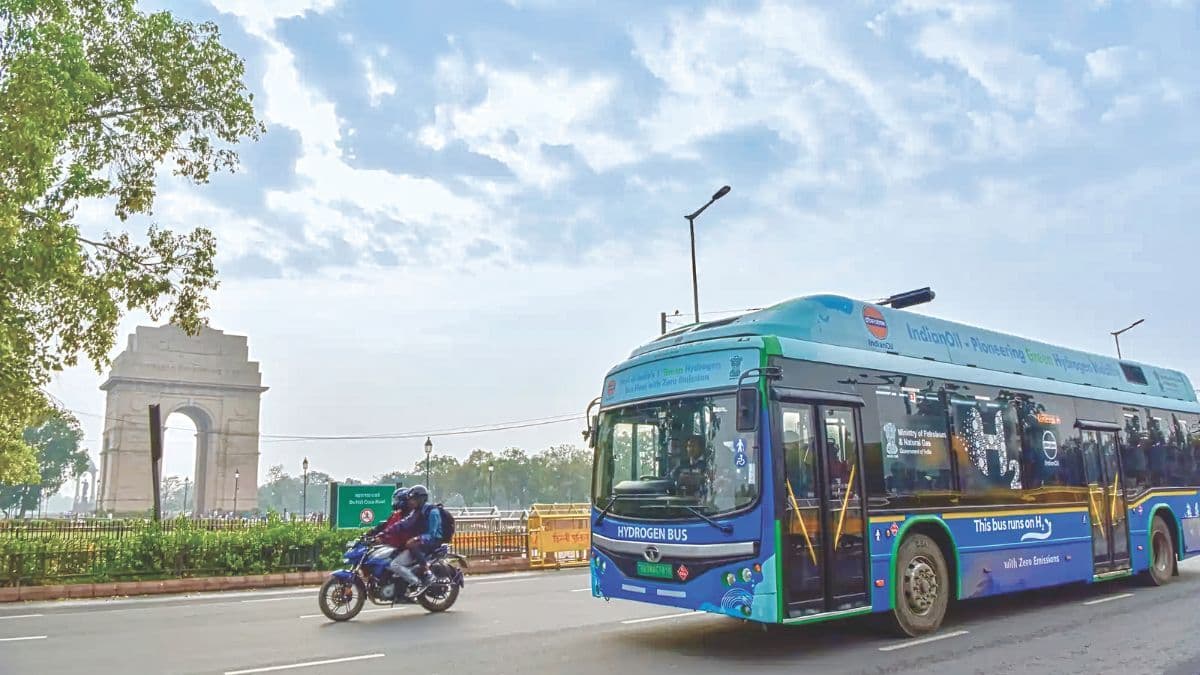
In road transport, five major pilot projects have been initiated involving 37 hydrogen vehicles, including buses and trucks, and nine refuelling stations across 10 different routes. The vehicles to be deployed for the trial include 15 hydrogen fuel cell-based vehicles and 22 hydrogen internal combustion engine-based vehicles. The financial support for the project would be around ₹208 crore.
Shipping has also emerged as an early use case. A port-based green hydrogen pilot project was commissioned at VO Chidambaranar Port in September 2025, featuring a ₹25 crore, 10 Nm³/hr facility that will supply green hydrogen for applications such as street lighting and an EV charging station.
Equally significant, Deendayal Port Authority, Kandla, has commissioned a megawatt-scale, indigenous green hydrogen facility developed at a cost of about ₹13 crore, with an annual production capacity of nearly 140 metric tonnes. Additionally, a ₹42-crore, 750 m³ green methanol bunkering and refuelling facility is being developed to support cleaner maritime operations and establish a Coastal Green Shipping Corridor between Kandla and Tuticorin.
Also, a high-altitude mobility has been tested. In November 2024, NTPC commissioned the world’s highest altitude green hydrogen mobility project in Leh at 3,650 meters, which includes five hydrogen intra-city buses and a fuelling station proving the fuel’s reliability in extreme conditions. This station shall mitigate the carbon emissions of approximately 350 MT/year and contribute 230 MT/year of pure oxygen into the atmosphere, which is equal to planting about 13,000 trees.
Enabling Framework
Beyond direct incentives, a comprehensive enabling framework is being established to de-risk investments and accelerate development.
A coordinated skill development programme is being implemented, which has already certified over 5,600 trainees in hydrogen- related qualifications.
To facilitate the delivery of low-cost renewable energy for hydrogen production, the government provided a waiver of interstate transmission charges and ensured a time-bound grant of open access.
Furthermore, a coordinated skill development programme is being implemented, which has already certified more than 5,600 trainees in hydrogen-related qualifications, building a future-ready workforce.
Forging Global Partnerships
India is proactively forging global partnerships. In 2024, the country made its debut in the international hydrogen community at the World Hydrogen Summit in Rotterdam by inaugurating its first India Pavilion. This positions the country as a prime partner for global investment and a key partner in the emerging global hydrogen economy.
Under the EU-India Trade and Technology Council, collaboration is expanding, with over 30 joint proposals received on hydrogen production from waste. Moving with India-UK Partnership, a dedicated Standards Partnership Workshop in February 2025 was held to strengthen cooperation on hydrogen standardisation, focusing on safe, scalable, and globally harmonised Regulations, Codes and Standards (RCS) to enhance trade.
In November 2024, Solar Energy Corporation of India (SECI) signed an MoU with Germany’s H2Global Stiftung to collaborate on market-based mechanisms and joint tender designs, facilitating the export of Indian green hydrogen to international markets. What is more, in October 2025, Sembcorp Industries signed MoUs with VO Chidambaranar and Paradip Port Authorities to develop integrated green-hydrogen and ammonia hubs for production, storage and exports.
Green hydrogen stands at the centre of India’s clean energy strategy, driving the shift towards a low-carbon and self-reliant economy. Building on one of the world’s most competitive renewable energy bases, the NGHM is expanding domestic production, scaling innovation and opening global markets for green hydrogen and its derivatives.
The mission reduces dependence on fossil fuels, accelerates industrial transformation, and positions India to lead with credibility in the global clean energy transition, advancing a future that is sustainable, secure, and self-sustained.