Puneet Kumar, Kerala’s Resident Commissioner and Additional Chief Secretary (Power), explains how Kerala is securing reliable supply through hydro and rooftop solar, managing EV-driven demand, fast-charging peaks, decentralised renewables, and stronger Centre–State grid coordination.
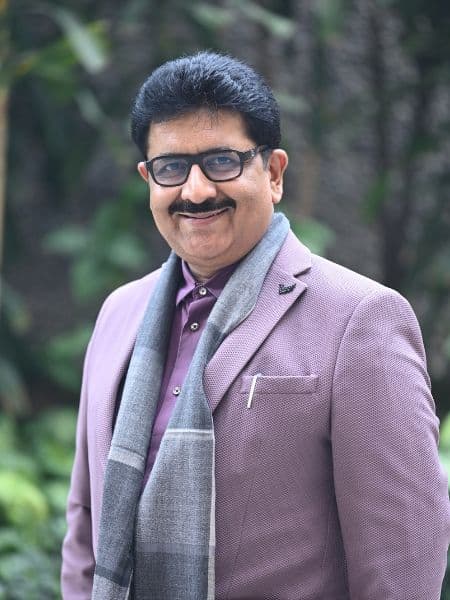
Puneet Kumar, Resident Commissioner & Additional Chief Secretary, Power, the Government of Kerala, outlines how the state is managing energy security amid rising demand and land constraints. He explains Kerala’s reliance on hydro power supplemented by rooftop solar, the impact of rapid electric vehicle adoption on grid operations, and the role of fast-charging infrastructure in managing peak loads. Kumar also discusses the use of decentralised renewable generation across urban and remote areas, and the importance of centre–state coordination in maintaining grid reliability.
Kerala has been generating its power largely through hydro resources, which have been supplemented to some extent by solar power and, to a very limited extent, by wind power. We generate about 30 percent of our requirements and are dependent on other sources of power through Power Purchase Agreements (PPA) to manage our resources. With various initiatives taken by the union government, and as the energy sector has evolved, several new schemes have come up. Kerala has done very well under the PM Surya Ghar: Muft Bijli Yojana, and rooftop solar has gained significant traction.
Apart from this, Kerala has moved very fast in terms of Electric Vehicle (EV) penetration. This is a very dense state, so when you encourage users to adopt EVs, fast-charging infrastructure becomes essential. Otherwise, the entire charging load comes onto the grid at night, which is already a peak period for power and becomes very difficult for discoms to manage.
We have therefore taken several initiatives. Under the PM E-DRIVE scheme, managed by the Ministry of Heavy Industries, Kerala has submitted proposals of more than `270 crore, identifying over 340 locations for fast-charging infrastructure. This will encourage users, facilitate ease of charging for EVs, and potentially increase the renewable energy component in the power mix.
We have also been moving quickly to generate more solar power wherever possible. Many people are aware that Cochin International Airport Ltd (CIAL) is a completely solar-powered airport, one of its kind globally. It also generates surplus solar power, which is now being used to produce green hydrogen. CIAL has launched its first pilot project in conjunction with BPCL. All requirements have been completed, and it can produce around 450–500 kg of green hydrogen per day. This can be scaled up to nearly two metric tonnes per day.
All these initiatives are underway, and therefore our energy transition is well on course towards achieving 100 percent renewable energy by 2040 and carbon neutrality by 2050.
The vulnerability arises when the cost of power rises during such periods, and it becomes very difficult because we cannot increase tariffs for the people. Neither is it the desired objective that we provide power if it is not affordable. If power is not affordable, problems begin to rise, and this also affects the financial health of the discoms.
Another vulnerability is related to the intermittent character of renewable energy. Because of its intermittency, it creates stress on the transmission network and on the overall system.
So, we are basically trying to use as much solar power as possible through distributed solar by connecting it to fast-charging EV infrastructure, so that most of the solar power is used directly. It is used through the fast-charging infrastructure in a faster manner, so that most of the renewable energy is actually used for EVs.
It has not really created complications. I would say that this has been a helpful situation wherever we have decentralised renewable energy generation, and I will give examples:
Kerala has been very innovative, and we have created solar energy systems even in tribal hamlets located in difficult and hilly terrain. This is a one-time investment, and once it is done, it can be expanded further.
For instance, it can be extended to community classrooms. There, smartboards and digital infrastructure can be provided for E-learning in tribal hamlets. During the daytime, when students go to these classrooms, they are able to use this infrastructure, which otherwise was very difficult to provide because conventional discom networks found it challenging to reach such remote and far-flung areas.
Apart from this, the same decentralised power generation has also been used for refrigeration and storing vaccines, which has improved the vaccination programme for tribal communities and weaker sections of society. So, decentralised power generation through renewable energy resources has actually helped us. Kerala has capitalised on this approach because we face constraints in terms of land availability. Therefore, we have focused on small but scalable initiatives.
We are receiving a lot of cooperation from the union government. Different state governments have also been offering their excess transmission capacity for utilisation. Rajasthan, in particular, has offered this of late, and Kerala has been taking advantage of such arrangements.
We have also benefited from distributed solar from some of these states through swap arrangements, which are working well. That is how we have been able to improve our operational efficiency.
I am a firm believer that no single model fits all. Every state has its own unique geographical constraints, and Kerala is no exception. Kerala has a coastline of around 600 kilometres. This gives us significant potential for offshore wind generation and even for tapping tidal power. We are working on some pilot projects in these areas, and once they become successful, they will be replicated.
Kerala does not have the kind of land availability required for large-scale solar projects like Gujarat or Rajasthan. Similarly, industrialisation has not taken place to the same extent.
However, Kerala has increased MSME growth and improved its ease of doing business. This will increase power demand, and we need to prepare for that. Our power demand growth rate is around CAGR of five percent.
Unless we act proactively and try to mop up as much power generation as possible within our constraints, the existing gap—which is currently around a 30:70 ratio—could widen further, possibly to 20:80 or even 15:85.
Additionally, once the Vizhinjam port starts full-scale operations, it will require a large number of ancillary and supporting industries, including data centres, which are power-intensive. As a result, power demand in Kerala is bound to increase.
We are therefore looking at all possible sources of power. In the times to come, private enterprise may be encouraged to explore nuclear power as well. Kerala has significant thorium resources, and thorium-based reactors are often discussed as a potential future solution. We are mindful of such possibilities and are aligned with several progressive initiatives of the central Government. Kerala has been receiving good support on these fronts.