
In an ENERGDIVE interview, Dr RK Malhotra outlines how India can build a competitive hydrogen ecosystem, stressing infrastructure-first execution, technology diversity, engineering integration and robust safety standards under the National Green Hydrogen Mission.
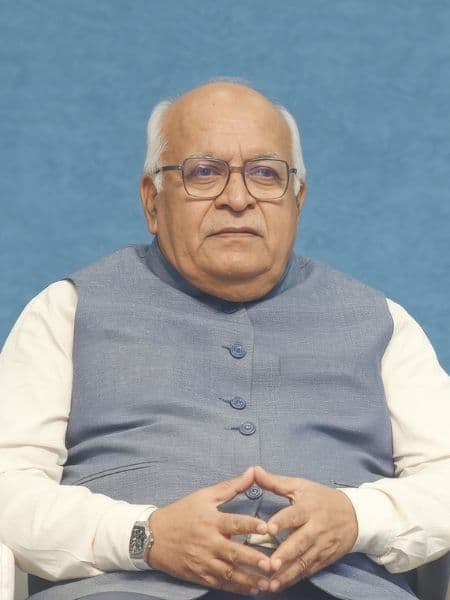
Dr RK Malhotra brings extensive experience across fuels, emissions, hydrogen technologies and national standards,
offering a clear view of what it will take for India to build a competitive hydrogen ecosystem. Drawing on his role in the
Empowered Group guiding the National Green Hydrogen Mission and President of Hydrogen Association of India, he outlines the practical steps needed: advance infrastructure ahead of cost declines, maintain a technology-plural approach to electrolysers, strengthen India’s engineering integration, and establish rigorous safety and certification frameworks. In an interview with ENERGDIVE, he lends his perspective that provides a structured, execution-focused pathway for translating policy ambition into credible industrial scale.
From the Empowered Group’s vantage point, three priorities are decisive. Firstly, bankable offtake that will, of course, depend on the cost of production, which is reportedly encouraging. The important point is, long tenor contracts, domestic by refineries or fertiliser units, etc, but also export orders that reduce demand risk for early plants.
Secondly, synchronised infrastructure—Renewable Energy (RE) and transmission on one timeline, and hydrogen pipelines or port logistics on another, so production is not stranded. Thirdly, standards and safety—codify the minimums for design, construction and operations now, so scale comes with confidence. We are aligning these with a clear implementation calendar and transparent data to keep execution honest.
India should be technology plural. Alkaline remains cost effective for large, steady loads; PEM is attractive where dynamics and footprint matter; AEM can lower catalyst costs; SOEC can be compelling when high temperature heat is available. On derivatives, ammonia is the logical export and shipping vector; methanol fits chemicals and shipping; LOHC can serve certain logistics. Our edge will come from integration quality—power electronics, balance of plant, thermal integration, and operating discipline—areas where Indian engineering is strong.
“Assembly” is not enough. We need stack reliability, membrane/catalyst innovation, power conversion efficiency, and supply chain depth (compressors, valves, instrumentation). Quality must be measurable—standard test protocols, durability run hours, and failure mode analytics. If we combine PLI enabled lines with indigenous materials science and qualification labs, India can be not just a large manufacturing hub but also export ready and may be one the global leaders.
Let me first address mobility: the conversion of Compressed Natural Gas (CNG) to hydrogen operation should be incentivised, and corridors on highways should have hydrogen dispensing stations. The hydrogen of any colour is permitted as green hydrogen is not affordable at present. We need to create infrastructure without waiting for the cost of green hydrogen to come down. Hydrogen Internal Combustion Engine kits retrofits, besides heavy duty trucking, can also find applications in mining/haulage/ off-road equipment.
The research on electrolysers can lead to cost reduction of catalysts, membranes and startups for the same need to be supported. Solid Oxide Electrolyzer Cell (SOEC) can be applied by co locating units with high temperature processes. Tools for accurate Techno-economic Analysis (TEA)/Life Cycle Analysis (LCA) analysis under common templates allow investors to see apples to apples metrics and help regulators calibrate the right incentives. As someone who has led R&D as well as standards work, I see common measurement as the fastest way to scale up credible innovation.
Start where molecules are already used. Refineries and fertilisers are natural first movers—existing hydrogen users who can switch green with the right economics. Next, steel via DRI and chemicals via derivatives; then heavy mobility, where Hydrogen Internal Combustion Engine and fuel cells can both play. Policy should enable pooled procurement and, where appropriate, contracts for difference to buy down early green premiums. This is targeted, time bound support in exchange for clear localisation and performance.
We must plan hydrogen hubs as systems, not projects—renewables plus grid connection, water solutions, production, H2 pipelines or virtual truck logistics, storage, and port interfaces for ammonia. The sequencing is: pick industrial anchors, align transmission and port capacity, and then expand to multi user ecosystems. Well designed hubs lower delivered costs, enhance safety oversight, and build learning curves faster. I will repeat that the infrastructure should be created without waiting for green hydrogen cost to come down, and in the interim, we may use grey or blue hydrogen or Hydrogen-enriched Compressed Natural Gas (H-CNG) mixtures.
Water must be treated as a first class design variable. Coastal hubs can combine desalination with responsible brine management; inland hubs should emphasise recycling, wastewater use and closed loop cooling. Sustainability is not a slogan—LCA discipline on water, land and materials will keep our plants financeable and our social licence intact.
Safety is engineering plus culture. We should front load codes and standards (hazardous area classification, ventilation, leak detection, materials compatibility), competency certification for installers and operators, and emergency response protocols for first responders. My experience on national emission and fuel quality committees taught me that codified, auditable practice is the only scalable safety model. Another important aspect is outreach to communicate with stakeholders about safety aspects.
India needs a digital, tamper evident Guarantee of Origin tied to carbon intensity with Monitoring, Reporting, and Verification (MRV) that is interoperable with major markets. Keep it rigorous but practical—align with global norms, yet avoid compliance overheads that disadvantage producers. If we get certification right, exports follow—because buyers are really purchasing verified carbon outcomes.
Early plants require blended finance: concessional lines and Viability Gap Funding (VGF), where justified, coupled with Contract for Differences (CfDs) to stabilise revenue. A green credit market for verifiable emissions reductions can complement offtake. The goal is to crowd in private capital with time bound, well targeted instruments, and sunset support as learning curves deliver cost parity.
Prioritise ammonia export corridors with credible offtakers in shipping, chemicals and power. Build port storage, cracking pilots and bunkering capability. On pricing, transparency matters—indexation that reflects carbon intensity and logistics reality will make MoUs investible. India can be a dependable supplier if we combine quality certification, hub reliability and logistics discipline.
Three signals would tell me we have arrived. One, achieving domestic production of 5-8 MMT of green hydrogen supplemented by another 2-3 MMT of low carbon/ blue hydrogen, cater the domestic offtake across refineries, fertiliser and steel plants, etc, with verified CI below agreed thresholds. Two, a globally recognised certification regime and export corridors shipping ammonia at scale. Three, an industrial base—electrolyser stacks, membranes/catalysts, power electronics, and safety systems—fed by Indian R&D and documented reliability. That is the difference between projects and a sector.