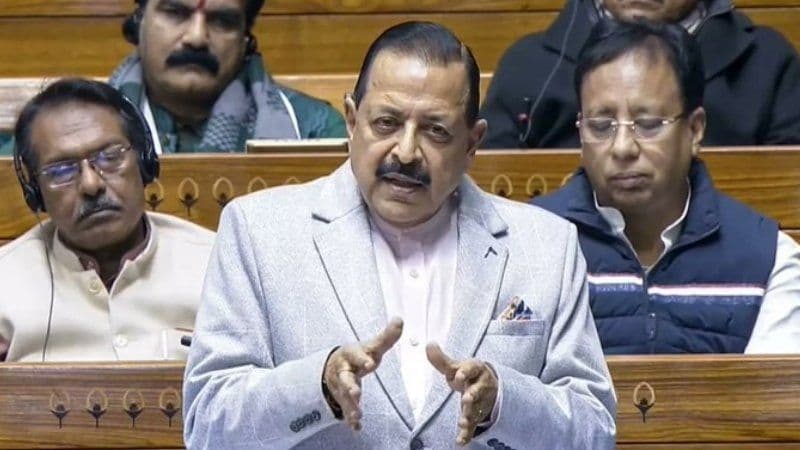
Energy independence has become an economic and strategic necessity rather than a policy choice, Union Minister of State for Atomic Energy and Science and Technology Jitendra Singh has said, linking India’s clean energy transition with self-reliance and geopolitical considerations.
Singh said debates over whether to adopt clean energy are largely settled, as energy transition is now central to economic resilience and long-term growth. Continued dependence on fossil fuel imports, he said, exposes India to external risks at a time when traditional energy exporters are themselves diversifying their energy portfolios.
While renewable energy will account for a growing share of the electricity mix, Singh said certain sectors such as data centres, artificial intelligence and advanced computing require uninterrupted, round-the-clock power. In these applications, nuclear energy remains critical due to its reliability and stability.
The minister reiterated the government’s long-term targets of achieving net zero emissions by 2070 and expanding nuclear power capacity to 100 GW by 2047. He said India’s future energy system would be hybrid in nature, combining renewables, nuclear power, hydrogen and other emerging technologies based on cost, reliability and system requirements.
Singh also referred to recent reforms opening sectors such as nuclear energy and space to private participation, arguing that public–private collaboration would be essential to scaling clean energy technologies. He said India was increasingly shaping global conversations on clean energy and climate action, rather than merely responding to them, adding that clean energy is gradually becoming part of everyday economic decision-making.