India is accelerating the expansion of its Electric Vehicle (EV) charging infrastructure through tighter battery safety standards, public funding for charging stations, and a push for domestic manufacturing of critical EV components. The measures span regulatory updates, research and development initiatives, and large-scale deployment of public charging infrastructure across the country.
The Minister of State for Heavy Industries, Bhupathiraju Srinivasa Varma has said that the government has put in place a comprehensive framework covering battery safety, charging infrastructure and indigenous manufacturing to support the rapid growth of electric mobility.
The Ministry of Road Transport and Highways has notified and periodically updated battery safety standards for EVs. Amendments to AIS-156 for L-category EVs and AIS-038 (Revision 2) for M and N-category vehicles prescribe technical requirements for traction batteries and have been applicable since December 2022. EV prototypes and components are tested for over-charge and discharge protection, over-current and short-circuit protection, over-temperature protection, voltage cut-off mechanisms, and battery management systems.
The Bureau of Indian Standards has also notified multiple safety standards governing lithium-ion batteries, covering transport safety, reliability and abuse testing, propulsion systems for electric vehicles, industrial applications, and portable battery systems. These standards define test protocols and safety requirements across different EV use cases.
Parallelly, the Ministry of Electronics and Information Technology, under the Development of Electric Vehicle Sub-Systems programme, has undertaken research and development initiatives for indigenous EV subsystems, including motors, controllers, converters, chargers, and battery management systems. Projects for the development of BMS and AC and DC chargers have also been taken up under the programme.
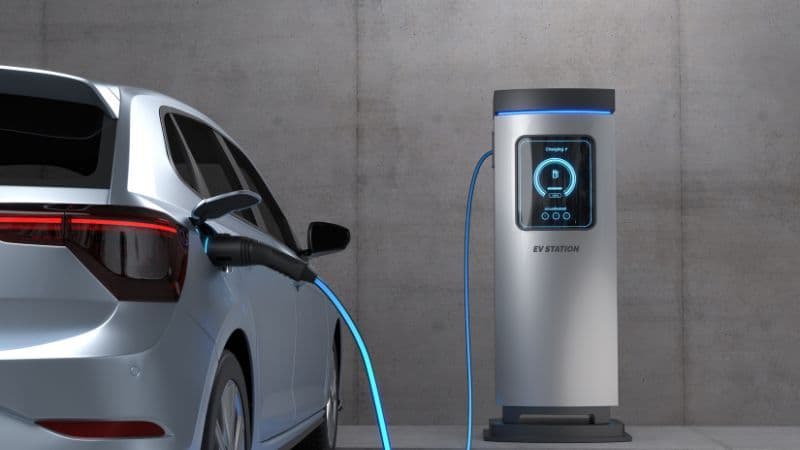
Public charging infrastructure deployment has been supported through multiple schemes. Under the FAME-II programme, ₹912.50 crore was sanctioned for setting up EV public charging stations. An additional allocation of ₹2,000 crore has been made under the PM E-DRIVE scheme for pan-India deployment of charging infrastructure. The Ministry of Power issued guidelines in January 2025 to accelerate the creation of a connected and interoperable EV charging ecosystem.
As per inputs from Bharat Heavy Electricals Ltd, a total of 29,151 EV charging stations have been installed across the country, of which 12,033 are fast chargers.
On the manufacturing side, the Production Linked Incentive scheme for Advanced Chemistry Cells, implemented by the Ministry of Heavy Industries, has earmarked ₹18,100 crore to establish 50 GWh of domestic ACC manufacturing capacity over seven years, aimed at strengthening the supply chain for electric mobility and reducing import dependence.