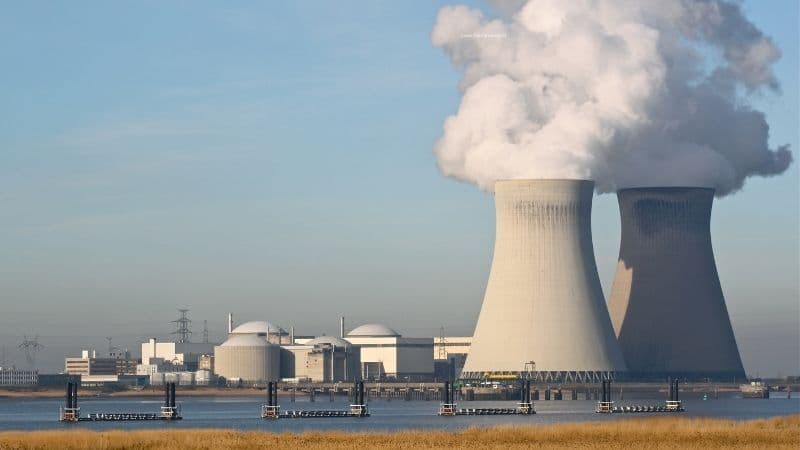
India’s nuclear power capacity is set for a major expansion, with 17 reactors totalling 13,100 MW under various stages of construction and pre-project activities. The projects are expected to be completed progressively by 2031–32.
At present, the country has an installed nuclear capacity of 8,780 MW from 24 reactors, excluding the 100 MW Rajasthan Atomic Power Station-1 (RAPS-1). Of the 17 upcoming units, seven reactors are under construction while 10 are in pre-project stages, Minister of State for Personnel, Public Grievances & Pensions and Prime Minister’s Office Jitendra Singh said in a written reply in the Rajya Sabha.
Among projects nearing completion, RAPP-8 in Rajasthan (700 MW) has achieved 98.6 percent physical progress, while Kudankulam units 3&4 (2,000 MW) stand at 80.5 percent. Kudankulam units 5&6 (2,000 MW) are 41.5 percent complete, and civil works are under way for Gorakhpur units 1&2 (1,400 MW) in Haryana.
In Tamil Nadu, state-run Bharatiya Nabhikiya Vidyut Nigam Ltd (BHAVINI) is commissioning the 500 MW Prototype Fast Breeder Reactor (PFBR) at Kalpakkam. The government has also approved pre-project activities for two additional 500 MW fast breeder units (FBR-1&2) at the same site. Financial sanction will be sought after the PFBR achieves first criticality.
Pre-project work is under way for reactors at Kaiga in Karnataka, Chutka in Madhya Pradesh, Gorakhpur in Haryana and Mahi Banswara in Rajasthan, where four 700 MW units are being implemented by Anusshakti Vidhyut Nigam Ltd (ASHVINI), a joint venture of Nuclear Power Corporation of India Ltd (NPCIL) and NTPC Ltd.
The minister said safety upgrades are a continuous process, adding that major renovation and modernisation is under way at four operating reactors. Construction begins only after obtaining environmental clearance based on comprehensive impact assessments, he said.