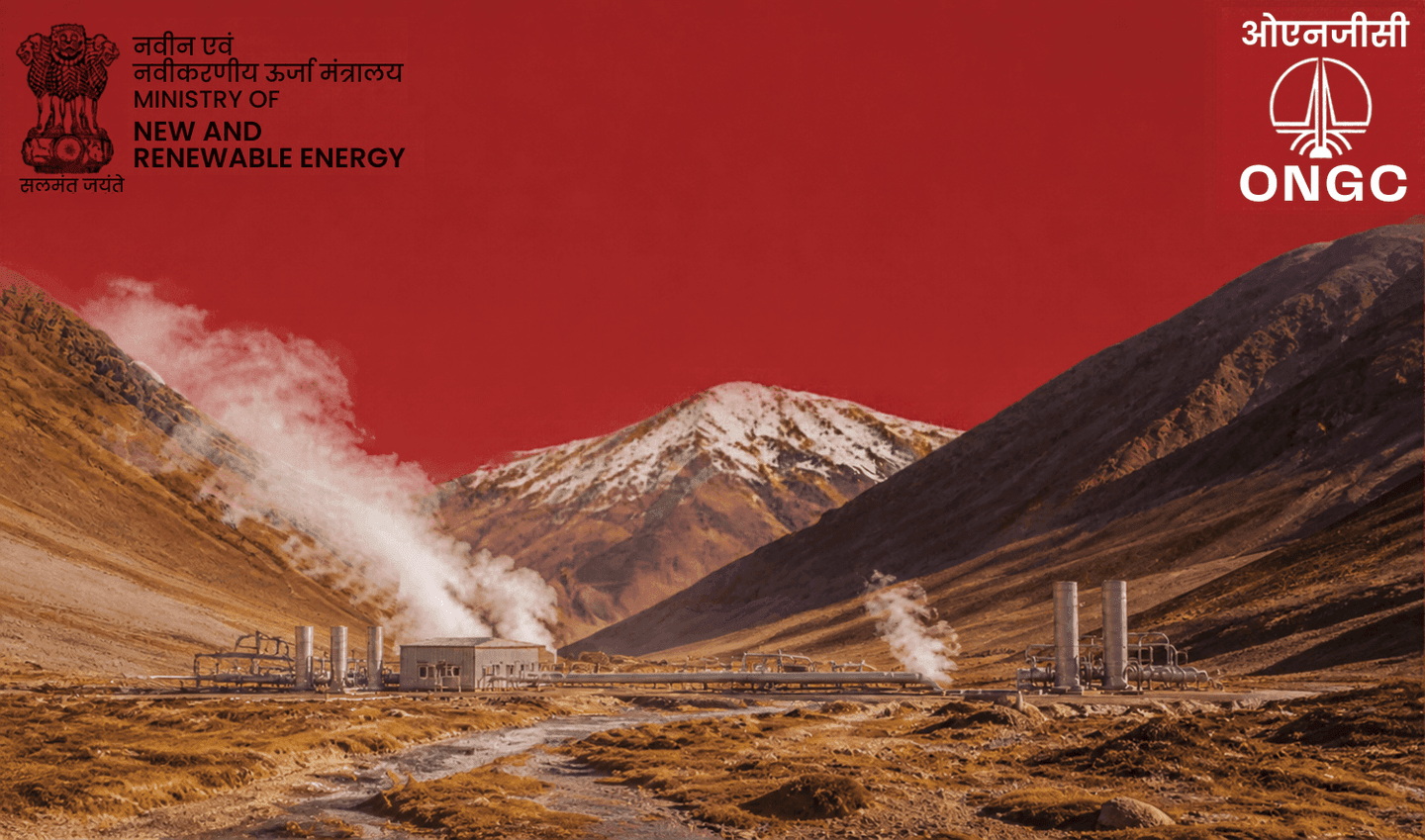
India is speeding hard to utilize its untapped geothermal resources to diversify its renewable energy mix and add weather-independent, round-the-clock clean baseload capacity in the run-up to its 2070 Net Zero aim. As per the National Policy on Geothermal Energy, notified in September 2025 with the Ministry of New and Renewable Energy (MNRE) as the nodal implementing body, the country is translating geological assessments into field deployment across 10 identified geothermal provinces, 381 mapped hot springs and 42 promising sites with an estimated theoretical potential of nearly 10.6 GW. The momentum picked up in July 2026 when ONGC Energy Centre drilled India’s first two 1,000-metre deep geothermal wells at Puga Valley in Ladakh, situated at an altitude of over 14,000 feet, to aid reservoir appraisal and pave the way for the nation’s first 1 MW demonstration geothermal power plant. Besides Puga Valley, MNRE is also pursuing five dedicated research and demonstration projects on abandoned oil and gas well retrofits in Ankleshwar, solar-geothermal hybrid projects of 50-90 kW in Gandhinagar, resource assessment projects in Tawang, geothermal cooling systems in Hyderabad and shallow borehole heat exchangers.
The policy framework, supplemented by bilateral technical cooperation with Australia, Iceland and Saudi Arabia, domestic support for Ground Source Heat Pumps (GSHPs) and a national geothermal data repository, provides the commercial and engineering foundations for scaling indigenous baseload clean energy.