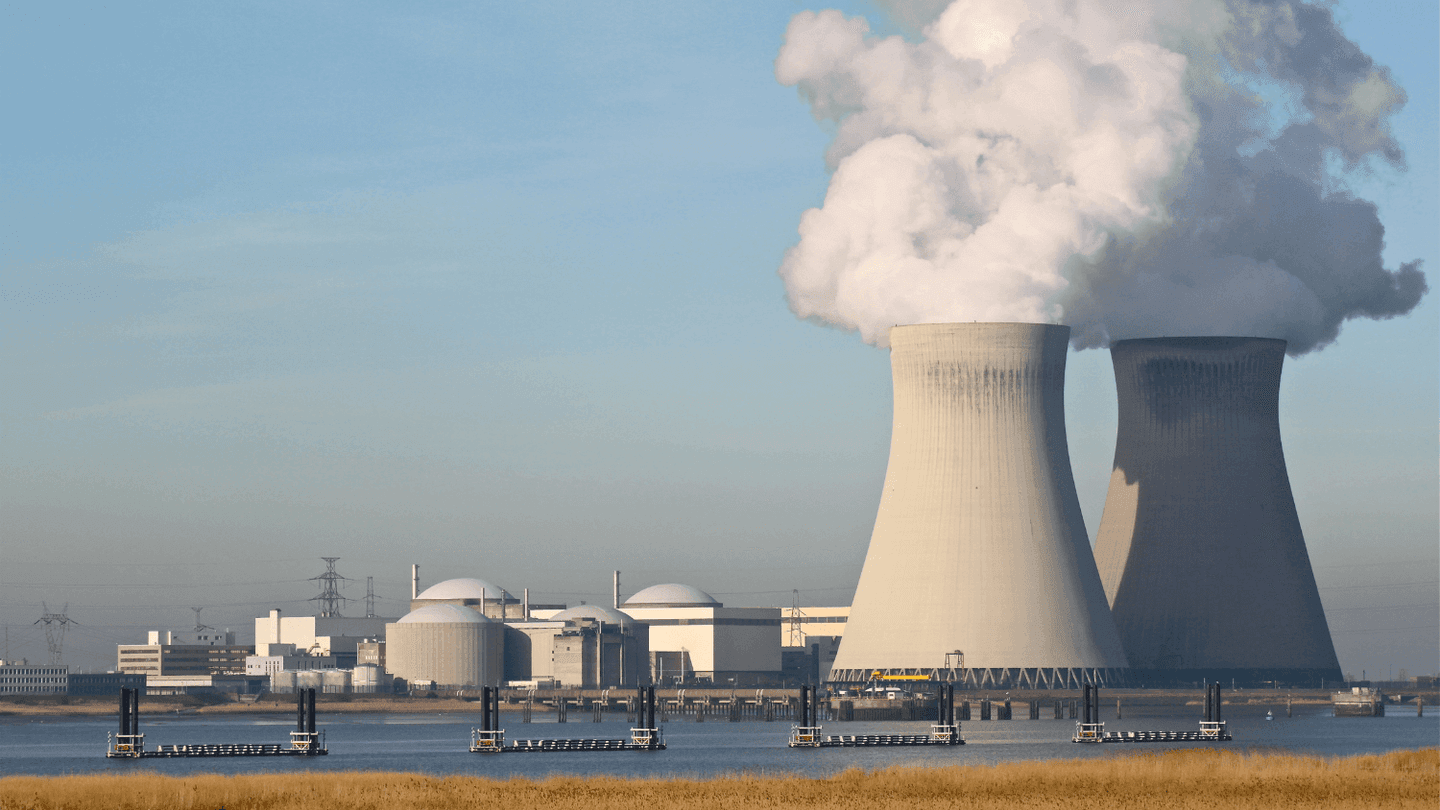
India's nuclear projects currently under construction are expected to add a cumulative 8,000 MW to the national grid upon progressive commissioning, the Department of Atomic Energy (DAE) has said.
The projects include indigenous 700 MW Pressurised Heavy Water Reactors (PHWR), the 500 MW Prototype Fast Breeder Reactor (PFBR) at Kalpakkam in Tamil Nadu and 1,000 MW Light Water Reactors (LWR) at Kudankulam in Tamil Nadu.
Among the projects, RAPP-7 at Rawatbhata in Rajasthan has already commenced commercial operation, with production beginning on April 15, 2026. The 700 MW unit was originally scheduled for commissioning in June 2016.
The paired RAPP-8 unit is in the advanced stage of commissioning and is expected to become operational in 2026.
At Gorakhpur, Haryana, construction and commissioning of GHAVP-1 and GHAVP-2, each with a capacity of 700 MW, is under way. The completion timeline is under revision.
The KAIGA-5 and KAIGA-6 units in Karnataka, each with 700 MW capacity, have also seen their commissioning schedules revised. KAIGA-5 is now scheduled for June 2031, while KAIGA-6 is scheduled for June 2032.
The 500 MW PFBR at Kalpakkam has a revised commissioning target of March 2027, with its project cost also under revision.
In the Light Water Reactor category, Kudankulam Nuclear Power Plant (KKNPP)-3 and KKNPP-4, each with 1,000 MW capacity, have revised commissioning dates of June 2027 and June 2028, respectively.
The KKNPP-5 and KKNPP-6 units, also of 1,000 MW each, are scheduled for commissioning in June 2029 and March 2030, respectively.
The Department of Atomic Energy said delays in nuclear projects in recent years have been attributed to several factors, including design changes following the Fukushima incident, delays in the supply of critical equipment, the COVID-19 pandemic, delays in supplies from the Russian Federation for Kudankulam projects, contractor-related financial constraints, difficult soil conditions at Gorakhpur, shortage of skilled manpower and geopolitical conflicts.
The department also cited the impact of the ongoing Russia-Ukraine and USA-Israel-Iran geopolitical conflicts on project execution.
To address these challenges, the government said project reviews are being conducted at multiple levels within the Nuclear Power Corporation of India Ltd (NPCIL) and DAE, alongside continuous monitoring of project activities, identification of constraints and mid-course corrections.
The measures also include frequent meetings with vendors and contractors, re-sequencing of construction activities, greater delegation of powers within NPCIL and a Board sub-committee for project monitoring.
The government has also adopted bulk ordering of long-delivery equipment, with several items already under manufacturing or progressive delivery for reactors being implemented in fleet mode.