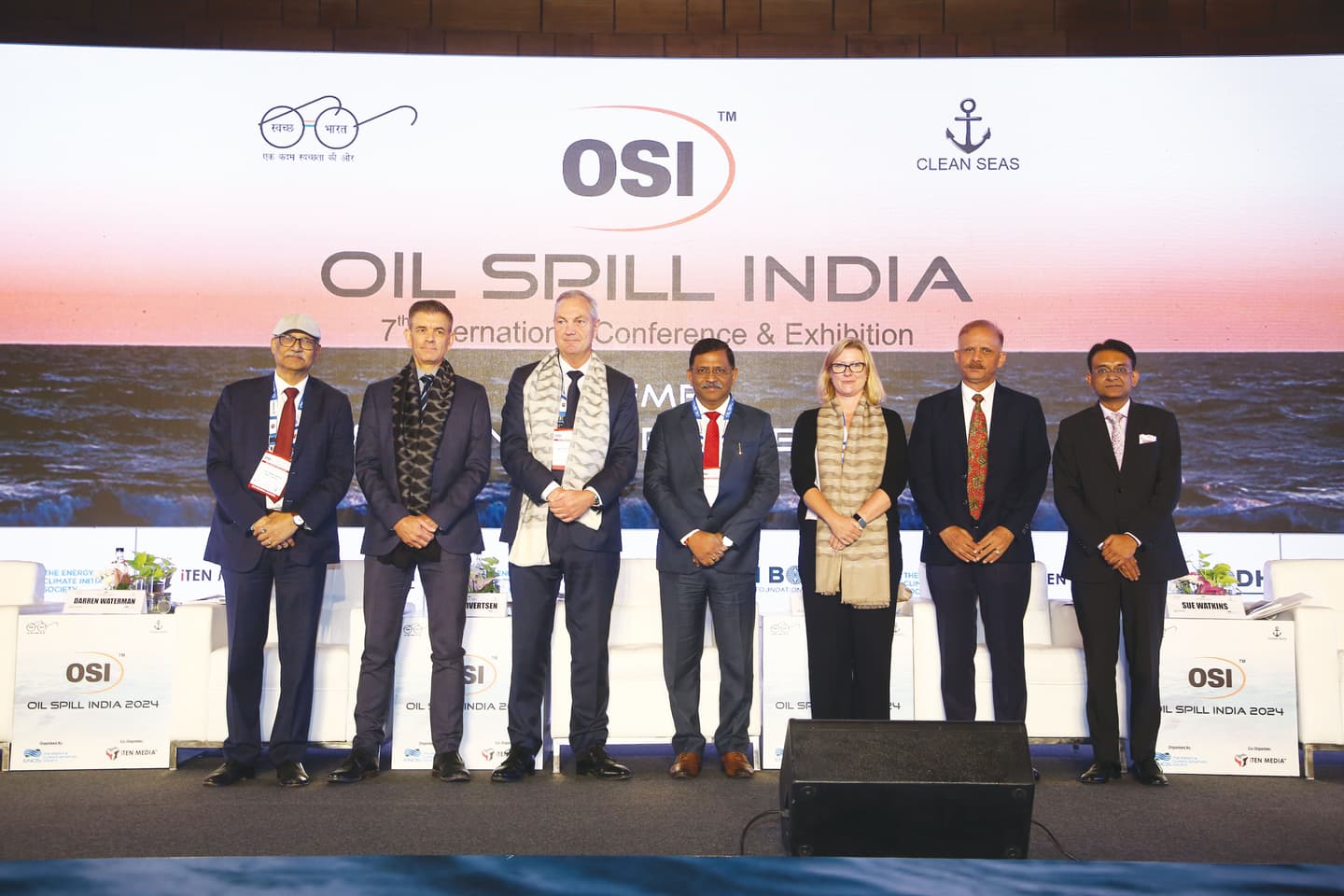
The eighth edition of Oil Spill India returns to New Delhi on 6–7 October 2026, bringing together policymakers, industry, researchers and frontline responders to examine the next phase of spill prevention, preparedness, response and restoration.
Oil Spill India (OSI) 2026 arrives at a significant point in its journey after its inception in 2011. The conference is entering its eighth edition with a brief that extends from spill prevention and response to the wider resilience of India’s coastal and marine environment. The setting for that discussion is changing. Maritime commerce is expanding, offshore activities are intensifying and coastal ecosystems across the Arabian Sea, Bay of Bengal and regional waterways are facing risks associated with climate-driven extreme weather and deeper offshore operations.
The 2026 edition with a theme ‘Coastal Guardians: Future-Proofing India’s Waters in an Era of Emerging Risks,’ will examine how India can prepare for these changing risks through stronger prevention and planning, more capable response systems, ecosystem restoration and closer collaboration among the institutions and industries involved.

Organised by The Energy & Climate Initiatives Society (ENCIS), with ITEN Media as co-organiser, over two days in New Delhi, OSI 2026 will bring together government bodies, maritime authorities, oil and gas companies, port and shipping professionals, scientists, researchers, technology companies, start-ups, environmental organisations and specialist response teams. The agenda ranges from AI-enabled surveillance and autonomous sensors to bioremediation, mangrove regeneration, governance and community capacity building.
A Conference Built on 15 Years of Experience
Since its inception in 2011, OSI has developed into a global forum devoted to spill prevention, planning, preparedness, response and restoration. The conference has brought together government bodies, industry practitioners, maritime authorities, researchers and NGOs to discuss the operational and environmental dimensions of oil-spill management.
This year’s edition builds on that experience while broadening the conversation towards emerging risks and the technologies and institutional arrangements required to address them. Its objective is to contribute to a decision-support ecosystem for India’s oil and gas, port and shipping sectors and support the movement towards a zero-incident paradigm.
Four Pillars for the 2026 Edition
The programme is structured around four critical pillars: Prevention & Planning; Preparedness & Response; Restoration & Resilience; and Collaboration & Governance. The four areas cover different stages of the spill-management cycle — from identifying and reducing risks to responding to incidents, restoring affected ecosystems and strengthening the relationships between agencies, industry and communities.
This year’s edition builds on that experience while broadening the conversation towards emerging risks and the technologies and institutional arrangements required to address them
Prevention & Planning
The prevention agenda will focus on the use of real-time surveillance and AI analytics for early leak detection. Advanced monitoring, detection and surveillance technologies will be examined alongside integrated risk-assessment and preparedness frameworks. The conference will also consider sea-based decarbonisation efforts in the context of India’s Net Zero ambition. The focus reflects a move towards identifying potential incidents earlier and improving the information available to those responsible for managing them.
Preparedness & Response
When an incident occurs, the quality and speed of the response can determine its wider consequences. OSI 2026 will draw lessons from global incidents while examining next-generation containment systems, bioremediation techniques and rapid mobilisation frameworks tailored to regional waters.
AI and robotics will also feature in discussions on spill response and remediation. Autonomous sensors, UAV mapping and predictive modelling will be examined for their potential role in preparing response teams and supporting decisions during an incident.
Restoration & Resilience
The work does not end when a spill has been contained. Restoration and resilience form a distinct pillar of OSI 2026, with attention to mangrove regeneration, coral reef restoration and community rehabilitation. These areas are closely linked to the livelihoods that depend on coastal ecosystems. The conference will therefore consider restoration not simply as an environmental exercise, but as part of the longer process of recovering from a spill.
Collaboration & Governance
Spill management involves a wide range of stakeholders, from national enforcement agencies and regulators to private companies, researchers, responders and local communities. OSI 2026 will examine frameworks that can bring these capabilities together and encourage greater use of private-sector innovation.
The conference will also explore the place of indigenous knowledge in developing an approach to spill-disaster resilience that reflects Indian conditions. Legal and regulatory reforms, community engagement and capacity building will form part of this discussion.
Technology as a Response Enabler
Technology runs across much of the OSI 2026 agenda. AI analytics can support surveillance and early detection. Autonomous sensors can extend monitoring capabilities. UAVs can support mapping, while predictive modelling can contribute to understanding potential spill movement and impacts.
The conference will also showcase technologies and techniques for containment and remediation. For OSI 2026, the question is therefore not technology in isolation, but how these tools can become part of a functioning response ecosystem involving people, equipment, information and institutions.
Who Will Be in the Room
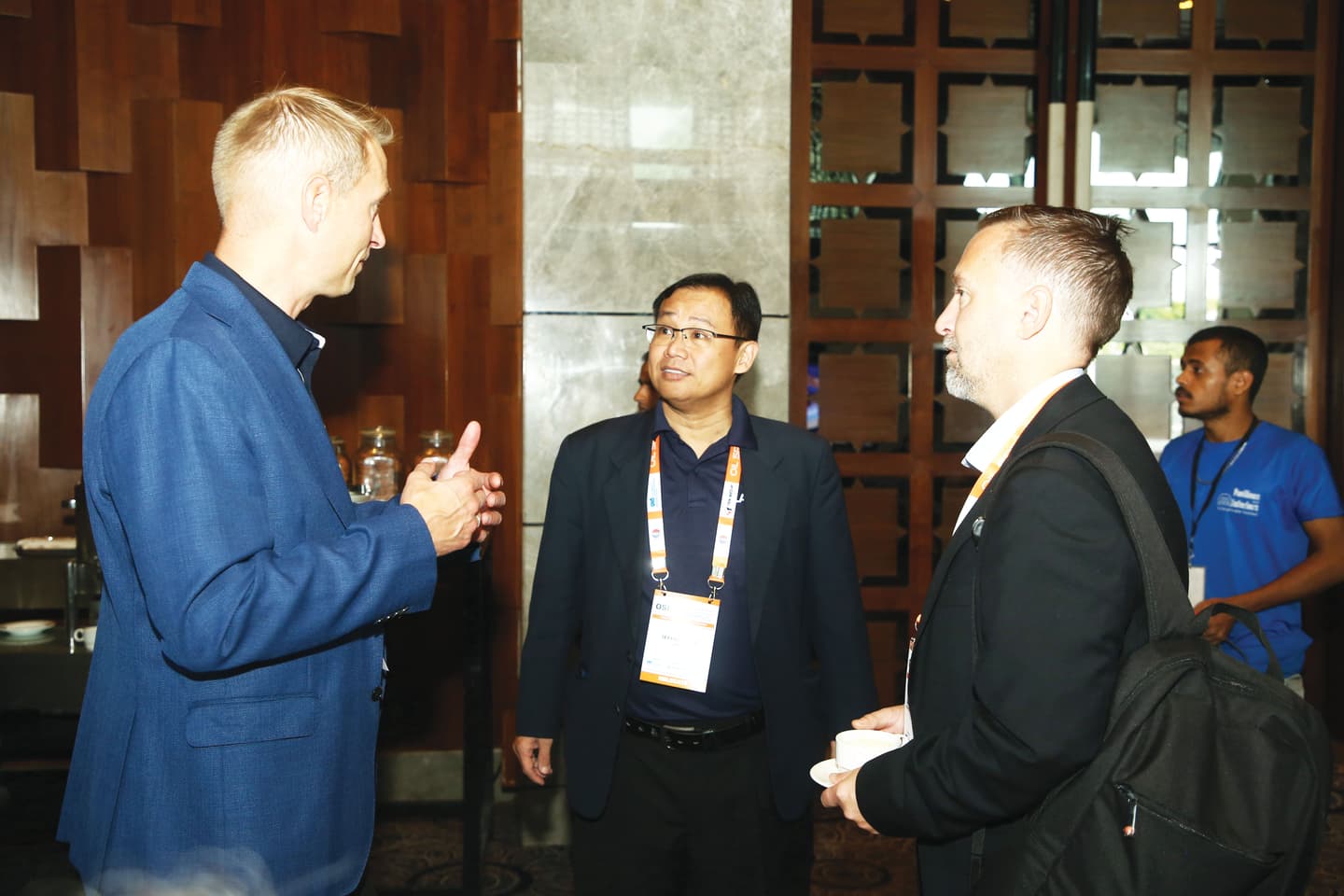
The attendee profile reflects the breadth of the spill-management ecosystem. Government authorities, nodal agencies and bureaucrats will participate alongside oil, gas and petroleum professionals, maritime and offshore companies, port authorities, private ports, shipyards, tankers, exploration companies, tug and barge operators and professionals working across pipelines and storage facilities.
The conference will also bring together global maritime organisations, salvage and wreck-removal companies, flag and port-state control advisers, marine scientists and researchers, pollution-response equipment suppliers, global spill responders and specialists.
P&I and H&M clubs, maritime lawyers, underwriters, classification societies, pollution control boards, EH&S professionals, plant and asset managers, logistics providers, fisheries, hoteliers, trade experts and organisations involved in PR and CSR initiatives also form part of the intended audience.
The Road to a Zero-incident Paradigm
The ambition set out for OSI 2026 is to help shape a robust decision-support ecosystem that can move India’s oil and gas, port and shipping sectors towards a zero-incident paradigm. That ambition rests on several connected requirements: better prevention, earlier detection, stronger preparedness, rapid response, effective remediation, ecological restoration and closer coordination between the stakeholders responsible for managing risk. It also places spill management within the larger context of coastal heritage, livelihood-based economies and the development of a blue economy that balances economic growth with ecological considerations.
The conference will gather global maritime organisations, salvage and wreck-removal companies, flag and port state control advisers, global spill responders and specialists
With its 15-year journey behind it, OSI 2026 turns its attention to the next set of challenges — emerging risks, new technologies, ecosystem recovery and stronger coordination.
The conference aims to turn these discussions into a more integrated approach to protecting India’s waters, coastal livelihoods and blue-economy interests.