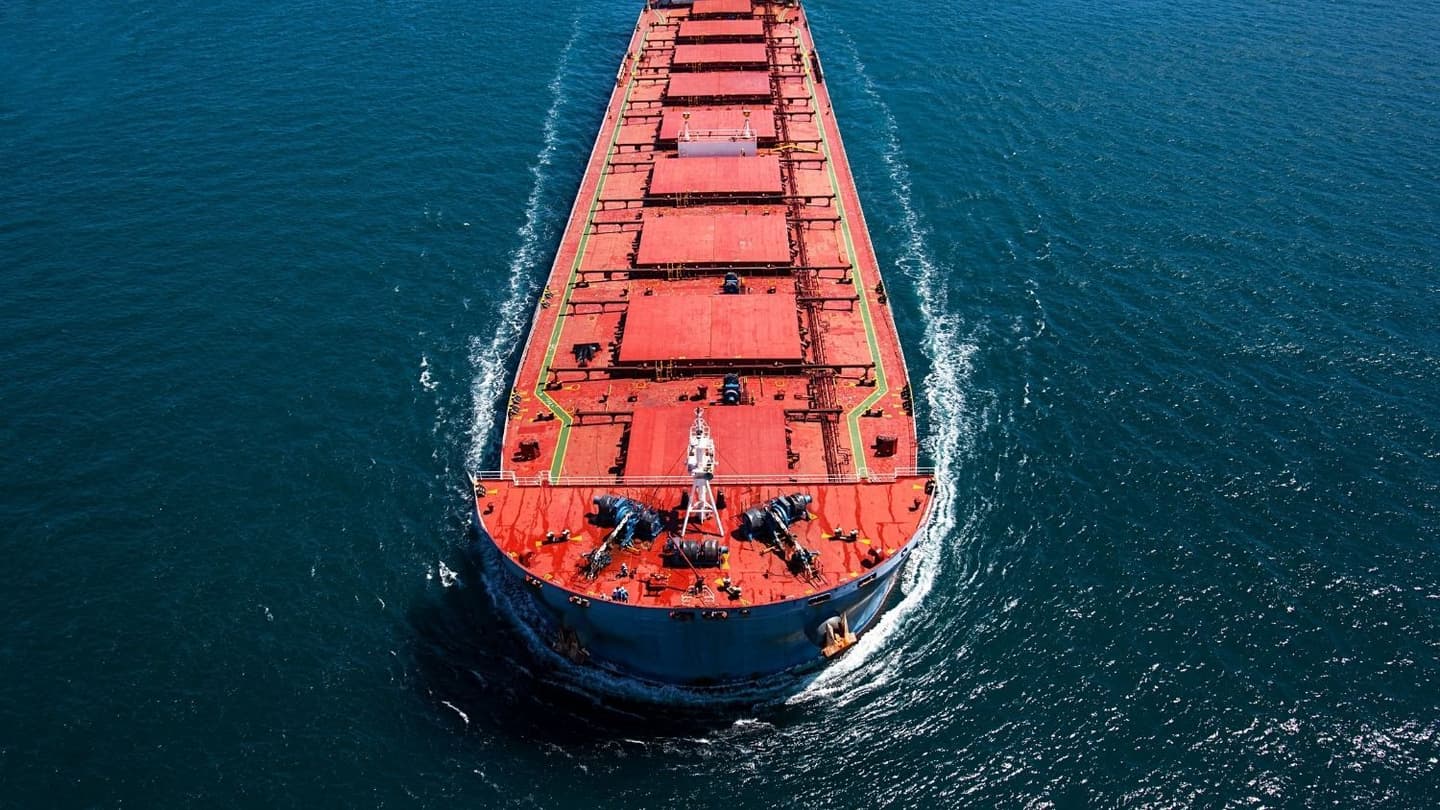
Six months amid the commencement of West Asia, the Strait of Hormuz has come to a near-standstill, stranding thousands of crew members in the Gulf and sharply limiting cargo movement.
Prior to Iran's blockade after the joint US-Israeli strikes in February, nearly 20 percent of global oil and liquefied natural gas exports flowed through the waterway.
Moreover, Iran’s guard issued a warning for a 1,400 square kilometres ‘danger zone’ which may contain mines.
Following Iran’s blockage on March 1, 2026, commodity carrier traffic dropped to an average of 10 transits daily, as per an analysis of data from maritime tracker Kpler quoted by AFP.
The US and Iran came into an agreement in June which led to a provisional revival to 36 daily transit, which later dropped back to an average of 15 between the resumption of hostilities on July 8 and August 22.
Prior to the war, ships crossed the strait freely via a route through the centre of the waterway adopted by the International Maritime Organization (IMO).
During the comparatively untroubled time between June 17 and July 7, an average of nine vessels per day used the Iranian route and eight the Omani one.
According to Kpler, two-thirds of vessel transits have gone "dark" or untracked since the July 8 ceasefire collapse, compared to under 1 percent before the war.
Ever since the start of the war, nearly 6,000 sailors and 500 ships have remained stuck in the Gulf, AFP reported the International Maritime Organisation (IMO) as saying.
The IMO also stated that there were "ongoing discussions" to guarantee a safe maritime route, adding that their outcome "depends on de-escalation in the region".
Furthermore, the organisation started an initiative to evacuate above 11,000 seafarers stuck in the Gulf, but the effort was soon suspended amid an attack on a vessel.