Rising military tensions in West Asia could expose India and other Asian economies to renewed energy and inflation shocks, Moody’s Analytics cautioned on Monday, pointing to the vulnerability of key oil and gas transit routes.
The assessment follows recent military exchanges involving Iran, the United States and Israel, raising concerns of a wider regional conflict that could disrupt critical supply corridors.
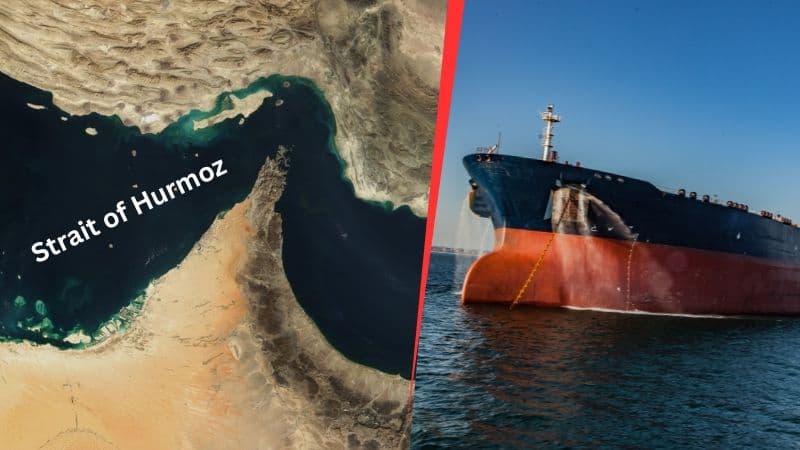
Reports indicating disruption of traffic through the Strait of Hormuz, a vital chokepoint for global energy supplies, have heightened market anxieties. The narrow waterway accounts for nearly one-third of global seaborne crude shipments and about 20 percent of Liquefied Natural Gas (LNG) trade.
India, the world’s third-largest oil importer, sources roughly half of its crude imports through the Strait of Hormuz. Any sustained blockage could tighten supplies, push up global crude benchmarks and feed into domestic inflation.
Disruptions are not limited to maritime flows. Airspace restrictions across parts of West Asia are compounding trade frictions, affecting cargo movement and passenger travel through one of the world’s busiest transit corridors.
Moody’s said a prolonged or broader conflict would add strain to emerging Asian economies already grappling with volatile commodity cycles and external debt pressures. A spike in oil and gas prices could widen current account deficits and complicate monetary policy decisions across the region.
Energy markets have historically reacted sharply to instability in West Asia, and policymakers are closely monitoring developments for signs of sustained supply bottlenecks and second-order impacts on trade and inflation.