Powertrac Enters BESS Sector with Proposed 10 GWh Manufacturing Facility in Gujarat
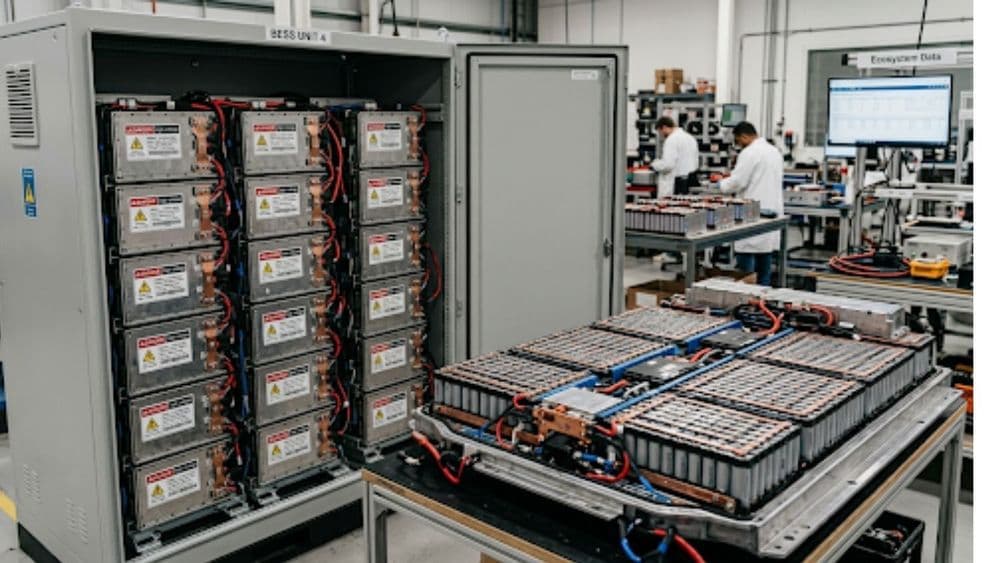
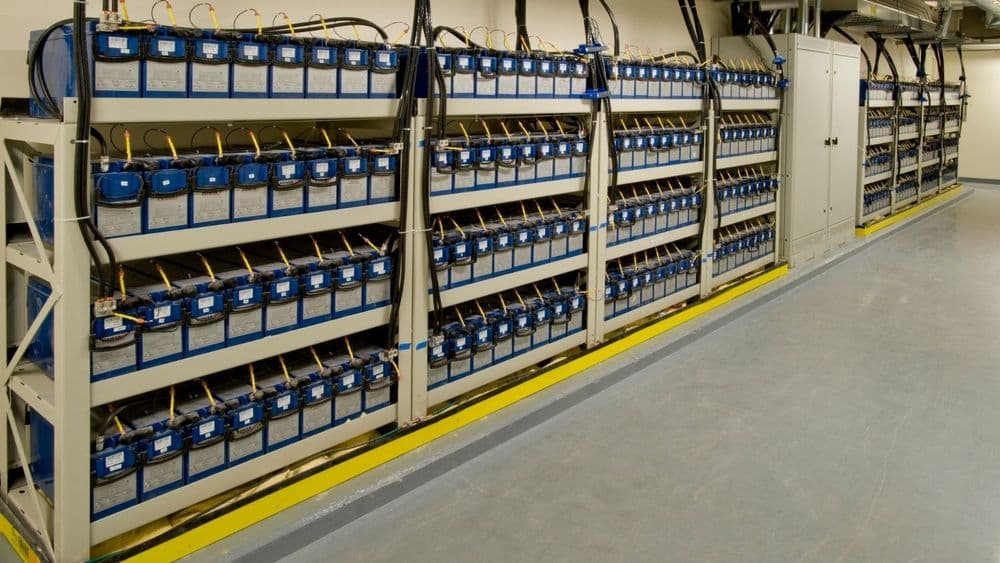
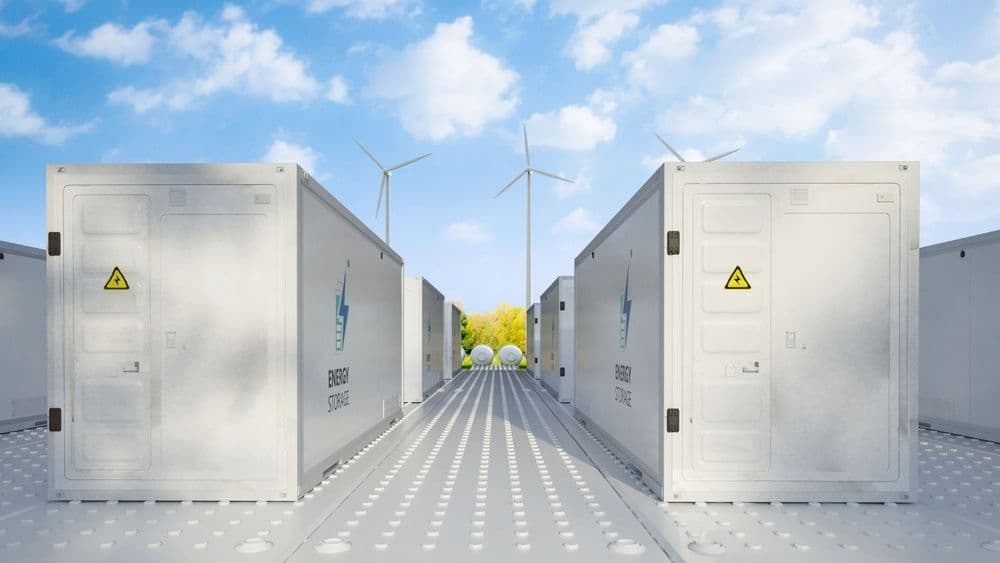
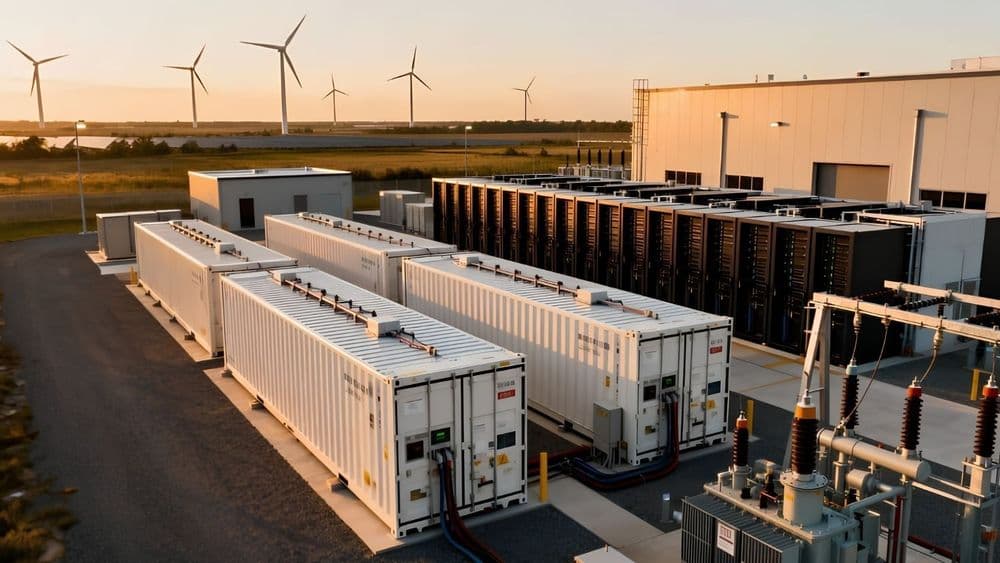
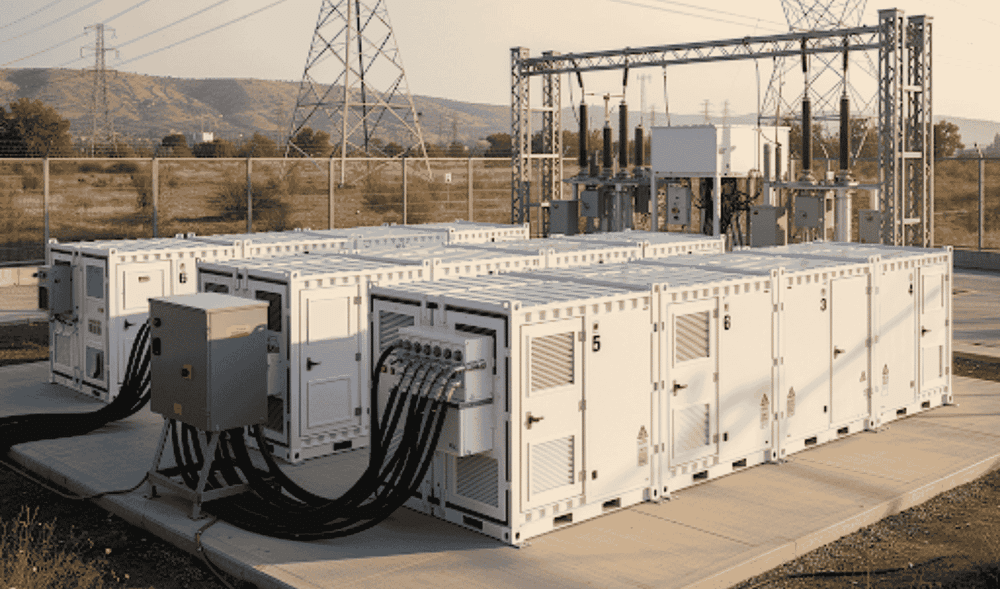
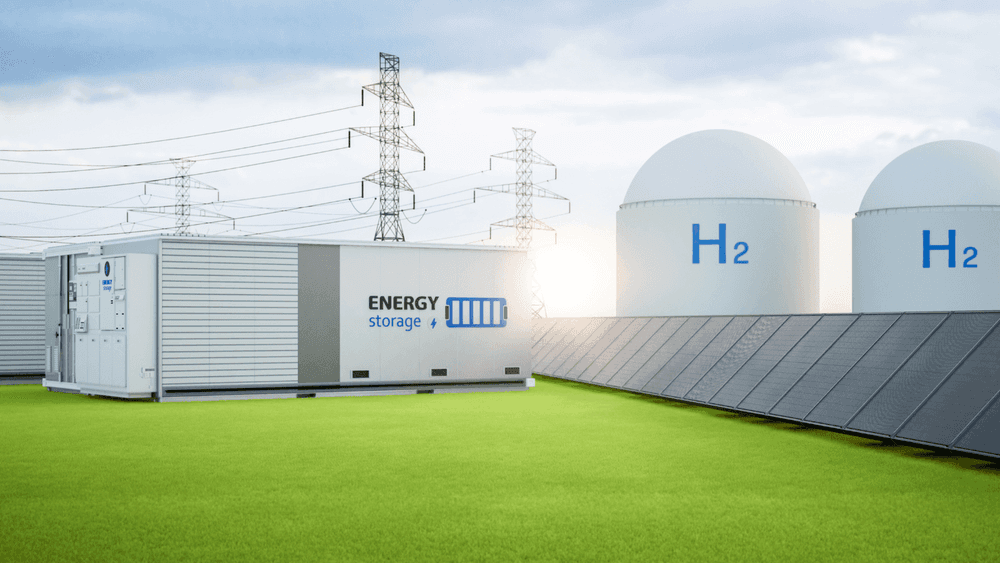
Powertrac has entered the BESS sector with a proposed 10 GWh manufacturing facility in Gujarat and placed an equipment order with China’s Sunka Lead.
All content tagged with “Energy Storage” - 32 items

Powertrac has entered the BESS sector with a proposed 10 GWh manufacturing facility in Gujarat and placed an equipment order with China’s Sunka Lead.


Infineon and Skeleton Technologies will collaborate on solid-state transformers and supercapacitor-based power systems to improve efficiency and resilience in AI data centres.

Urban mining is emerging as a strategic pillar of energy security, turning end-of-life batteries into a valuable source of critical minerals, while strengthening circularity, resource resilience and India’s clean energy ambitions.

ACME Solar Holdings has secured ₹1,571 crore in long-term project financing from IIFCL for its 300 MW assured peak power project in Rajasthan. The project, backed by a 25-year SECI PPA, will integrate solar generation with 1,350 MWh of BESS to support predictable and dispatchable power supply.

Roofsol Energy has signed a PPA with Associated Capsules Group for a 5 MWp solar project paired with a 4 MWh BESS in Maharashtra, marking its entry into India’s commercial and industrial renewable energy segment.

Solaryaan has unveiled its largest inverter portfolio, featuring hybrid and All-in-One inverters, microinverters and BESS solutions for residential, commercial and industrial applications. The portfolio includes three-phase hybrid inverters, energy storage systems and microinverters designed to support solar generation, storage and energy management.

Gujarat Urja Vikas Nigam has issued a tender for 4,000 MWh of standalone BESS capacity connected to the state grid to meet distribution companies’ peak and off-peak requirements.

Ola Electric has introduced its Shakti energy storage portfolio, expanding its battery business beyond electric mobility into residential, commercial and utility-scale applications.

Octillion Power Systems has commissioned its third manufacturing facility in Halol, Gujarat, spanning more than 13,000 square metres. The plant will manufacture over 48,000 battery systems annually at full capacity, potentially taking the company’s combined India capacity above 150,000 battery systems and around 9 GWh.

NTPC Simhadri Thermal Power Station will assess indigenous iron-air battery technology for long-duration energy storage applications. The project will be implemented by AIC-AU with technology partner Meine Electric to evaluate technical performance, operational reliability and system characteristics under real-world utility conditions.

NTPC Green Energy has secured a 200 MW/800 MWh standalone battery energy storage project from WBSEDCL through a competitive bidding process, expanding its energy storage portfolio.

The Maharashtra Electricity Regulatory Commission has approved BEST’s procurement of 220 MW solar power with a 110 MW/440 MWh battery energy storage system through SECI, supporting the utility’s Renewable Purchase Obligation and Energy Storage Obligation compliance.

Serentica Renewables has commissioned the first 200 MWh phase of its 1 GWh Battery Energy Storage System (BESS) in Bikaner, Rajasthan. The project will support round-the-clock renewable power for commercial and industrial consumers while strengthening grid reliability and renewable energy integration.

Shipping activity through the Strait of Hormuz and Bab el-Mandeb Strait rebounded on July 29, while increasing dark vessel activity and a buildup of VLCCs at Egypt's Sidi Kerir highlighted continued security and logistical challenges.

IOCL and MRPL. have suspended crude oil loadings from Iraq as security risks in the Strait of Hormuz continue to disrupt regional oil shipments.

Goldman Sachs has warned Brent crude could rise to $120 a barrel by the fourth quarter if disruptions in the Strait of Hormuz continue, while maintaining its base-case forecast of $80 amid expectations of easing regional tensions

Assam has announced investments of over ₹77,353 crore across hydro, solar, thermal and energy storage projects to add 8,457 MW of power generation capacity, with pumped storage, thermal and hydropower projects forming the core of the state's expansion plan.

The government has floated bids for 10 GWh of grid-scale battery storage manufacturing under the ACC PLI scheme to strengthen domestic energy storage and renewable integration.

Tata Power will invest ₹300 crore in 100 MW/200 MWh of battery energy storage systems across Mumbai to enhance grid stability, meet rising electricity demand and support urban infrastructure growth.

India must scale battery energy storage capacity to 888 GWh by FY36, with strong growth in installations and tenders highlighting the sector's rapid expansion.

MRPL has resumed crude imports through the Strait of Hormuz, supporting supply stability for Indian refiners as shipping normalises along the key energy trade route.

Adani Green Energy Ltd has commissioned a 150 MW solar power project in Khavda, Gujarat, taking its total operational renewable energy capacity to 19,985.8 MW. The company also announced an active battery energy storage capacity of 3,366 MWh, strengthening its clean energy and grid stability initiatives.

Envision Energy has secured a 660 MWh battery energy storage system (BESS) order for South Africa's Naos-1 project through an agreement with SOLA Group and WBHO. The company will also provide long-term technical support and maintenance under a 25-year agreement.
Infineon Technologies and Siemens have partnered to develop semiconductor-based circuit breaker solutions aimed at improving reliability, efficiency and protection in battery storage systems and data centres.

Ganesh Green Bharat Ltd (GGBL) has secured a 1,000 MWh Battery Energy Storage System (BESS) Engineering, Procurement and Construction (EPC) project from NTPC Renewable Energy Ltd (NTPC REL).

Adani Green Energy has operationalised a 3.37 GWh battery energy storage system at Khavda, Gujarat strengthening round-the-clock renewable power delivery capabilities.

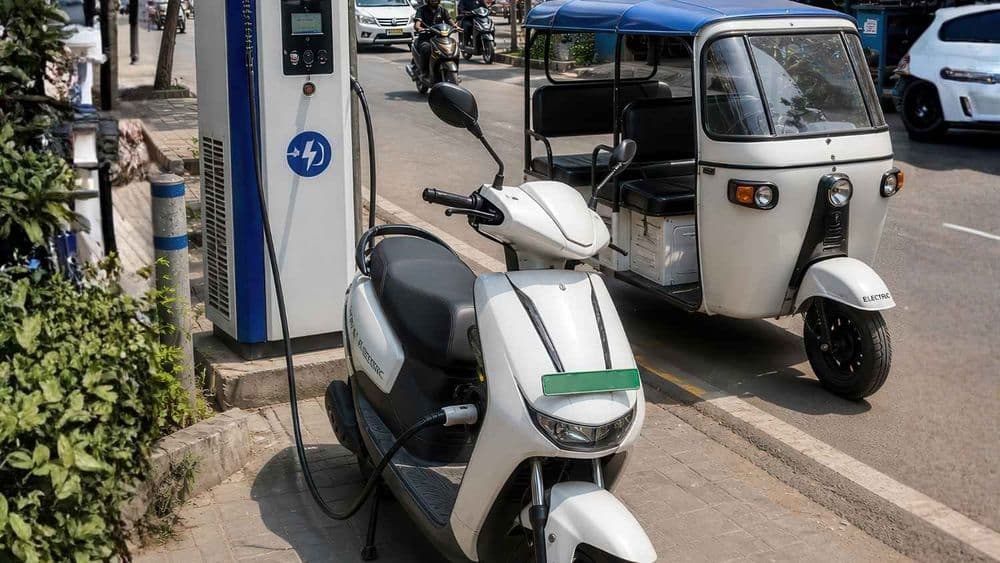
Centre extends PM E-DRIVE scheme to accelerate EV adoption, strengthen domestic clean mobility manufacturing and reduce import dependence in critical minerals and EV supply chains.

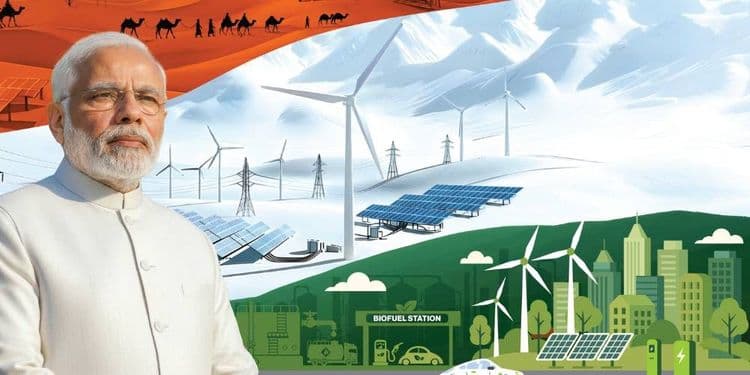
When Narendra Modi became Prime Minister in 2014, India’s energy sector was troubled by shortages and inefficiencies; a decade later, reforms have driven major progress towards clean energy leadership.

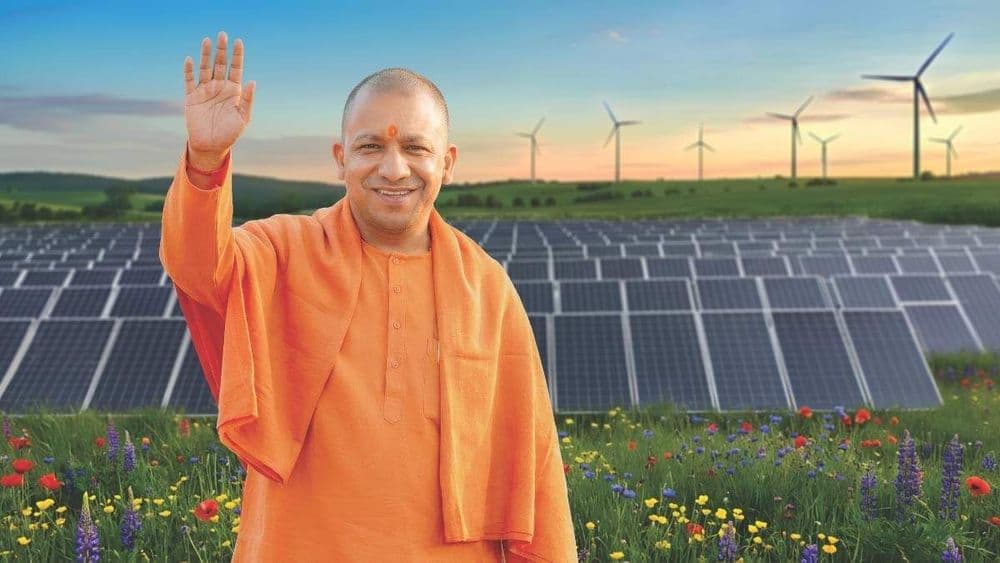
Once defined by chronic power cuts and slow execution, Uttar Pradesh is today scripting one of India’s boldest turnarounds.